Company car tyre checks are a small habit that can prevent missed appointments, unsafe journeys and difficult questions after a roadside stop. If your team uses company cars, pool cars or grey-fleet vehicles for work, tyres deserve the same attention as fuel, insurance and servicing.
This guide explains what drivers should look for, how managers can keep simple records, and when a mobile fitter can help. Tyretick provides mobile tyre fitting London drivers can use at home, work or the roadside.
Key takeaways
- Drivers are responsible for making sure the vehicle they drive is roadworthy before and during a journey.
- For cars, the UK legal minimum tread depth is 1.6mm across the central three-quarters of the tread, around the full circumference.
- Business users should record tyre defects, pressure issues and replacements so problems are not missed between drivers.
- Mobile fitting can reduce disruption when a company car cannot spare time for a garage visit.
Why Company Car Tyre Checks Matter
A company car may be used by several people, driven through heavy London traffic and parked tight against kerbs every day. That sort of use makes tyre damage easy to miss, especially on pool cars where no single driver feels fully responsible.
Regular company car tyre checks protect the driver, passengers and other road users. They also help a business avoid vehicle downtime, last-minute cancellations and preventable tyre failures.
Tyres affect braking, steering, fuel use and grip in the wet. A car with low pressure, a slow puncture or worn tread can feel fine at town speeds, then become a problem when the driver has to brake hard or change direction quickly.
If your business also runs vans, the checks are similar, but the load being carried matters even more. Tyretick has a separate van tyre fitting London fleet checklist for commercial vehicle users.
How Often Should Company Car Tyre Checks Be Done?
There is no one timetable that suits every business, but company car tyre checks should be regular, recorded and simple for drivers to complete. A quick look before a work journey can catch obvious damage, while a more detailed weekly check can pick up slow pressure loss or uneven wear.
A practical check routine
- Before each work journey: look for flats, visible damage, nails, bulges and anything that looks out of place.
- Weekly: check tread depth, tyre pressures and valve condition when the tyres are cold.
- Before long journeys: inspect all four tyres and the spare wheel or repair kit if fitted.
- After a kerb or pothole hit: check the sidewall, wheel and steering feel before driving on.
- After a warning light: do not ignore TPMS alerts, especially if the vehicle is shared.
For a simple inspection method, use Tyretick’s guide on checking all four tyres before a long journey. If you want a wider maintenance routine, read how often tyres should be professionally checked.
What Should Drivers Inspect Before a Work Journey?
You don’t need to be a mechanic to spot many tyre problems. The aim is to notice anything that could make the car unsafe, illegal or likely to let the driver down during the day.
1. Tread depth and wear pattern
For cars, the legal minimum tread depth is 1.6mm across the central three-quarters of the tyre, around the full circumference. In business use, it’s sensible not to wait until tyres are right on the limit, especially during wet London commutes.
Uneven wear can point to pressure, alignment, suspension or driving issues. If one shoulder is wearing quickly, or the tyre is smooth in patches, book a proper inspection rather than just topping up the air.
Drivers who are unsure can follow Tyretick’s tyre tread depth measuring guide.
2. Pressure and TPMS warnings
Use the pressure figures from the vehicle manufacturer, usually found in the handbook, fuel flap or door pillar. Check pressures when the tyres are cold where possible, as heat from driving can change the reading.
If the tyre pressure warning light comes on, don’t just reset it and carry on. The tyre may have a puncture, a leaking valve, a damaged rim or pressure loss caused by cold weather. Tyretick’s TPMS reset guide explains when recalibration is the right step.
3. Sidewalls, valves and foreign objects
Look for cuts, cracks, bulges, exposed cord, screws, nails and valve damage. A bulge in the sidewall is a serious warning sign, and the car should not be driven as normal.
If there is a nail in the tread, avoid pulling it out at the roadside. Removing it can cause rapid air loss and turn a slow leak into a flat tyre.
When Should a Business Repair, Replace or Call a Fitter?
The right decision depends on where the damage is, how much tread is left and whether the tyre has been driven while flat. A safe repair must follow recognised repair rules, and not every puncture can be fixed.
| Tyre issue | What it may mean | Best next step |
|---|---|---|
| Nail in central tread | May be repairable if the tyre is otherwise sound | Use a professional tyre puncture service assessment |
| Sidewall cut or bulge | Structural damage is likely | Do not continue normal driving; replacement is usually needed |
| Tread near legal limit | Reduced wet grip and legal risk | Plan replacement before the vehicle is sent out again |
| Repeated pressure loss | Could be puncture, valve or rim leak | Book a tyre repair service inspection |
| Vibration after new tyres | Wheel balance may be wrong | Consider wheel balancing London support |
If the puncture looks repairable, Tyretick’s guide to tyre puncture service repair rules explains the basics. If the car is already flat, keep the driver safe first and arrange help rather than asking them to limp to a garage.
Searching for mobile tyre fitting near me often happens when a driver is already stuck. For business users, it’s better to have a plan before that happens, including who can approve the work and what details the driver should give.
How Can Managers Keep Tyre Records Without Slowing the Team Down?
Business vehicle tyre records do not need to be complicated. A simple digital form, shared spreadsheet or fleet app can show that defects were reported, checked and dealt with.
Record the vehicle registration, mileage, tyre position, tread depth if measured, pressure issue, visible damage, driver name and action taken. Photos help when a car is shared, parked off site or handed from one driver to another.
Make checks easy for drivers
- Keep the checklist short and clear.
- Ask drivers to report defects before leaving, not at the end of the day.
- Store tyre size and locking wheel nut key information for each vehicle.
- Agree who can approve replacement tyres.
- Review repeated defects, such as the same car losing pressure each week.
If a business runs several cars or vans, planned visits can cut down disruption. Tyretick’s guide on arranging mobile tyre fitting for multiple vans or a small fleet explains what details help when booking.
For office-based teams, workplace mobile tyre fitting can be useful when cars are parked during the day. Some drivers prefer tyre fitting at home, especially when the vehicle is used early in the morning or late at night.
If your business needs same day tyre fitting London support, give as much information as you can when you call: tyre size, vehicle registration, location, whether the car is safe to access, and whether a locking wheel nut key is available.
How Does Mobile Fitting Help Company Car Drivers?
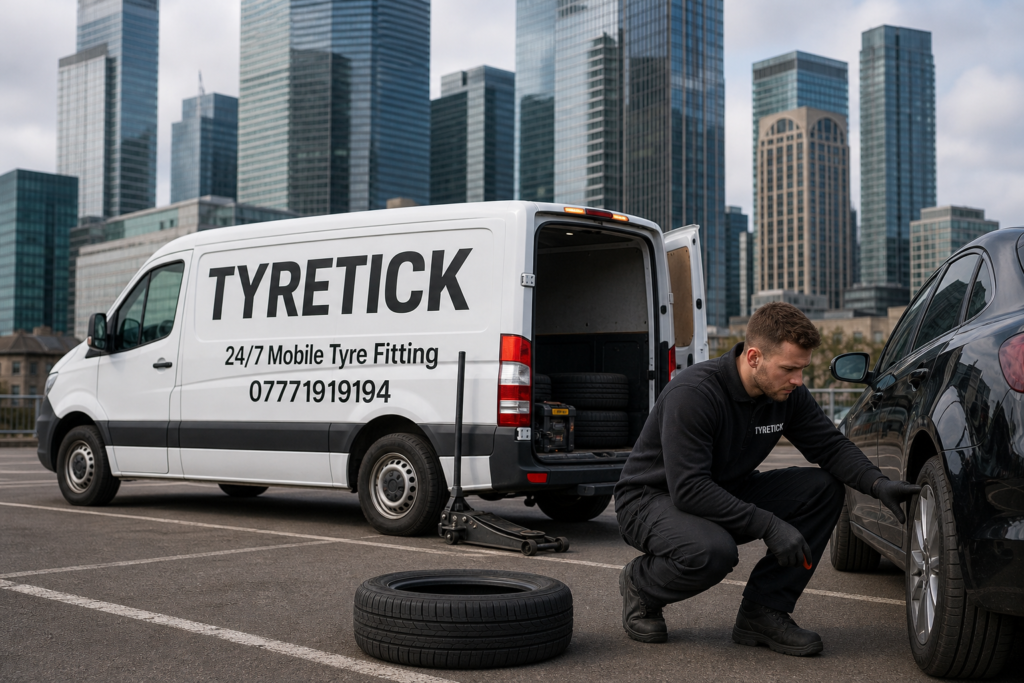
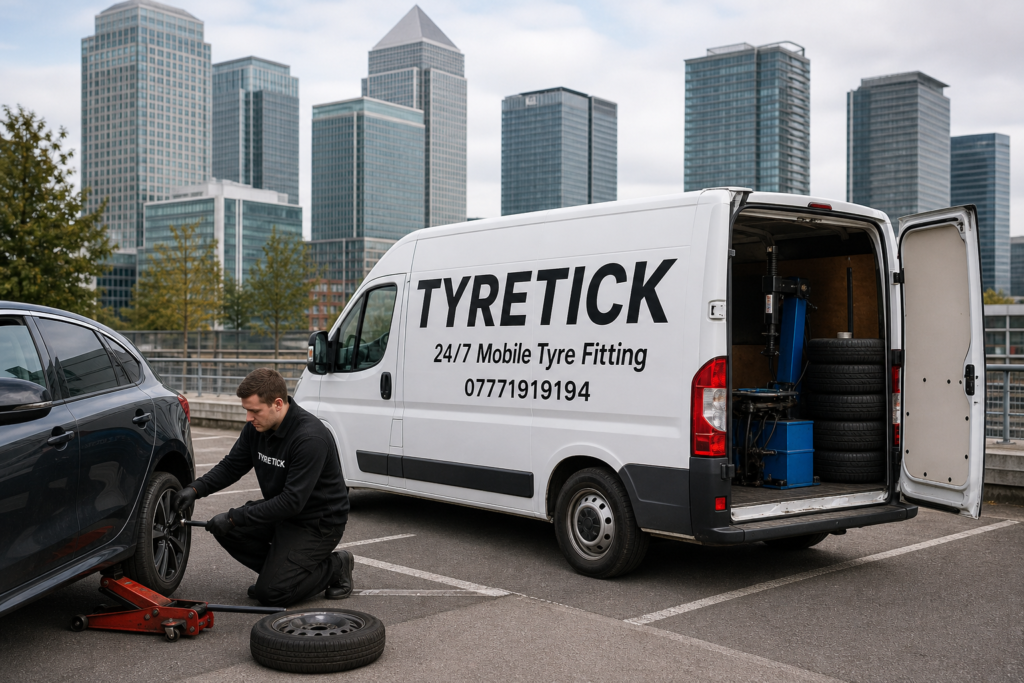
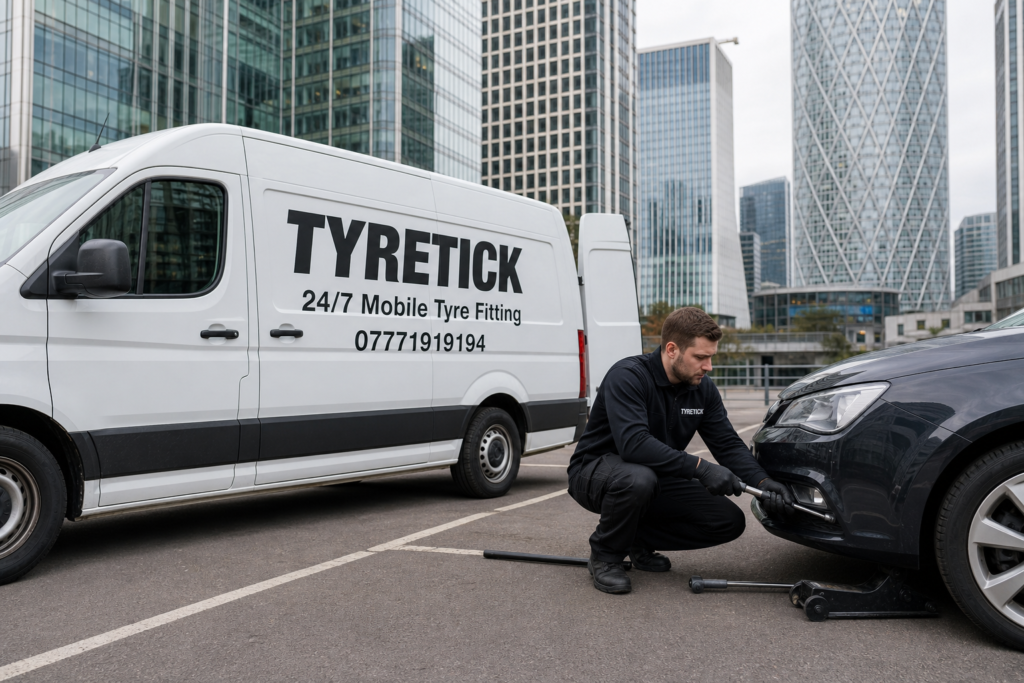
Mobile fitting helps because the tyre work comes to the vehicle. That can reduce downtime when a driver is at home, at a customer site, in an office car park or safely stopped at the roadside.
It’s particularly useful for drivers who cannot leave a vehicle at a garage during working hours. Mobile tyre replacement, puncture checks and emergency tyre replacement can often be arranged around the vehicle’s location, as long as there is safe access.
Business drivers should still choose a safe place for the fitter to work. Tyretick’s car park access and safety guide explains what makes a location suitable.
If a driver is stranded, flat tyre help London may be needed rather than a planned appointment. Tyretick also provides 24/7 emergency mobile tyre fitting for tyre problems that happen outside normal garage hours.
After new tyres are fitted, wheel balance matters. If a driver reports shaking through the steering wheel, read Tyretick’s guide to wheel balancing London and locking wheel nut keys.
Frequently Asked Questions
Who is responsible for tyres on a company car?
The driver is responsible for making sure the vehicle is roadworthy when they use it. The business should also have a clear process for checks, defect reporting and repairs, especially where vehicles are shared.
Should company car drivers check tyres every day?
A quick visual check before a work journey is sensible. A more detailed weekly check should include tread depth, pressure, valve condition and signs of damage.
Can a puncture on a company car be repaired?
Sometimes, but only if the damage is in a repairable area and the tyre has not been ruined by being driven flat. A professional inspection is needed before deciding.
What details should a driver give when booking mobile tyre fitting?
Give the vehicle registration, tyre size, location, whether the car is on level ground, the problem seen, and whether the locking wheel nut key is available.
Can Tyretick help with pool cars and small fleets?
Yes, Tyretick can help business drivers with mobile tyre fitting, puncture assessment and replacement tyres where safe access is available.
Need Help With Business Vehicle Tyres in London?
If a company car, pool car or work vehicle has a flat, damaged or worn tyre, Tyretick can come to the vehicle and help you get the tyre sorted safely. For bookings and advice, call 07771919194 or use the Tyretick contact page.