A TPMS reset is one of those things most drivers only think about when the tyre pressure warning light refuses to go out. You have topped up the tyres, driven a few miles, and there it is again on the dash. Annoying, yes. But it is also worth taking seriously.
The warning could mean several things. The tyre may still be low, the car may not have relearned the correct pressure, or you could have a slow leak that is not obvious by eye. This guide explains when to reset the tyre pressure monitoring system, when to leave it alone, and how to spot the signs of a puncture before it becomes a bigger problem.
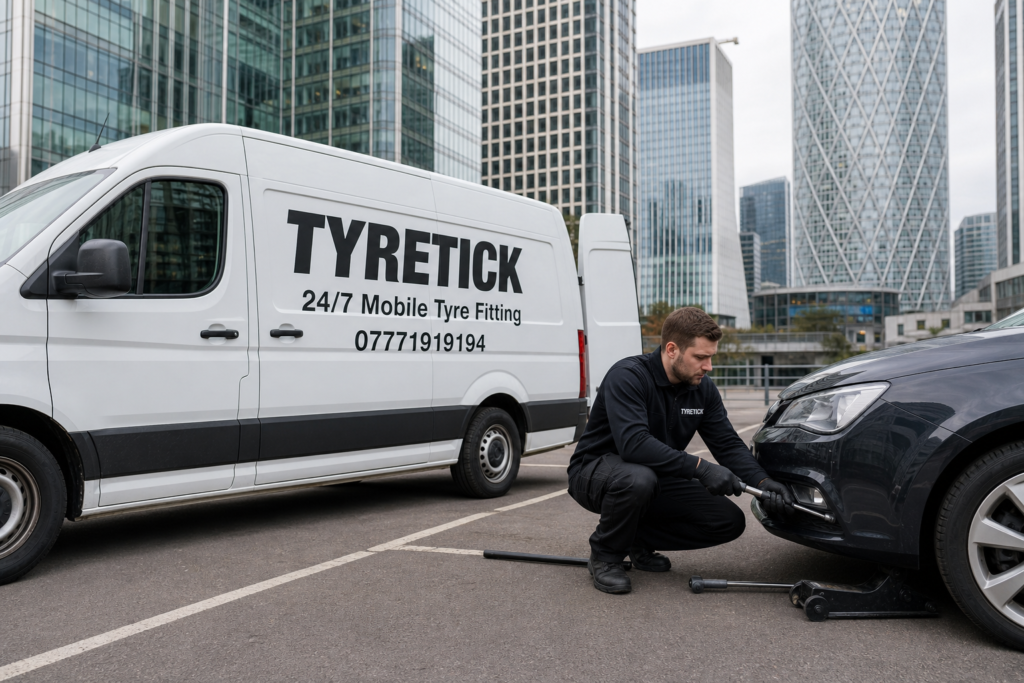
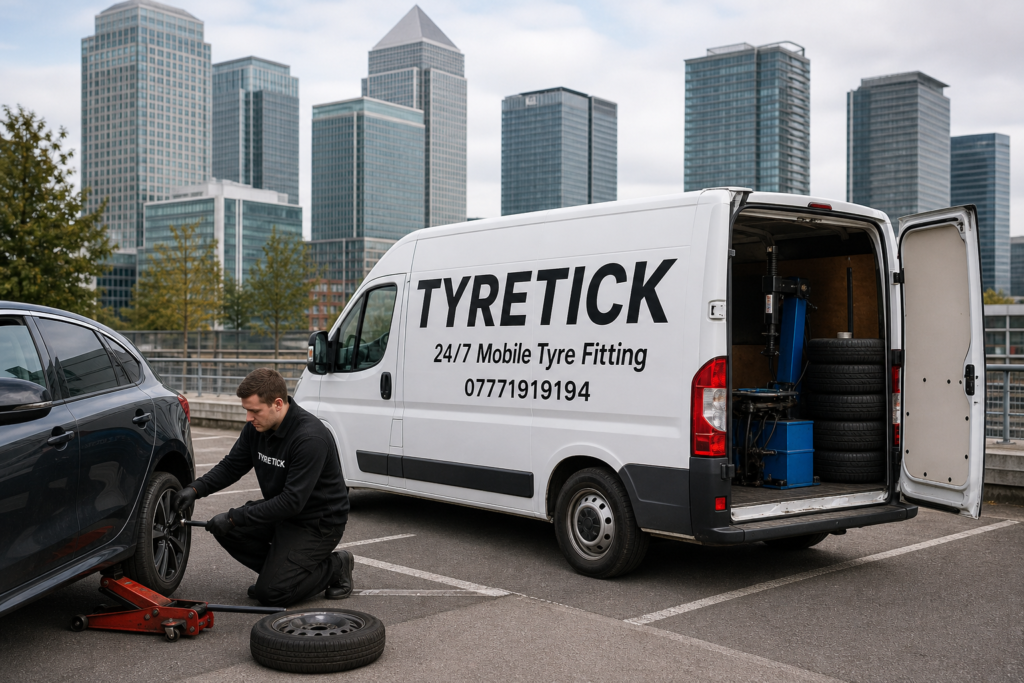
If you would rather not drive to a garage with a suspect tyre, Tyretick provides mobile tyre fitting in London at homes, workplaces and safe roadside locations.
Key takeaways
- Reset the TPMS only after you have checked and corrected all tyre pressures.
- A warning that returns soon after resetting may point to a puncture, valve leak or damaged tyre.
- Do not ignore repeated pressure loss, even if the tyre still looks inflated.
- A mobile fitter can check whether you need air, a repair or a replacement tyre.
What does a TPMS reset actually do?
A tyre pressure monitoring system watches for pressure loss and alerts you when a tyre is underinflated. Some vehicles use direct sensors inside the wheel. Others use the ABS system to compare wheel rotation, because a tyre that has lost air becomes slightly smaller and turns differently.
A TPMS reset tells the car to accept the current pressures as its new reference point. It does not add air, repair a puncture or check whether the tyre is structurally sound. If the pressures are wrong when you reset it, the system may learn the wrong baseline and give you false confidence.
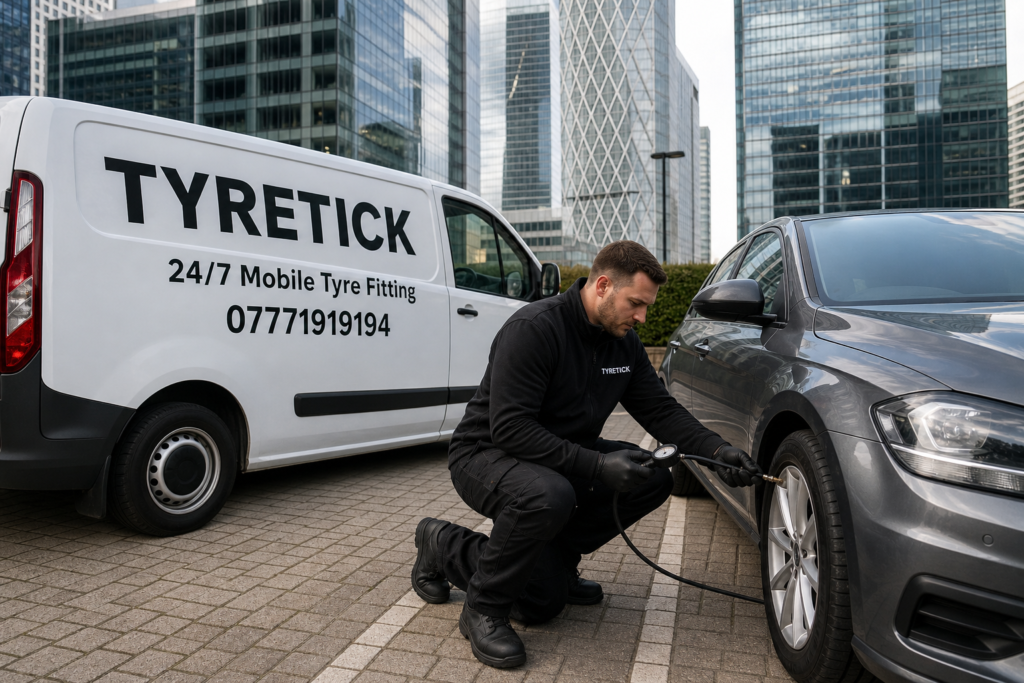
That is why the first step is always a proper pressure check with a gauge. Check the label inside the fuel flap or door shut, or use the handbook. If you are unsure what your car needs, read Tyretick’s guide to finding the correct tyre pressure before using the reset button.
When should you do a TPMS reset?
You should usually recalibrate the system after setting the tyres to the correct pressure, fitting new tyres, rotating wheels where the vehicle allows it, or changing between normal and loaded pressure settings. The reset comes last. Air first, checks next, reset after that.
A reset can also be needed after a tyre has been repaired and reinflated. For example, if a nail is removed safely and the tyre is professionally plugged and patched, the car may need to relearn the corrected pressure. Tyretick explains repair limits in this tyre puncture service guide.
Do not use a TPMS reset just to silence a warning. If the light appears after hitting a pothole, clipping a kerb or noticing sidewall damage, treat it as a safety issue. If the pressure keeps dropping over a few days, compare the symptoms with Tyretick’s guide to cold weather pressure loss and punctures.
Common times to recalibrate
- After inflating all tyres to the handbook or door-label pressure.
- After a new tyre has been fitted and balanced.
- After a safe puncture repair and pressure check.
- After adjusting pressures for a heavy load, then returning them to normal.
- After seasonal pressure changes, if your car manual tells you to reset.
How to do a TPMS reset safely
Every car does this slightly differently, so the exact steps depend on the make, model and year. Some have a physical button. Others use the infotainment screen, steering wheel controls or a dashboard menu. Your handbook is the best place to find the correct sequence.
- Check the tyres when they are cold if possible, before a long drive heats them up.
- Set all four tyres to the correct pressure, including the rear tyres, which are easily forgotten.
- Look for obvious damage, screws, nails, cracks, bulges or one tyre sitting lower than the others.
- Use the vehicle menu or button to start the recalibration process.
- Drive as instructed by the vehicle handbook so the system can relearn the readings.
Do not forget the spare wheel if your vehicle has a full-size spare with a sensor. Some systems monitor it, and some do not. If you are not sure, the handbook will normally say.
If you need help with the inflation step, Tyretick has a simple guide on how to put air in tyres. If you have searched for mobile tyre fitting near me because you cannot safely drive to a pump, a mobile fitter may be the better call.
Why does the tyre pressure warning light come back?
If the tyre pressure warning light returns soon after recalibration, assume there is still a problem until someone proves otherwise. A healthy tyre should not need topping up every few days. Repeated loss can come from a puncture, leaking valve, rim corrosion, bead leak or impact damage.
A slow puncture TPMS warning can be easy to miss because the car may still feel normal at first. You might only notice the light after the car has been parked overnight, during colder weather, or when one tyre drops faster than the others. A small screw in the tread can lose air slowly for days.
If you can see a nail or screw, do not pull it out at the roadside. It may be slowing the air loss. Tyretick’s nail in tyre repair guide explains when this type of damage can be fixed safely.
For urgent situations, searches such as emergency tyre repair near me or flat tyre repair near me usually mean you need help where the car is parked. Tyretick offers a tyre repair service and mobile puncture repair where the tyre condition and location make repair safe.
TPMS reset or tyre repair: which do you need?
The table below gives you a quick way to judge what to do next. It is not a substitute for an inspection, but it can help you avoid resetting a warning when the tyre really needs attention.
| What you notice | Likely meaning | Best next step |
|---|---|---|
| Light came on after topping up tyres | The system may not have been recalibrated | Check pressures again, then reset using the handbook method |
| Light returns within a day or two | Possible slow air leak | Book a tyre puncture service or inspection |
| One tyre is visibly low | Pressure loss may be serious | Do not drive far; arrange roadside tyre help |
| Warning after new tyres | System may need relearning, or a sensor issue may exist | Ask the fitter to check pressures and reset procedure |
| Warning plus vibration or pulling | Possible damage, imbalance or pressure difference | Stop when safe and have the tyre and wheel checked |
If you need replacement rather than repair, Tyretick’s mobile tyre fitting London service guide explains how fitting can be arranged without visiting a depot. Drivers who prefer the work done at home can also read what to expect from tyre fitting at home.
Frequently Asked Questions
Can I drive with the TPMS light on?
You should not ignore it. If the car feels unstable, a tyre looks low, or you hear flapping or thumping, stop somewhere safe. If the tyres look normal, drive carefully to check pressures as soon as you can.
Will pumping up the tyre turn the light off?
Sometimes it will, but some vehicles also need recalibration. Inflate all tyres to the correct pressure first, then follow the handbook reset steps. If the light returns, suspect a leak or sensor issue.
Can a mobile fitter help with TPMS problems?
A mobile fitter can check tyre condition, pressure loss, valves, tread damage and whether repair or replacement is needed. For sensor programming or electrical faults, some vehicles may need specialist diagnostic work.
Is a TPMS warning an MOT problem?
On many modern cars, a TPMS malfunction warning can affect the MOT result. More importantly, it may mean a tyre is underinflated, which can affect braking, handling and tyre wear.
Do run-flat tyres still need pressure checks?
Yes. Run-flat tyres can hide pressure loss because the sidewall is reinforced. You should still check pressures and act quickly if the warning appears, rather than relying only on the tyre’s ability to support the car for a limited distance.
Need tyre pressure or TPMS help in London?
If your warning light will not stay off, your tyre keeps losing air, or you are not sure whether it is safe to drive, Tyretick can help with mobile tyre fitting, repair checks and 24/7 emergency mobile tyre fitting in London. Call 07771919194 or contact Tyretick to book a fitter.