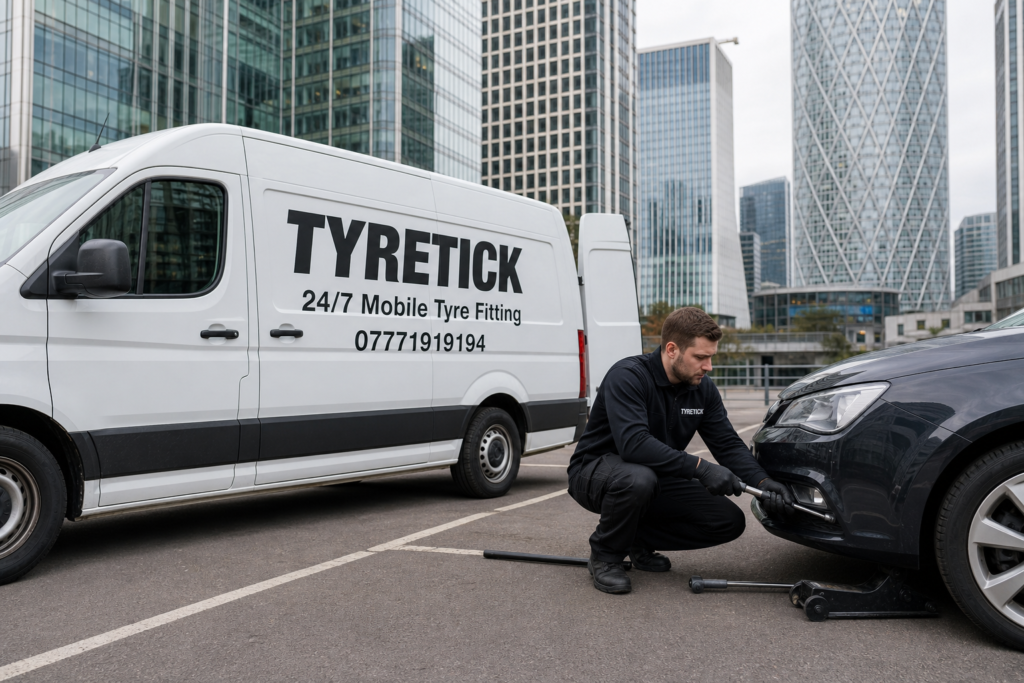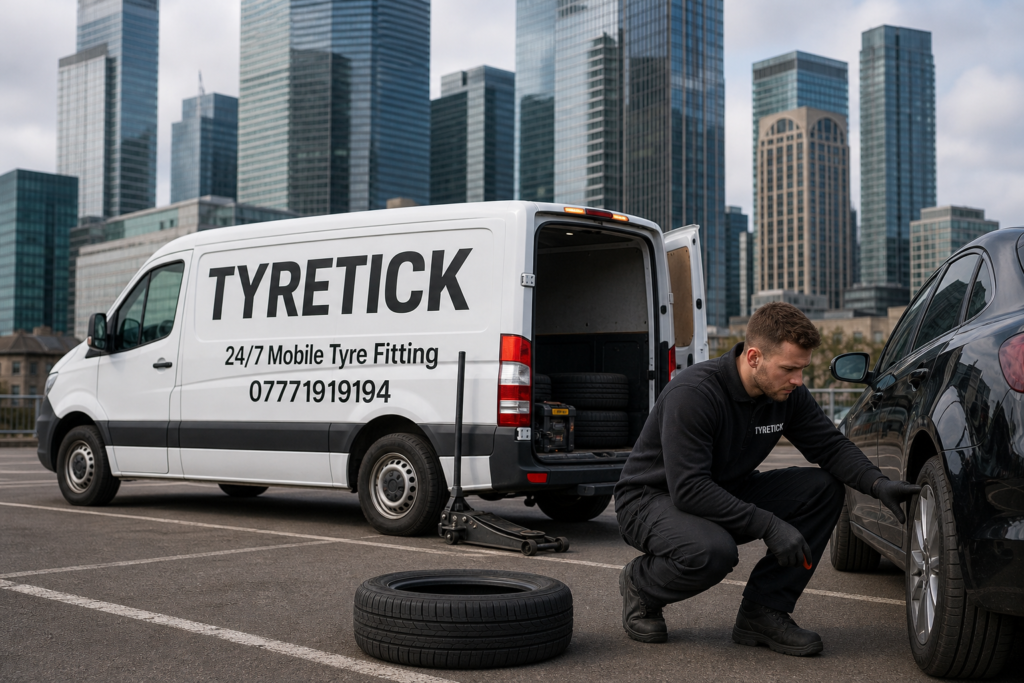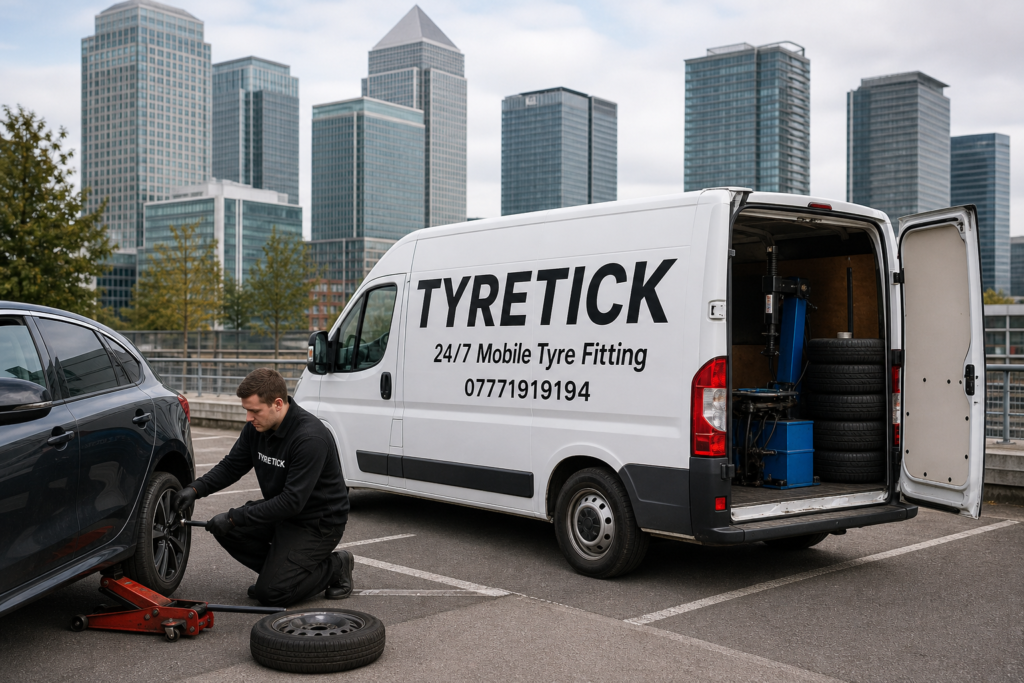
A mobile tyre fitting car park appointment can be very handy, especially if you come back to the car and find a flat. It only works well, though, if the fitter can get to the vehicle and work safely around it. This guide explains what to check before you book, what details to share, and when it may be better to move the car first.
Car parks across London are all different. A supermarket bay, office basement, hotel car park, private residential block and multi-storey each brings its own access problems. If you’re arranging mobile tyre fitting London, a few quick checks can save time and avoid a lot of back and forth.
Key takeaways
- A mobile tyre fitting car park job needs safe access, enough working space and permission where required.
- Height barriers, steep ramps, poor lighting and tight bays can stop a van or equipment reaching the car.
- Share your exact parking level, bay number, tyre size and locking wheel nut details when booking.
- If the car park is unsafe, a fitter may ask you to move the vehicle or arrange help in a safer nearby place.
When Is Mobile Tyre Fitting Car Park Work Suitable?
A mobile tyre fitting car park visit is usually suitable when the vehicle is on firm, level ground with room to work on the damaged wheel. The fitter needs space to set down tools, jack the vehicle correctly and stay clear of other drivers.
Open-air car parks are often easier because there is more headroom and better ventilation. Underground and multi-storey car parks can still be workable, but they need a bit more planning before anyone sets off.
Good Car Park Locations
- Open supermarket or retail park bays where the car is not blocking traffic.
- Office car parks with clear access for a service van.
- Residential car parks where the driver has permission for a tradesperson to enter.
- Hotel or visitor car parks with a level bay and enough lighting.
If you’re not sure whether your spot is suitable, compare it with Tyretick’s guide to where mobile tyre fitting can be done. The question is not just where the car is parked. It’s whether the work can be done without putting you, the fitter or other car park users at risk.
What Access Details Should You Give Before Booking?
The more accurate your information is, the easier it is for the fitter to prepare. That applies if you searched for mobile tyre fitting near me after a sudden flat, and it also applies if you’re planning a routine tyre change while you’re at work.
When booking, have these details ready:
- The full address and nearest entrance to the car park.
- The parking level, bay number or a clear landmark inside the car park.
- Any gate code, concierge process, ticket barrier or permit rule.
- The height restriction, if there is one shown at the entrance.
- Whether the car can be moved if the current bay is too tight.
- Your tyre size, vehicle make and model, and whether you have the locking wheel nut key.
If the car is at your workplace, it also helps to tell security or reception that a tyre fitter is expected. Tyretick has a separate guide on mobile tyre fitting at work, which is useful if your office car park has visitor controls.
Mobile Tyre Fitting Car Park Safety Checks Before The Fitter Arrives
Before the appointment, take a quick look around the vehicle. You don’t need specialist knowledge. Just check whether there is space beside the wheel that needs attention, because a narrow bay, a wall tight to the wheel or a kerb under the jacking point can make the job awkward or unsafe.
Try to leave enough room for a person to stand and work beside the affected wheel. If another car is parked too close, ask reception, security or the neighbouring driver if the space can be cleared.
Quick Checks To Make
- Is the car on a flat, firm surface rather than a steep ramp?
- Is there enough light to see the tyre, wheel nuts and jacking point?
- Can the fitter reach the damaged wheel without standing in moving traffic?
- Is the vehicle clear of sharp kerbs, posts, pillars or low pipes?
- Will the fitter be allowed to use tools without breaking car park rules?
If the problem is a puncture, don’t keep driving around the car park looking for a better bay if the tyre is flat. Driving on a flat can damage the sidewall and the wheel. If you have no usable spare, read Tyretick’s advice on what to do with a flat tyre and no spare.
Car Park Fitting Compared With Home, Workplace And Roadside
A car park is only one possible place for a tyre service. Some drivers choose tyre fitting at home because the car is already parked off the road. Others need roadside tyre repair London support after a sudden puncture away from home.
The right option depends on safety, access and how urgent the problem is. This table shows the main differences.
| Location | Best for | Main thing to check | Common issue |
|---|---|---|---|
| Home driveway | Planned replacement or a flat found before leaving | Safe parking and access around the car | Tight driveways or parked-in vehicles |
| Work car park | Replacing tyres while you are at the office | Permission from security or facilities | Barriers, permits or visitor restrictions |
| Public car park | Punctures while shopping or visiting London | Bay space, lighting and height limits | Low ceilings or narrow multi-storey bays |
| Roadside | Emergency tyre fitting London situations | A safe stopping place away from traffic | Traffic risk, poor visibility or limited space |
For home visits, see the guide on whether fitters need power or a driveway for tyre fitting at home. For emergency stops, Tyretick also explains where you can stop safely for emergency tyre fitting London.
What Can Stop A Tyre Fitter Working In A Car Park?
Most problems are practical rather than mechanical. The fitter may have the right tyre and equipment, but still be unable to work if the van cannot enter or the vehicle cannot be lifted safely.
Common reasons a job may need to be moved include:
- Height barriers: some car parks have low entrances that may not suit a mobile fitting van.
- Steep ramps: jacking a car on a slope is unsafe.
- Tight bays: pillars, walls or nearby vehicles may block tool access.
- No permission: private car parks may require approval from management or security.
- Poor lighting: the fitter must be able to inspect the tyre and wheel properly.
- Missing locking wheel nut key: specialist locking wheel nut removal may be needed before the wheel can come off.
If your wheel has locking nuts and the key is lost or damaged, don’t force it with the wrong tool. Read Tyretick’s advice on locking wheel nut removal before the appointment.
Can A Puncture Be Repaired In A Car Park?
A tyre puncture service may be possible in a car park if the damage is repairable and the working area is safe. A professional will inspect the tyre before deciding whether a repair is suitable.
Repairs are not suitable for every flat tyre. Damage to the sidewall, shoulder, bead area or inner structure normally means replacement is needed. The tyre must also meet legal and safety requirements, including the UK minimum tread depth of 1.6mm across the central three-quarters of the tread and around the full circumference for cars.
If you need a tyre repair service, the fitter may check where the object entered, whether the tyre has been driven on while flat, and whether there is hidden internal damage. Tyretick’s guide to whether a punctured tyre can be repaired explains the main repair rules in more detail.
If the tyre cannot be repaired, mobile tyre replacement may be the safer answer. If you have already booked, it helps to know what happens on the day of a mobile tyre fitting appointment.
Frequently Asked Questions
Can mobile tyre fitting be done in an underground car park?
Sometimes, yes. It depends on the height limit, ventilation, lighting, bay space, surface and permission from the car park operator. Give these details before booking so the fitter can judge whether the mobile tyre fitting car park job is practical.
Do I need permission from the car park owner?
In private, residential, office or hotel car parks, it’s sensible to get permission first. Some sites have rules about tradespeople, tools, visitor parking or vehicle recovery. Public car parks may also have restrictions, so check signs or ask staff if you’re unsure.
What if my car is in a very tight bay?
If the wheel that needs work is against a wall, pillar or another vehicle, the fitter may not be able to jack the car or remove the wheel safely. If the tyre is not fully flat and it is safe to do so, move to a wider, level space. If not, wait for advice.
Can Tyretick help at night in a car park?
Tyretick provides 24/7 emergency mobile tyre fitting, but the location still has to be safe and accessible. Lighting, security access and the ability to work without blocking other vehicles are especially important at night.
Should I drive out of the car park with a flat tyre?
Usually, no. Driving on a flat tyre can damage the tyre beyond repair and may harm the wheel. If you’re stuck, seek flat tyre help London support and follow safe advice. For busy roads, Tyretick’s roadside tyre repair safety guide explains what to do around traffic.
Need Help With A Tyre In A London Car Park?
If your car has a puncture, flat tyre or damaged tyre in a car park, Tyretick can advise what information to share and whether a mobile fitter can help at your location. Call 07771919194 for support, or use the Tyretick contact page to book a fitter.
Before calling, note the car park name, level, bay number, vehicle details and tyre size if you can see it. Clear information helps Tyretick plan the safest way to get you moving again.