Tyre speed rating matters when you’re choosing replacement tyres, even if you never drive anywhere close to the figure linked to the letter on the sidewall. It shows the maximum speed a tyre is designed to carry its approved load under controlled test conditions.
That doesn’t give you permission to drive faster, and it doesn’t change UK speed limits. This guide explains where to find the rating, how it works with load index, when you can change it, and what to ask before booking mobile tyre fitting. It’s for UK drivers who want safe, sensible tyres without getting buried in tyre jargon.
Key takeaways
- Match the tyre speed rating recommended by your vehicle manufacturer unless you have expert advice.
- The rating is about tyre capability, not a legal permission to drive faster.
- Load index, size, seasonal type and tyre condition are just as important.
- Choosing the wrong rating can affect handling, insurance and suitability.
- A mobile fitter can check the sidewall and help with safe replacement options.
What does tyre speed rating mean?
A tyre speed rating is a letter on the tyre sidewall, usually shown straight after the load index. For example, in 225/45 R17 94W, the W is the speed rating and 94 is the load index.
Each rating is tested to a maximum speed with the tyre correctly inflated and carrying the right load. It is a capability rating, not a target. You still need to drive to the road, weather, traffic and legal speed limit.
Car manufacturers choose ratings to suit the vehicle’s weight, power, braking system and handling. That’s why two cars with the same tyre size may still need different speed letters. The tyre has to suit the car, not just fit the wheel.
How do you find the correct tyre speed rating?
Start with the tyres currently fitted, then double-check the correct specification in your vehicle handbook, fuel flap sticker, door pillar label or manufacturer information. If you bought the car second-hand, don’t assume the tyres on it are right. Previous owners sometimes fit whatever was available at the time.
If you’re unsure how to read the full sidewall code, Tyretick’s guide to tyre markings explained is a useful next step. You can also check the size separately using this guide on how to check your tyre size.
- Find the tyre size on the sidewall, such as 205/55 R16.
- Look just after the size for a number and letter, such as 91V.
- Record both the load index and speed letter.
- Check the vehicle’s recommended specification.
- Use the same rating or a suitable manufacturer-approved alternative.
Can you choose a lower tyre speed rating?
In most everyday replacement situations, you should not choose a lower rating than the one recommended for your vehicle. A cheaper tyre can look tempting, especially if you’re replacing one unexpectedly, but the wrong specification may not suit the car’s design.
It can also raise awkward questions with insurance if the tyre is not appropriate for the vehicle. Handling, braking feel and heat build-up can all be affected, particularly on heavier cars, performance models and vehicles that spend time on motorways.
There are some specialist exceptions, including certain winter tyre applications, but these should be checked against the vehicle manufacturer’s guidance and your insurer if needed. For normal London driving, the safe approach is simple: fit the correct rating, or a higher suitable rating from a reputable tyre range.
If your tyre is damaged and you need mobile tyre replacement, give the fitter the full tyre size, load index and speed letter when you call. That helps them identify suitable options before they travel to you.
| Speed rating | Maximum rated speed | Common use | What to check |
|---|---|---|---|
| T | 118 mph | Some smaller or older cars | Only use if listed for the vehicle |
| H | 130 mph | Many family cars | Check load index as well |
| V | 149 mph | Higher performance family cars | Do not swap down without advice |
| W | 168 mph | Performance cars and larger vehicles | Match the handbook specification |
| Y | 186 mph | High performance vehicles | Use the correct approved tyre type |
What else should you check when choosing new tyres?
The speed letter is only one part of choosing the right tyre. You also need the correct size, load index, construction type, season, tread pattern and quality level.
Load index is worth checking carefully because it tells you how much weight the tyre can carry. This matters on family cars, SUVs, EVs, taxis and vehicles often used with passengers, tools or luggage. A tyre can have the right size and still be wrong if the load rating is too low.
Think about how you drive as well. A short urban commute, regular motorway use and a heavy electric car all place different demands on tyres. If you’re comparing budget, mid-range and premium options, read Tyretick’s guide to budget vs premium tyres and the broader best tyres for your car buyer’s guide.
- Size: must match an approved size for the vehicle and wheel.
- Load index: must be high enough for the vehicle.
- Speed rating: should meet or exceed the correct specification.
- Tyre label: compare wet grip, fuel efficiency and noise ratings.
- Condition: replace tyres with cuts, bulges, exposed cord or serious wear.
When is speed rating urgent rather than just a buying choice?
If one tyre has failed and you’re replacing it at the roadside, the fitter still needs to match the correct specification. A quick fix should not mean fitting a tyre that isn’t suitable for the car.
Get help promptly if the tyre has a bulge, exposed cord, severe cracking, a sidewall cut or has been driven on while flat. A tyre puncture service may be possible for some tread-area punctures, but damaged sidewalls and run-flat damage often need replacement instead.
If you’re searching for mobile tyre fitting near me because the car is unsafe to drive, avoid moving it unless you can do so safely and legally. Tyretick provides 24/7 emergency mobile tyre fitting for drivers who need help at home, at work or at the roadside.
How can a mobile fitter help you choose correctly?
A good fitter checks the sidewall, confirms the size and rating, inspects the wheel and looks for possible causes of tyre failure. That’s especially helpful if you’ve recently hit a pothole, clipped a kerb, noticed uneven wear or seen a warning light on the dash.
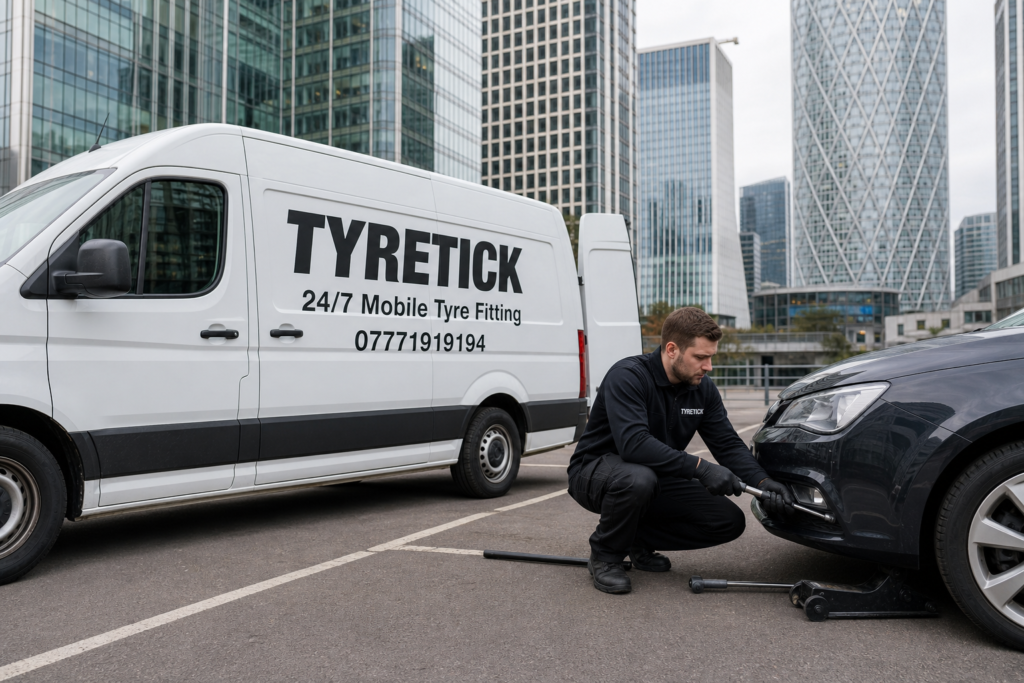
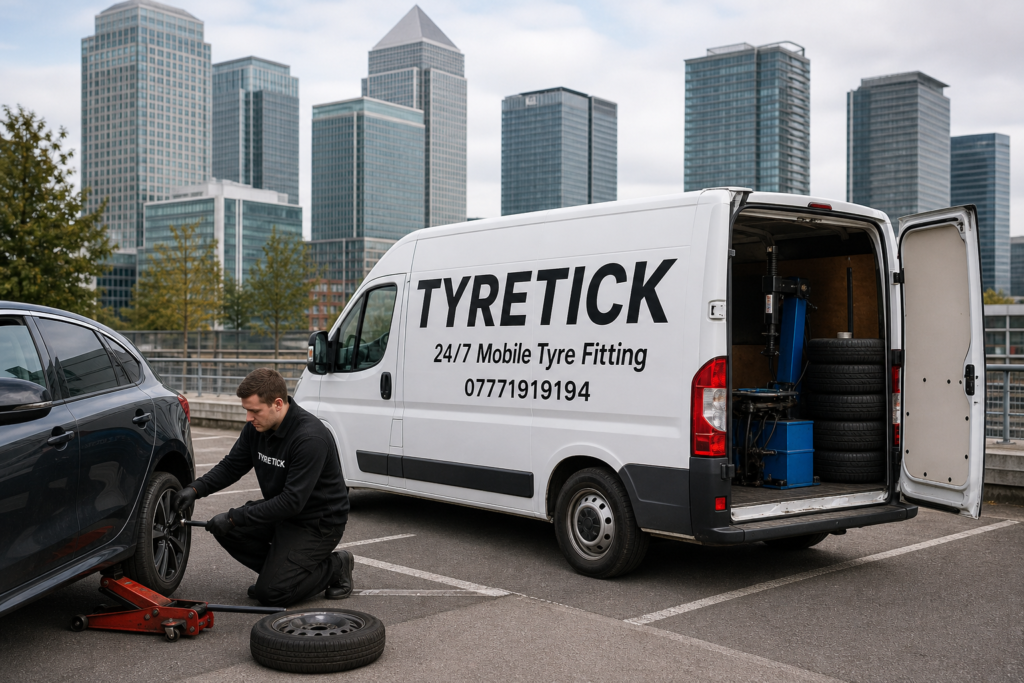
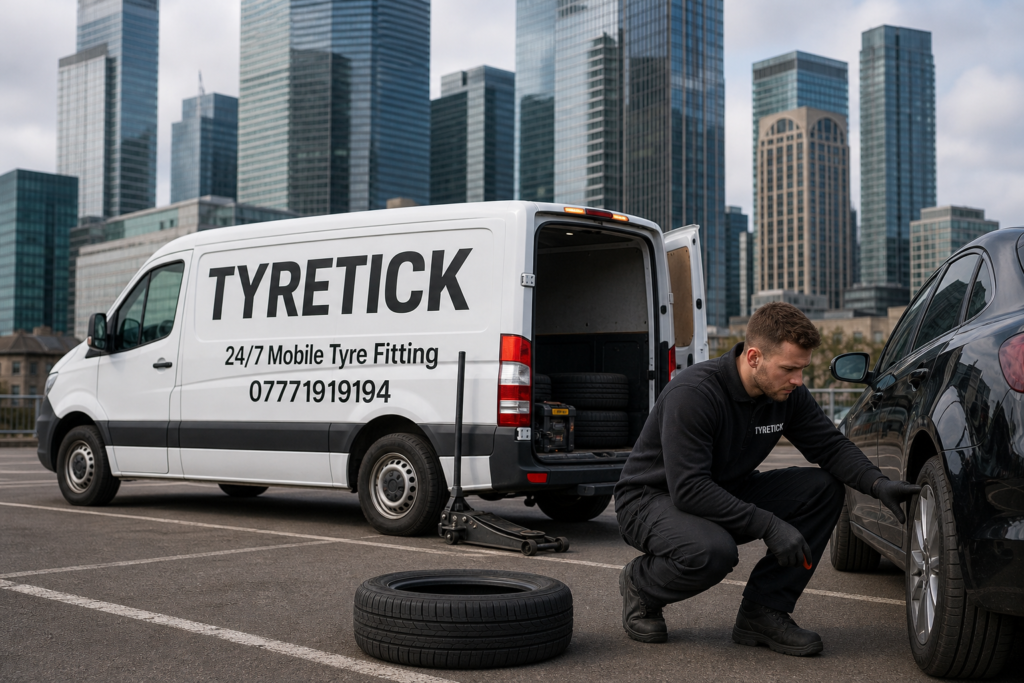
With mobile tyre fitting London, the tyre can be fitted where the car is, instead of you driving on a doubtful tyre to a garage. Tyretick can also support tyre fitting at home, at work or in suitable parking areas.
After fitting, wheel balance matters. Poor balance can cause vibration through the steering wheel and uneven wear, so read more about wheel balancing London if your steering shakes after new tyres. If the fitter cannot remove the wheel because the key is missing or damaged, locking wheel nut removal may be needed before the tyre can be changed.
Frequently Asked Questions
Does tyre speed rating affect MOT?
The MOT checks tyre condition, size suitability and legal safety items, but don’t treat the MOT as the only standard. A tyre must be suitable for the vehicle, so the correct rating still matters for safety, insurance and manufacturer compatibility.
Can I fit a higher speed rating than recommended?
Often, yes, provided the tyre is the correct size, load index and type for the vehicle. A higher rating does not automatically make a tyre better, so compare wet grip, comfort, noise and intended use too.
Do all four tyres need the same speed rating?
Ideally, keep ratings consistent across the axle and follow the vehicle specification. Mixing unsuitable ratings can affect handling, especially during braking, cornering or motorway driving.
Is speed rating more important than tread depth?
Both matter. UK cars need at least 1.6mm tread depth across the central three-quarters of the tyre and around the full circumference, but a tyre can still be unsuitable if its rating or load index is wrong.
Can a puncture be repaired if the tyre has the wrong rating?
A repairable puncture may still be unsafe if the tyre itself is not suitable for the car. A professional tyre repair service should check the tyre specification and condition before deciding whether repair is sensible.
Need help choosing the right tyres?
If you need help deciding whether to replace two tyres or all four, or you need same day tyre fitting London support, Tyretick can help you choose a suitable replacement and fit it where your car is.
Call Tyretick on 07771919194 for mobile tyre advice, replacement or emergency help, or use the contact page to book a fitter.