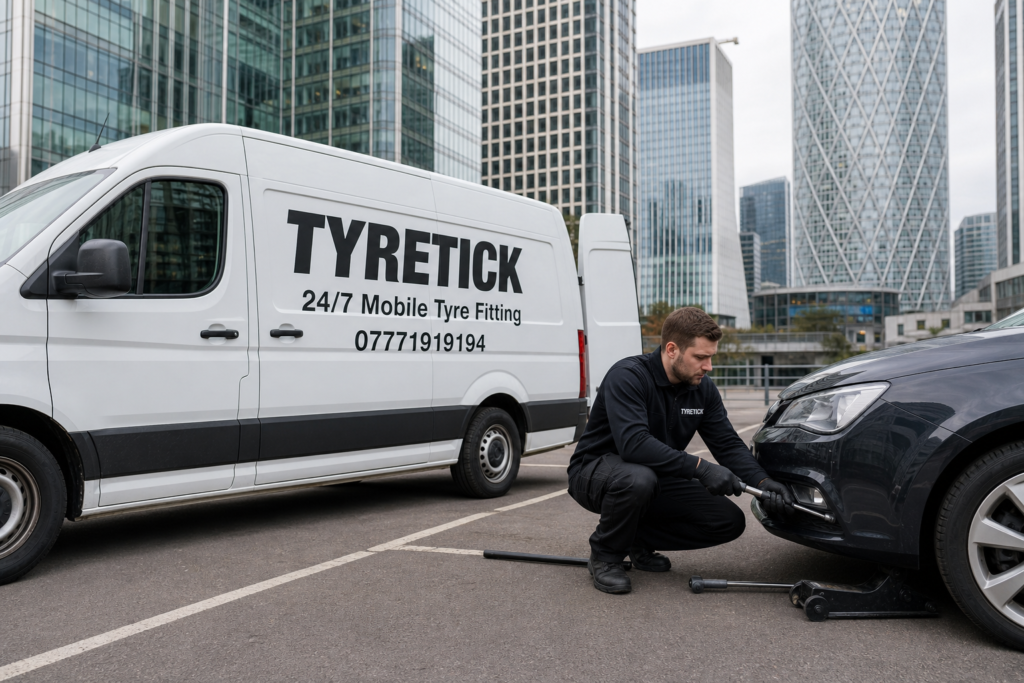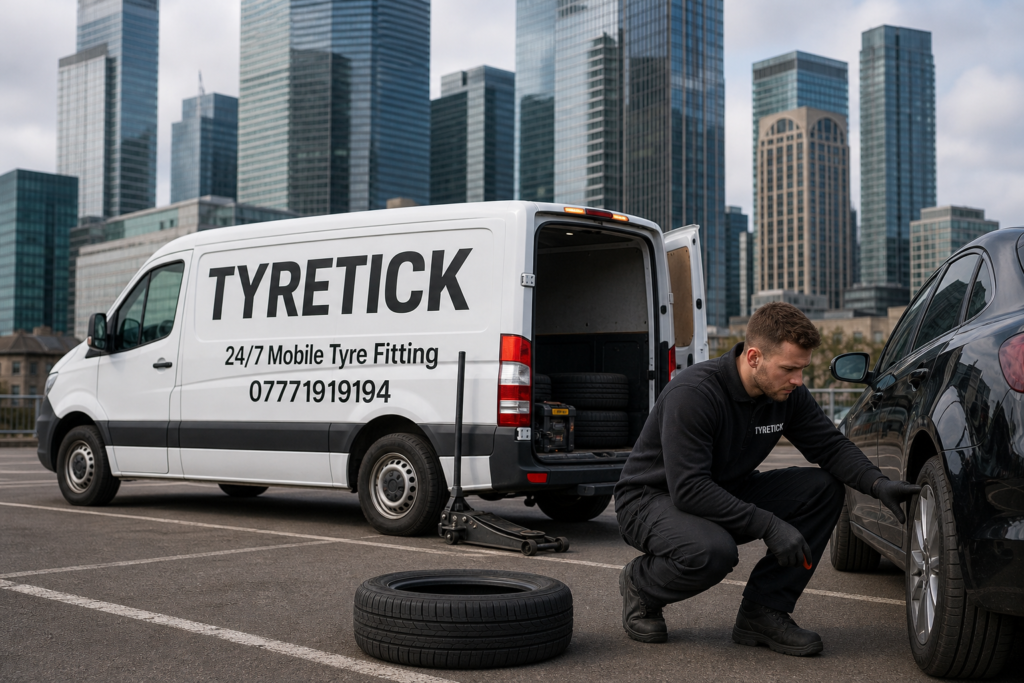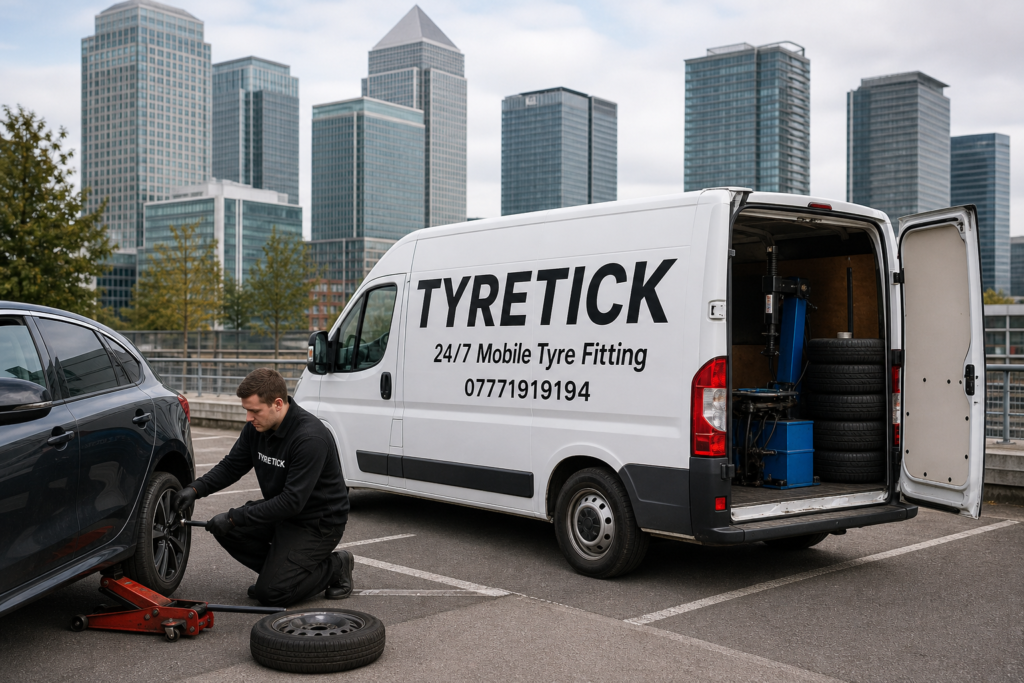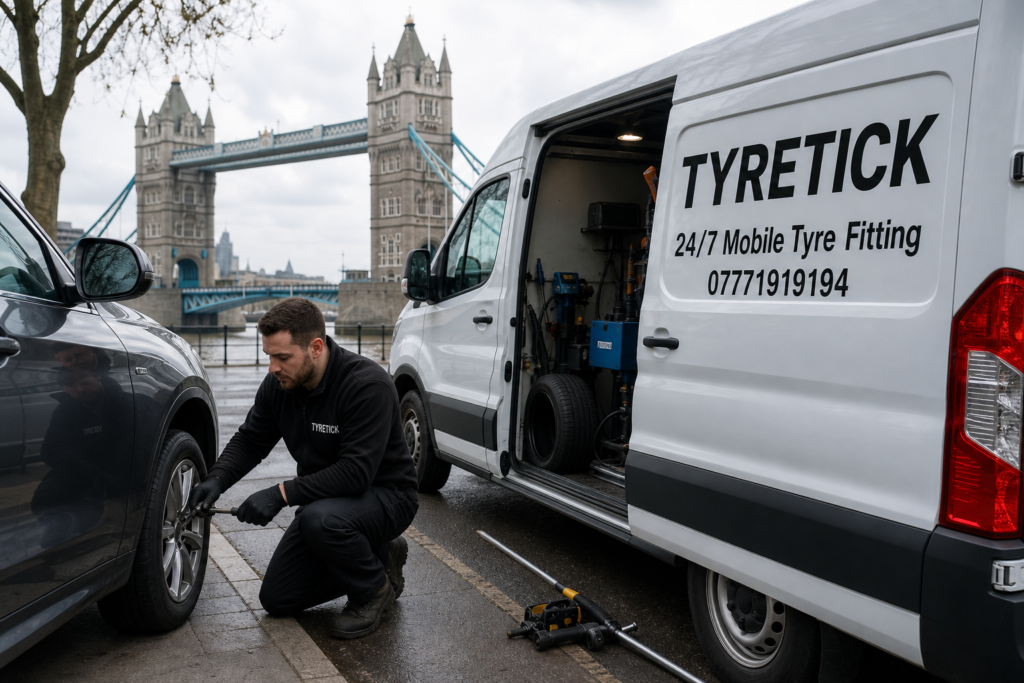
A tyre puncture service is about much more than plugging a hole and getting you moving again. A safe repair depends on where the damage is, how large it is, how far you drove after the tyre lost pressure, and the general condition of the tyre.
In this guide, we’ll walk you through the checks a professional fitter makes before repairing a puncture. You’ll also see when replacement is the safer answer, what to do while you wait, and how Tyretick can help with mobile tyre fitting in London at home, at work or at the roadside.
Key takeaways
- A repair is usually only considered when the damage is in the central tread area, not the sidewall or shoulder.
- A tyre must be removed from the wheel so the inside can be inspected before a proper repair.
- Driving on a flat tyre can damage the internal structure, even if the outside looks fine.
- Low tread, exposed cords, bulges, cuts or previous unsafe repairs can make replacement necessary.
- If you are unsure, stop driving and arrange a professional tyre repair service.
What does a tyre puncture service check first?
The first job is deciding if the tyre is safe to repair at all. A good fitter won’t make that call from the outside alone, because a tyre can look fairly normal while the inside has been badly damaged.
A proper inspection normally includes these checks:
- Location of the puncture: the object must be in the repairable tread area, not the shoulder or sidewall.
- Size of the injury: small nail or screw holes are more likely to be repairable than cuts, tears or large holes.
- Internal condition: the tyre should be removed from the rim so the fitter can look for crumbling rubber, heat marks or inner liner damage.
- Tread depth: car tyres in the UK must have at least 1.6mm across the central three-quarters of the tread and around the full circumference.
- Overall condition: age cracks, bulges, exposed cords and severe uneven wear can all rule out repair.
If the problem is a nail or screw, its position still matters. For more detail on that common fault, read Tyretick’s guide to nail in tyre repair.
Where is a repairable tyre puncture on the tread?
A repairable tyre puncture is normally within the central tread area, often called the crown of the tyre. This is the part that can usually accept a safe internal patch and plug repair, as long as the hole is small, clean and the tyre is otherwise sound.
The shoulder is the curved section where the tread starts to meet the sidewall. The sidewall is the flexible outer wall of the tyre. These areas move and flex heavily as you drive, so a repair there is not treated as a safe long-term fix.
| Damage position | Repair likely? | Why it matters |
|---|---|---|
| Central tread | Possible | This is the strongest repair zone if the hole is small and the tyre is otherwise sound. |
| Outer tread edge | Often no | It may be too close to the shoulder for a safe repair. |
| Shoulder | No | A tyre shoulder puncture is in a high-flex area and should not be patched. |
| Sidewall | No | Sidewall damage weakens the tyre structure and needs replacement. |
| Bead area | No | Damage where the tyre seals to the wheel can cause air loss and unsafe seating. |
If you can see a cut, bubble or heavy scuff on the sidewall, don’t keep driving to see what happens. Tyretick has a separate guide explaining why tyre sidewall repair is not usually safe.
When will a tyre puncture service say no?
Sometimes replacement is the right answer, even if the puncture itself looks small. A professional fitter has to judge the whole tyre, not just the visible hole.
The tyre has been driven while flat
When a tyre loses air, the sidewalls can be crushed between the wheel and the road. That can leave black dust inside the tyre, wrinkled inner liner damage or weakened cords. Once that happens, repairing the hole won’t restore the tyre’s strength.
The tread is too worn
A tyre near the legal limit is not a good repair candidate. Even if it can technically hold air, it may soon need replacing because of tread depth. Use Tyretick’s guide to measuring tyre tread depth properly if you want to check before calling.
The damage is not a simple puncture
Cuts, splits, impact breaks, exposed cords and bulges are different from a clean puncture. These signs point to structural damage, often caused by potholes, kerbs or driving with too little air in the tyre.
The tyre has already had unsafe repairs
Temporary string plugs, sealant-only fixes and poor previous repairs can make a new repair unsuitable. A fitter will inspect the inside and advise if the tyre can be repaired properly, or if repair or replacement is the safer choice.
Can mobile puncture repair be done at home or roadside?
Yes, mobile puncture repair can often be carried out where the vehicle is parked, as long as the location is safe and the tyre is repairable. That might be your driveway, workplace, a suitable car park or the roadside, provided there is enough safe working space.
If you’re searching for puncture repair near me, flat tyre repair near me or emergency tyre repair near me, the main thing is to stop before the tyre is ruined. Even a short drive on a flat can turn a simple repair into a mobile tyre replacement.
On busy roads, put safety first. Move away from traffic if you can do so without taking a risk, switch on your hazard lights, and stand somewhere safe. For more practical advice, read Tyretick’s roadside tyre repair London safety guide.
A mobile fitter will usually inspect the tyre, remove the wheel if needed, check the inside, repair it if safe, then reinflate it and check for leaks. If it can’t be repaired, they can advise on replacement options instead.
What should you do before the fitter arrives?
Clear information helps the fitter bring the right tools and tyre options. It can also save time if the puncture turns out not to be repairable.
- Give your exact location, including car park level, entrance details or nearby landmarks.
- Share your tyre size if you can read it from the sidewall.
- Say whether the tyre is fully flat, slowly losing air or still holding pressure.
- Mention if you drove on the flat tyre, even for a short distance.
- Tell the fitter if your vehicle has locking wheel nuts and whether you have the key.
If your pressure keeps dropping but you can’t find the cause, it may be a slow puncture, valve issue or rim leak. Tyretick explains the signs in more detail in why tyre pressure keeps dropping.
If you’re waiting for a mobile fitter, avoid using sealant unless you have no safer option. Sealant can make the inspection messier and may affect whether a permanent repair is possible. If you’ve already used it, tell the fitter when you call.
How does repair differ for run-flat tyres and emergency call-outs?
Run-flat tyres are designed to support the vehicle for a limited distance after pressure loss, but that doesn’t mean they can always be repaired. Because the sidewall carries extra load when flat, internal damage can be hard to judge without a careful inspection.
Many repairers are cautious with run-flat repairs, especially if the tyre has been driven with little or no air. If your car has run-flats, it’s worth reading Tyretick’s guide: can run flat tyres be repaired?
For urgent situations, a 24/7 emergency mobile tyre fitting service can be more practical than trying to reach a garage. Tyretick can attend flats and punctures day or night, inspect the tyre, and provide a tyre repair service or replacement where appropriate.
If you want to understand timings, see how long a mobile puncture repair usually takes. Actual time can vary because the fitter must inspect the tyre properly before deciding if repair is safe.
Frequently Asked Questions
Can a tyre puncture service repair every puncture?
No. The puncture must be in the correct tread area, the damage must be suitable, and the tyre must be structurally sound. Sidewall damage, shoulder damage, low tread or signs of being driven flat usually mean replacement.
Is a plug from the outside enough?
A quick external plug is not the same as a proper permanent repair. A safe repair usually involves removing the tyre from the wheel, inspecting the inside, then fitting an approved internal repair where suitable.
Can I drive slowly to a garage with a puncture?
If the tyre is flat or nearly flat, it is safer not to drive. Driving on it can damage the sidewall and wheel. Tyretick’s guide on driving with a punctured tyre explains the risks in more detail.
Will I need a new tyre if the puncture is near the edge?
Very often, yes. Damage close to the shoulder may be outside the safe repair zone, even if it appears to be on the tread. The fitter will check its exact position before advising.
What if I do not have a spare wheel?
Many modern cars do not carry a spare. If the tyre cannot be repaired, a mobile fitter may be able to fit a replacement where you are. See Tyretick’s advice on what to do with a flat tyre and no spare.
Need a tyre puncture service in London?
If you have a puncture, slow leak or flat tyre, Tyretick can inspect it and advise if repair or replacement is the safe option. The best tyre puncture service won’t promise a repair before the tyre has been checked properly.
For mobile tyre fitting, tyre repair service, tyre puncture service or emergency help in London, call Tyretick on 07771919194. You can also contact Tyretick to book a fitter at your home, workplace or roadside location.