Skip to content

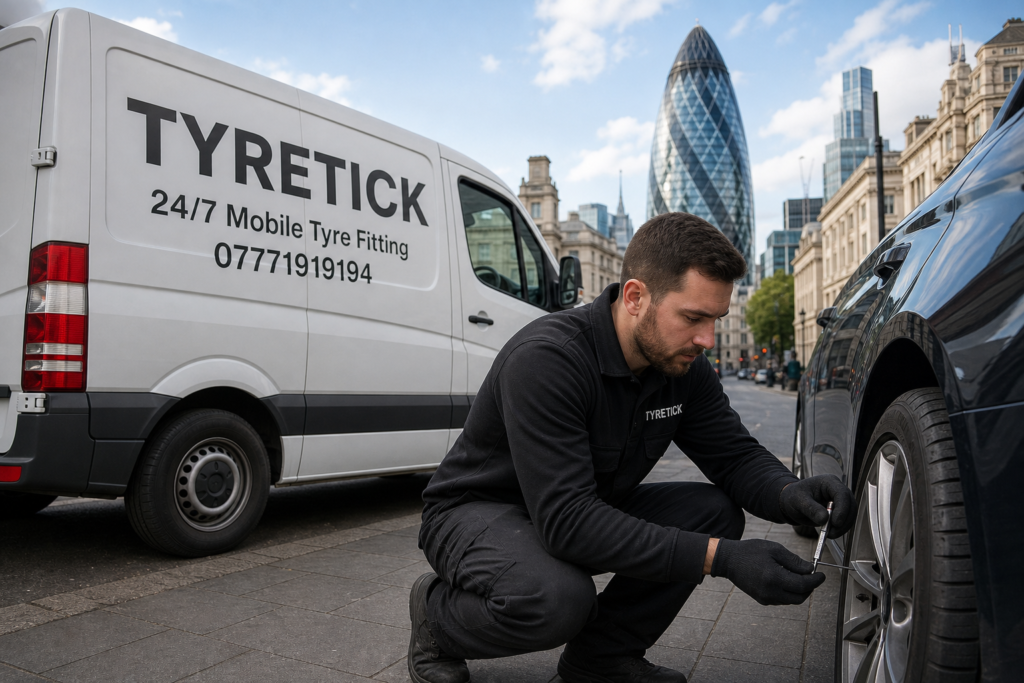
Tyre tread depth is one of the easiest tyre checks you can do at home, but it’s also one of the easiest to get wrong. A quick glance at the outside edge doesn’t tell the whole story. You can miss a worn inner shoulder, a flat patch, or a tyre that’s already getting close to the legal limit.
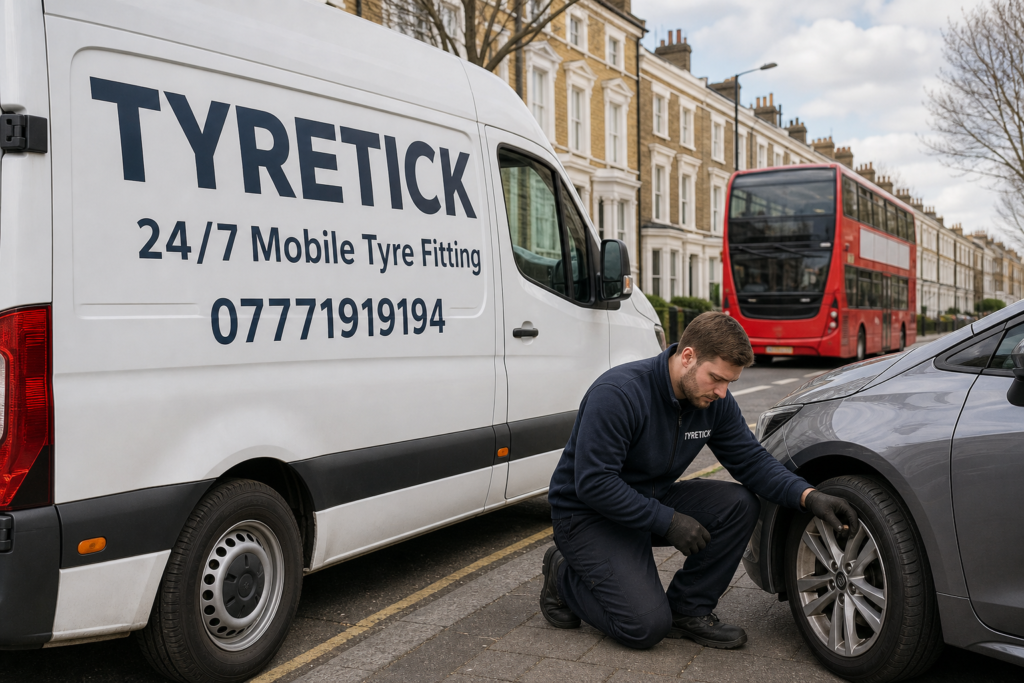
This guide explains how to measure your tread properly, where to check, what UK law says, and when it’s safer to get help. If you’d rather have a fitter come to you, Tyretick provides mobile tyre fitting in London at your home, workplace or roadside location.
Key takeaways
- The UK legal minimum for car tyre tread is 1.6mm across the central three-quarters of the tread, around the full circumference.
- Measure more than one groove and more than one point around each tyre, not just the easiest bit to see.
- A tyre tread depth gauge is the most accurate tool for home checks, while the 20p test is useful for a quick warning.
- Uneven wear, cracks, bulges or exposed cords can make a tyre unsafe, even if some tread remains.
- If a tyre is borderline, damaged or losing pressure, a mobile fitter can inspect it and advise whether repair or replacement is needed.
What Is Tyre Tread Depth and Why Does It Matter?
Tread depth is the amount of rubber groove left between the road-facing blocks of your tyre. Those grooves help clear water from the contact patch, which is the small area of tyre touching the road.
As the tread wears down, the tyre has less ability to push water away. In wet weather, that can mean longer stopping distances and a higher risk of aquaplaning. London roads can be hard on tyres too, with potholes, speed cushions, tight kerbs and lots of stop-start braking.
Tread isn’t the only condition check that matters. The sidewall, valve, rubber age and wear pattern all count as well. For more background on the effect of worn rubber, see Tyretick’s guide to worn tyres, braking and fuel economy.
How to Measure Tyre Tread Depth at Home
The best way to measure tyre tread depth is with a small depth gauge. They’re inexpensive, easy to keep in the glovebox and far more accurate than judging by eye.
Using a tread depth gauge
- Park on flat ground, switch off the engine and apply the handbrake.
- Turn the steering if needed so you can see the front tyre grooves clearly.
- Place the gauge probe into a main groove, not on top of a tread block.
- Press the base of the gauge flat against the tread.
- Read the measurement in millimetres and write it down.
- Repeat across the inner, centre and outer grooves, then check another point around the tyre.
Do the same on all four tyres. If you’re getting ready for a long drive, it’s worth pairing this with Tyretick’s five-minute tyre check before a long journey.
Using the 20p test
The 20p test is a quick warning check. Place a 20p coin into the main tread grooves. If you can see the outer band of the coin, the tread may be below the legal limit and should be checked with a gauge or by a professional.
The coin test isn’t a full inspection. It won’t tell you if one shoulder is wearing faster, if the tyre is getting close to 2mm, or if there’s damage on the sidewall or elsewhere on the tyre.
Where Should You Check Tyre Tread Depth on Each Tyre?
Don’t rely on the most visible groove. A tyre can look fine from the outside and still be badly worn on the inner edge. A proper check means measuring across the width of the tyre and at more than one point around it.
Use this simple pattern:
- Inner groove: often missed because it’s harder to see.
- Centre groove: useful for spotting pressure-related wear.
- Outer groove: often affected by cornering, kerbs and alignment issues.
- Several points around the tyre: helps reveal flat spots, local damage or uneven patches.
If one side is much lower than the other, the tyre may be pointing to an alignment, suspension or pressure issue. Tyretick explains those warning signs in more detail in what uneven tyre wear is quietly telling you.
| What you find | What it may mean | What to do |
|---|---|---|
| Even wear across the tyre | Normal wear pattern | Keep checking regularly and before long journeys |
| Centre tread much lower | Possible over-inflation or pressure history issue | Check pressures and inspect the tyre more often |
| Both shoulders worn | Possible under-inflation or heavy cornering | Check pressure and look for sidewall damage |
| One edge badly worn | Possible alignment or suspension issue | Have the tyre and vehicle checked before fitting new tyres |
| Cracks, bulges or cords | Structural or age-related tyre damage | Don’t ignore it; arrange professional help |
What Does UK Tyre Tread Law Say?
UK tyre tread law says car tyres must have at least 1.6mm of tread across the central three-quarters of the tread width and around the entire circumference. The tyre must also be suitable for the vehicle and free from dangerous defects.
That legal limit is a minimum, not a target. Many drivers choose to replace tyres before they reach 1.6mm because wet grip reduces as tread gets shallow. If your readings are close to the limit, it’s better to plan ahead than wait for an MOT failure or a roadside problem.
For a wider legal overview, including other reasons a tyre can be unlawful, read Tyretick’s guide to what makes tyres illegal in the UK.
Pressure affects wear as well. Incorrect pressure can shorten tyre life and hide developing problems. If you’re not sure what your pressures should be, check the vehicle handbook, fuel flap sticker or Tyretick’s guide to what your tyre pressure should be.
When Should You Replace Instead of Keep Driving?
If your tread is close to the legal limit, replacement is usually the sensible next step. That’s especially true if you drive in heavy rain, carry family passengers, use motorways or rely on the car for work.
Replace rather than keep driving if you find:
- Any reading at or below 1.6mm in the required tread area.
- Large differences between inner and outer tread readings.
- Bulges, cuts, cracks or visible cords.
- A tyre that is old, perished or repeatedly losing pressure.
- A puncture combined with low tread or sidewall damage.
Age matters because rubber hardens and cracks over time. If the tyre looks perished, has cracks between the tread blocks or has an old date code, read Tyretick’s guide to reading tyre date codes and spotting perished rubber.
If only one or two tyres are worn, you may wonder whether to change a pair or the full set. The answer depends on tread levels, axle position, vehicle type and manufacturer guidance. Tyretick covers this in whether to replace two tyres or all four.
Can a Mobile Fitter Check and Replace Low-Tread Tyres?
Yes. A mobile fitter can inspect the tyre, confirm the size and condition, and fit a replacement at a suitable location if one is needed. This is useful if the tyre is close to illegal, badly worn on one edge, or unsafe to drive to a garage.
Tyretick provides mobile tyre fitting across London, including mobile tyre fitting London services for homes, workplaces and roadside situations. If you’re searching for mobile tyre fitting near me, same day tyre fitting London or tyre fitting at home, a mobile appointment can save you from driving on questionable rubber.
Low tread isn’t always a repair job. A nail in the central tread may be repairable if the tyre is otherwise legal and safe, but damage near the shoulder, sidewall damage or very low tread usually means replacement. Tyretick also provides a tyre repair service and tyre puncture service, so the fitter can advise whether a repair is suitable.
For urgent flats, unsafe tyres or night-time problems, Tyretick offers 24/7 emergency mobile tyre fitting and mobile tyre replacement. You can also read more about same-day mobile tyre fitting in London and how mobile tyre replacement works step by step.
Frequently Asked Questions
How often should I check tyre tread?
Check your tread at least monthly and before long journeys. Also check after hitting a pothole, clipping a kerb, or noticing vibration, pulling, pressure loss or a change in road noise.
Is 2mm of tread legal in the UK?
For car tyres, 2mm is above the 1.6mm legal minimum if it applies across the required area and around the full circumference. It is close to the limit, though, so it’s wise to plan replacement.
Can tyres be illegal even if the tread looks fine?
Yes. A tyre can be unsafe or illegal because of cuts, bulges, exposed cords, incorrect size, severe cracking or other defects. Tread depth is only one part of tyre condition.
Should I check tread on spare tyres?
Yes, if your car has a usable spare. Check its tread, pressure, age and condition. A spare that’s flat, cracked or damaged may not help when you need it.
Can a tyre with low tread be repaired after a puncture?
Usually not if the tyre is at or near the legal limit, or if there’s damage outside the safe repair area. A fitter must inspect the tyre before deciding between repair and replacement.
Need a Tyre Tread Check or Replacement in London?
If your tyre tread depth is low, uneven or hard to measure safely, Tyretick can help at your home, workplace or roadside. Call 07771919194 or use the Tyretick contact page to book a fitter.
A quick check now can help you avoid a stressful breakdown later. If the tyre is safe to repair, Tyretick will tell you. If it needs replacing, a mobile fitter can fit the right tyre without you driving on worn or damaged rubber.