Skip to content

Worn tyres can change how your car brakes, grips and uses fuel, even before they reach the legal limit. This guide explains what happens as tread wears down, what you can check at home, and when it is safer to arrange a replacement.
Tyres are the only parts of your car touching the road, so small changes make a big difference. If your car feels less settled in the wet, takes longer to stop, or seems to be using more fuel than usual, start with the tyres.
Key takeaways
- The UK legal minimum tyre tread depth for cars is 1.6mm across the central three-quarters of the tread, around the full circumference.
- Grip can drop before a tyre becomes illegal, especially on wet London roads.
- Underinflation, uneven wear and old rubber can harm braking and fuel economy.
- A quick monthly tyre safety check helps you spot problems before they become urgent.
- Tyretick can provide mobile tyre fitting at home, work or roadside when replacement is needed.
Why do worn tyres matter for everyday driving?
Tyre tread is there to move water away from the contact patch, help the tyre bite into the road, and keep the car stable when you steer or brake. As the tread wears down, there is less depth left to do that job properly.
You will usually notice it most in rain, standing water and stop-start traffic. London drivers get plenty of all three: wet junctions, bus lanes, potholes, speed humps and sudden braking. A tyre that felt fine in summer can feel much less reassuring on a cold, wet evening.
Wear can also change how the tyre sits on the road. If the tread is low on one shoulder, the car may pull, feel vague, or wear the tyre even faster. If you have spotted odd patterns, our guide to what uneven tyre wear is telling you explains the common causes.
How do worn tyres affect braking?
Braking depends on grip. When tread is shallow, the tyre cannot clear water as well, which raises the risk of sliding or aquaplaning in wet conditions. Your brakes may be working perfectly, but they still need the tyres to hold the road.
Modern cars can hide tyre problems for a while. ABS, traction control and stability systems help you keep control, but they cannot create grip if the tyre cannot find it. If those systems start cutting in more often than usual, treat it as a warning sign.
Worn tyre symptoms while braking
- The car takes longer to slow down in rain.
- The ABS pulses during normal wet stops.
- The steering feels light or nervous when braking.
- The car pulls to one side under braking.
- You can see cracks, bulges, cuts or exposed cords.
If braking feels unsafe, do not keep driving just to test it. Park somewhere safe and arrange a professional check. If the issue is a puncture or pressure loss rather than tread wear, a mobile tyre puncture service in London may be able to help.
Can worn tyres reduce fuel economy?
Yes, tyres can affect fuel use, although they are only one part of the picture. Pressure, tyre type, wheel alignment, load, driving style and road surface all matter. Still, poor tyre condition can make the engine work harder than it should.
Low pressure increases rolling resistance, which can use more fuel and heat the tyre. Uneven wear can also create drag, noise and vibration. If you are comparing fuel-efficient tyres, the EU/UK tyre label is useful, but real-world condition matters just as much as the label on a new tyre.
| Tyre issue | What you may notice | Why it matters |
|---|---|---|
| Low tread | Less confidence in rain | Reduced water clearance and wet grip |
| Underinflation | Heavy steering or poor economy | More rolling resistance and heat |
| Uneven wear | Pulling, vibration or noise | Less stable contact with the road |
| Old or cracked rubber | Visible cracking or hard rubber | Grip and strength may be reduced |
For more on ratings, see our plain-English guide to fuel, grip and noise tyre labels. For pressures, check what your tyre pressure should be and use the car maker’s recommended settings.
How should you check tyre tread depth?
A proper tyre tread depth check is quick and worth doing every month, before long journeys, and after a hard pothole hit. Check all four tyres, not just the one that looks worst, because wear can vary from axle to axle and from inner edge to outer edge.
- Park on level ground with the handbrake on.
- Turn the steering if needed so you can see the front tyre shoulders.
- Use a tread depth gauge, or check the built-in tread wear indicators in the grooves.
- Measure in several places across the tyre: inner edge, centre and outer edge.
- Look for cuts, bulges, nails, sidewall damage and cracking.
The legal minimum for cars in the UK is 1.6mm across the central three-quarters of the tyre, around the full circumference. That is the legal floor, not a target to aim for. Many drivers choose to replace earlier, especially if they do regular motorway driving or spend a lot of time on wet roads.
If you want a broader checklist, use our five-minute tyre check before a long journey. If you are unsure whether a tyre is already illegal, read what makes tyres illegal in the UK.
Should a worn tyre be repaired or replaced?
A worn tyre is usually a replacement issue, not a repair issue. A repair may be possible for some punctures in the repairable tread area, but it will not restore low tread, cracked rubber, sidewall damage or a tyre that has been driven flat.
There is also a safety judgement to make. If a puncture repair would leave you with a tyre close to the legal limit, replacement may be the more sensible option. A professional tyre repair service should inspect the tyre properly before deciding.
If one tyre is badly worn, check the opposite tyre on the same axle too. Matching tyres across an axle helps braking and stability. Our guide on whether to replace two tyres or all four explains the main options.
Tyre age matters as well. A tyre can have tread left but still be unsafe if the rubber is perished or damaged. If you are not sure how old yours are, see how to read the tyre date code.
When should you book tyre help?
Book help if your tread is near the legal limit, braking feels worse, the car pulls, you can see damage, or one tyre keeps losing pressure. Do not wait for a flat tyre if the warning signs are already there.
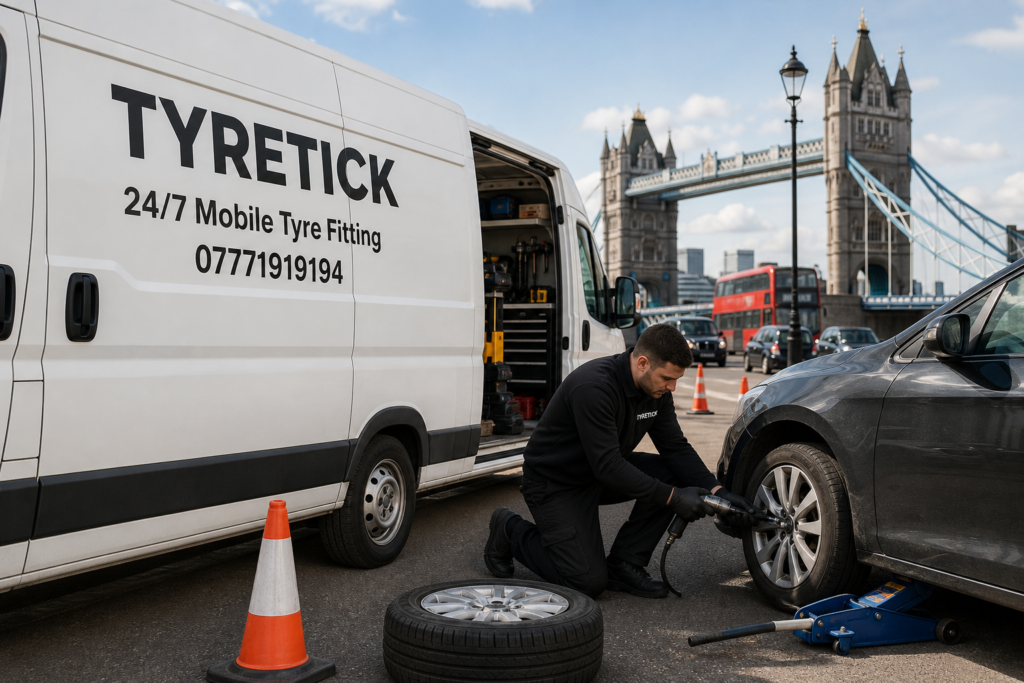
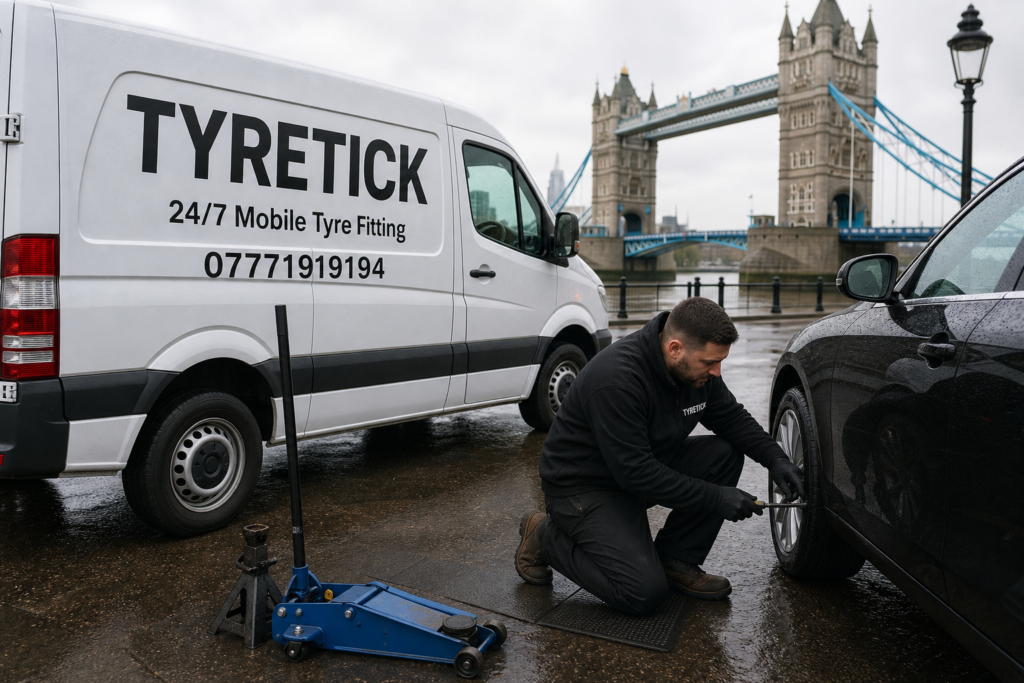
Tyretick offers mobile tyre fitting in London, so you can have tyres fitted at home, at work or at the roadside. This is useful if the car is unsafe to drive to a garage. If you searched for mobile tyre fitting near me because you have just spotted a problem, ask for advice before driving any further.
For urgent problems, a 24/7 emergency mobile tyre fitting service can help when a tyre has failed out of hours. Tyretick also provides mobile tyre replacement and same day tyre fitting London where suitable tyres and fitter availability allow. You can read more about same-day mobile tyre fitting London if you need a practical service overview.
Frequently Asked Questions
Are worn tyres always illegal?
No. A tyre may be legal but still worn enough to affect wet grip and driver confidence. The legal minimum is 1.6mm for cars across the central three-quarters of the tread, around the full circumference.
Can worn tread make my car use more fuel?
It can contribute, especially if the wear is linked to low pressure, poor alignment or uneven contact with the road. Check pressures first, then inspect tread and wear patterns.
Do front tyres wear faster than rear tyres?
On many front-wheel-drive cars, the front tyres often wear faster because they handle steering, braking and power. Wear patterns vary by vehicle, driving style and maintenance.
Can I replace just one worn tyre?
Sometimes, but it depends on the condition and tread depth of the tyre on the opposite side of the same axle. Matching tyres on an axle is usually better for balanced braking and handling.
What if my tyre is worn and punctured?
A fitter will need to inspect it. If the tread is too low, the sidewall is damaged, or the tyre has been driven flat, replacement is usually safer than repair.
Need worn tyres checked or replaced in London?
If you are worried about tyre wear, Tyretick can come to your home, workplace or roadside and check what is safe to do next. For mobile tyre fitting, puncture help or replacement tyres, call 07771919194 or contact Tyretick to book a fitter.