Skip to content

Replace two tyres or all four? It’s a question we hear a lot, usually after one tyre has worn out, picked up damage or started losing pressure. The right answer depends on tread depth, tyre age, axle position, the type of vehicle you drive and whether the remaining tyres still match safely.
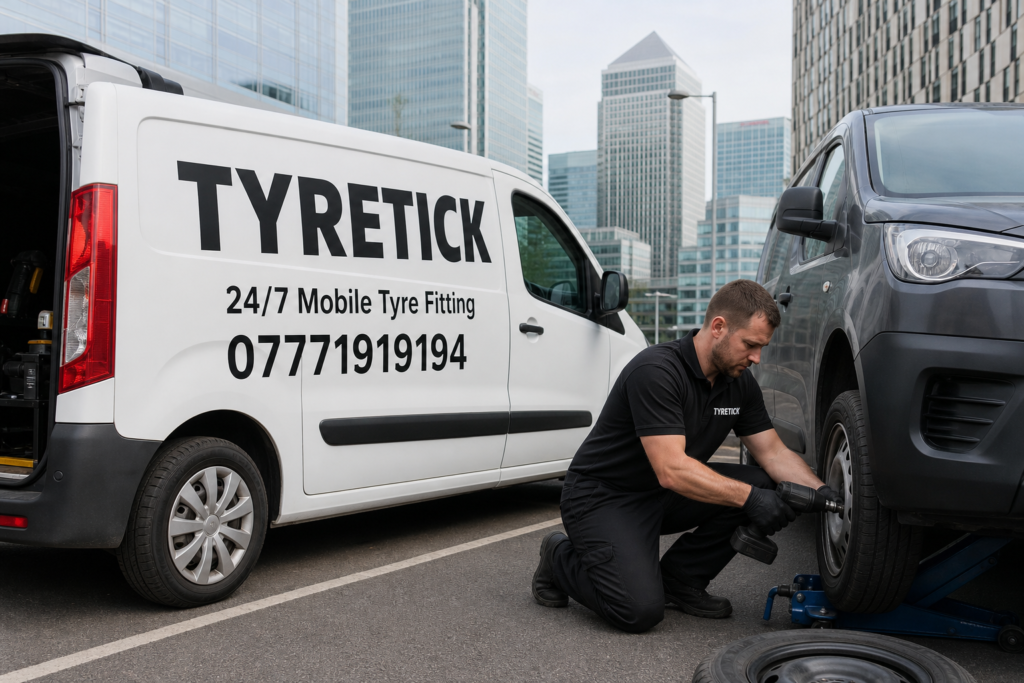
This guide explains the signs your tyres need changing, when a pair is enough and when a full set is the better call. If you’d rather not drive to a garage on questionable rubber, Tyretick provides mobile tyre fitting in London at homes, workplaces and safe roadside locations.
Key takeaways
- You can often replace two tyres if the other two are legal, healthy and reasonably close in tread depth.
- New tyres should usually be fitted as matching pairs on the same axle for predictable handling.
- Change all four tyres if they’re old, heavily worn, mismatched or your vehicle manufacturer requires it.
- Sidewall damage, exposed cords, bulges and illegal tread mean the tyre needs attention straight away.
- A mobile fitter can check, supply and fit tyres where the car is parked, provided the location is safe.
Should You Replace Two Tyres Or All Four?
For many everyday cars, it’s perfectly reasonable to replace two tyres rather than all four, as long as the remaining tyres are still in good condition. The important bit is balance: the two tyres on each axle should be the same size, speed rating and load rating, and ideally the same brand and tread pattern.
If the front tyres are worn but the rear pair still has plenty of safe tread, a same axle tyre replacement can make sense. If all four tyres are close to the legal limit, cracked, old or wearing unevenly, a full set is usually the safer choice and may save you booking another fitting shortly afterwards.
Some four-wheel drive, all-wheel drive and performance cars are more sensitive to differences in rolling circumference. Check the vehicle handbook if you’re unsure, especially if your car uses staggered sizes or has manufacturer-specific tyre requirements.
What Signs Mean Your Tyres Need Replacing?
The easiest sign to spot is low tread. In the UK, car tyres must have at least 1.6mm of tread across the central three-quarters of the tyre and around the full circumference. If you’re getting close to that limit, don’t wait until the tyre is illegal.
Damage can be just as serious as worn tread. Look for cuts, bulges, sidewall cracks, exposed cords, nails close to the shoulder or repeated pressure loss. If you’re not sure what counts as unsafe, read Tyretick’s guide to what makes tyres illegal in the UK.
- Low tread: wet braking and water clearance get worse as tread wears down.
- Uneven wear: one edge may wear faster because of pressure, suspension or alignment issues.
- Old rubber: tyres can harden and crack even when there’s tread left.
- Vibration: damage, imbalance or tyre deformation can come through the steering wheel.
- Slow pressure loss: a puncture, leaking valve or rim issue may be to blame.
If a tyre keeps losing air after a repair, a slow puncture investigation can show whether another repair is possible or replacement is the safer route.
When Is It Safe To Replace Two Tyres?
It’s usually safe to replace two tyres when the other two are legal, undamaged and not too different in tread depth. This often happens on front-wheel-drive cars, where the front tyres do most of the steering, braking and pulling.
Many tyre professionals prefer to fit the newest or deepest tread tyres to the rear axle, unless the vehicle maker says otherwise. That helps rear-end stability in wet conditions, especially during braking or cornering.
Before making the decision, compare all four tyres properly:
- Check tread depth across each tyre, not just the most worn-looking one.
- Confirm the tyre sizes and ratings printed on the sidewalls.
- Look for cracks, bulges, sidewall cuts and exposed cords.
- Check the tyre date code if the tyres are several years old.
- Ask the fitter whether the remaining pair is safe to keep using.
If age is part of the decision, Tyretick’s guide to reading tyre date codes and spotting perished rubber explains what to check.
Replace Two Tyres Or Choose A Full Set?
The table below gives a simple way to think about your options. It doesn’t replace a proper inspection, but it does show what a mobile fitter will be looking at before giving advice.
| Situation | Likely option | Why it matters |
|---|---|---|
| Two tyres worn, two tyres healthy | Replace two tyres | Keeps the car balanced when fitted as an axle pair. |
| All four tyres near 1.6mm | Replace all four | Avoids driving on tyres that are close to illegal. |
| One tyre damaged beyond repair | Replace one or two | Depends on tread difference and axle matching. |
| Old, cracked or perished tyres | Replace affected tyres, often all four | Rubber condition can matter even when tread looks good. |
| Four-wheel drive with strict tyre rules | Check handbook first | Some systems need closely matched tyres. |
If your tyres are wearing unevenly, new rubber alone may not fix the cause. Read what uneven tyre wear is telling you before fitting another set.
How Do You Choose The Right New Tyres?
Start with the correct tyre size, load rating and speed rating for your car. You’ll find these details on the tyre sidewall, and often in the vehicle handbook or on a sticker inside the door frame. If the numbers look confusing, see Tyretick’s guide to checking your tyre size.
Then think about your day-to-day driving. London drivers often deal with short trips, speed humps, potholes, wet roads and stop-start traffic. A tyre with good wet grip and decent durability may be a better buy than simply choosing the cheapest option available.
Tyre labels can help you compare wet grip, fuel efficiency and external noise. They don’t tell the whole story, but they’re useful when you’re choosing between similar tyres. Tyretick has a clear explanation of tyre label ratings.
If you’re weighing up budget, mid-range and premium tyres, consider your mileage, vehicle weight and driving style. For a wider buying overview, read the best tyres for your car guide and the comparison of budget vs premium tyres.
What If Only One Tyre Is Damaged?
If one tyre has a puncture, it may be repairable, but only if the damage is in a safe repair area and the tyre hasn’t been driven flat or damaged internally. A professional tyre repair service will inspect it before making that call.
A tyre puncture service may be enough for a simple nail in the central tread area. Damage to the sidewall, shoulder, bead or internal structure usually means replacement. If it’s a run-flat, run flat tyre replacement is often recommended after the tyre has been driven with little or no pressure, depending on the tyre and manufacturer guidance.
Sometimes one new tyre can be fitted, especially if the opposite tyre on the same axle is nearly new. If the other tyre is already half-worn, it may be better to fit a pair so the axle has a more even level of grip.
How Can Mobile Tyre Replacement Help?
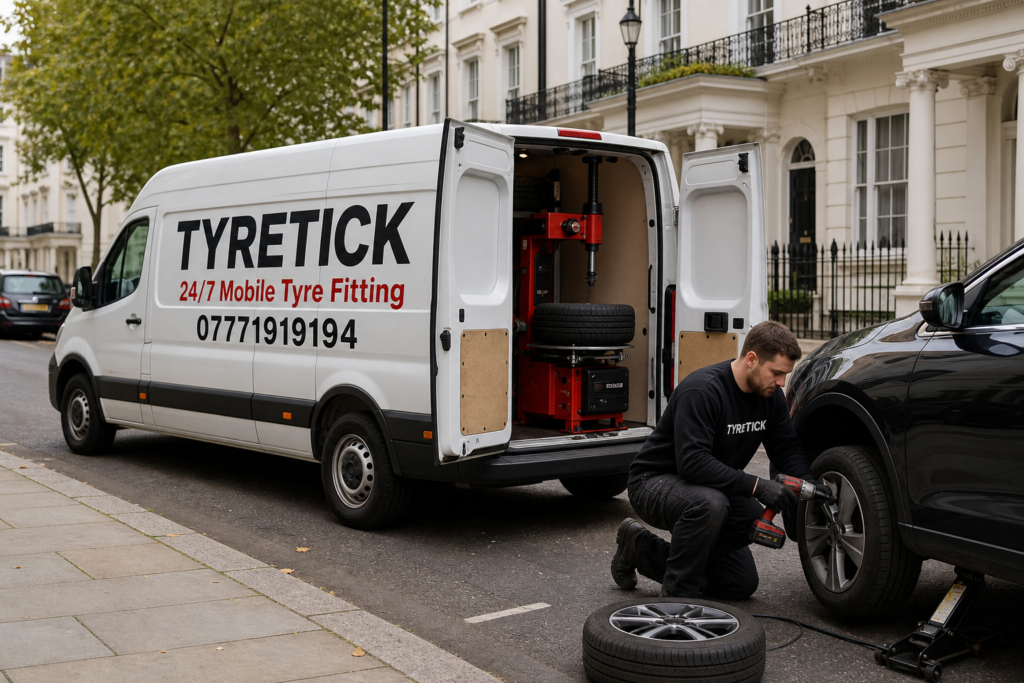
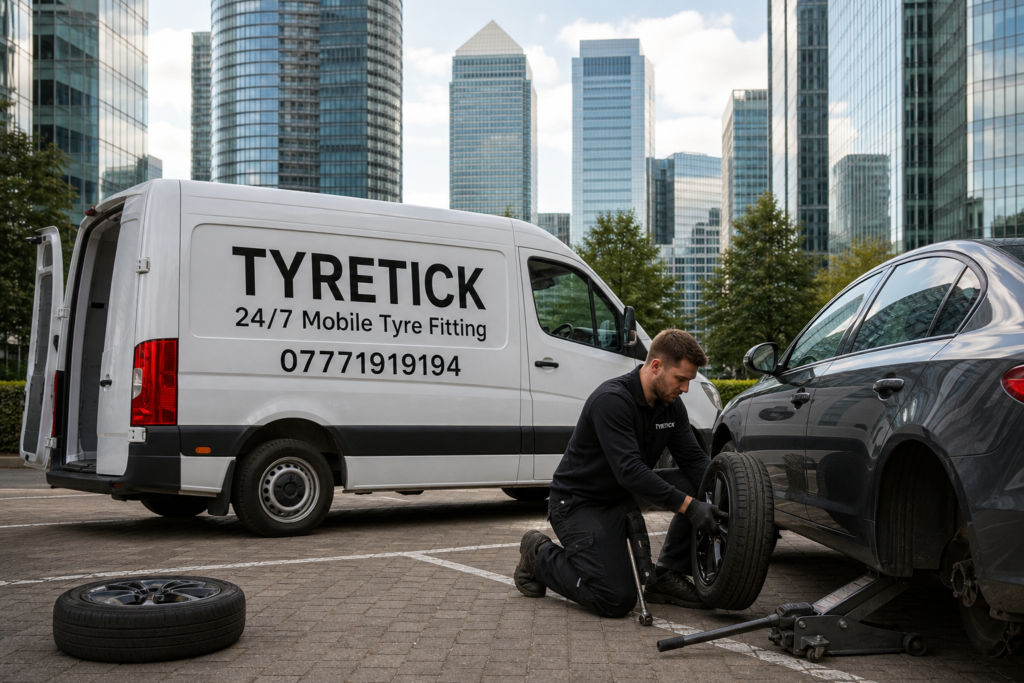
Mobile tyre replacement is handy when your tyres are unsafe, flat or too worn to drive to a garage. With mobile tyre replacement near you, a fitter comes to the car, removes the old tyre, fits the new one and checks the wheel before you drive away.
You can arrange this at home, at work or at a safe roadside spot. If you’re planning ahead, tyre fitting at home doesn’t always need the setup drivers expect, but the fitter will need safe access around the vehicle.
Balancing matters after new tyres are fitted. Poor balance can cause vibration and uneven wear, so ask about mobile wheel balancing near me if your tyres are being fitted away from a workshop. Tyretick also helps drivers looking for wheel balancing London support as part of a mobile fitting visit.
For urgent tyre problems, 24/7 emergency mobile tyre fitting can be the safest option, especially if the car is at the roadside or can’t be driven legally. Mobile tyre fitting London services help reduce the risk of driving on a damaged or illegal tyre.
Frequently Asked Questions
Is it legal to replace only two tyres?
Yes, replacing only two tyres can be legal if all tyres on the car meet UK legal requirements and are suitable for the vehicle. The two new tyres should normally be fitted as a matching pair on the same axle.
Should new tyres go on the front or rear?
Many tyre professionals fit the best tyres to the rear axle for stability in wet conditions, unless the vehicle manufacturer gives different instructions. Your fitter can advise based on your car and the condition of the tyres already fitted.
Can I mix tyre brands?
Mixing brands is not always illegal, but it’s better to keep matching tyres on the same axle. Avoid mixing different sizes, load ratings, speed ratings or tyre types unless the vehicle manufacturer specifies it.
Do I need wheel balancing with two new tyres?
Yes, new tyres should be balanced after fitting. Balancing helps prevent steering vibration, protects suspension components and supports even tyre wear.
Can a puncture be repaired instead of replacing the tyre?
Sometimes. A repair depends on where the puncture is, how large it is and whether the tyre has been driven flat. Sidewall and shoulder damage normally mean replacement.
Need Help Choosing Or Fitting New Tyres?
If you’re unsure whether to replace two tyres, one tyre or the full set, Tyretick can inspect the tyres and explain your options clearly. For mobile tyre fitting, emergency replacement or advice from a fitter, call 07771919194 or use the Tyretick contact page to book help.