Skip to content

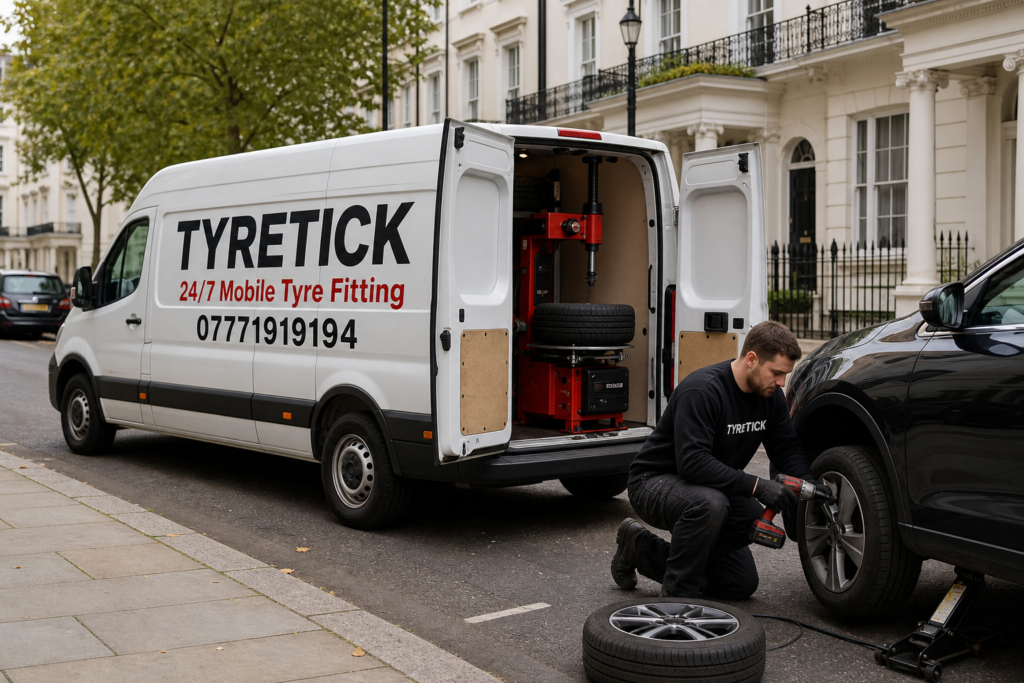
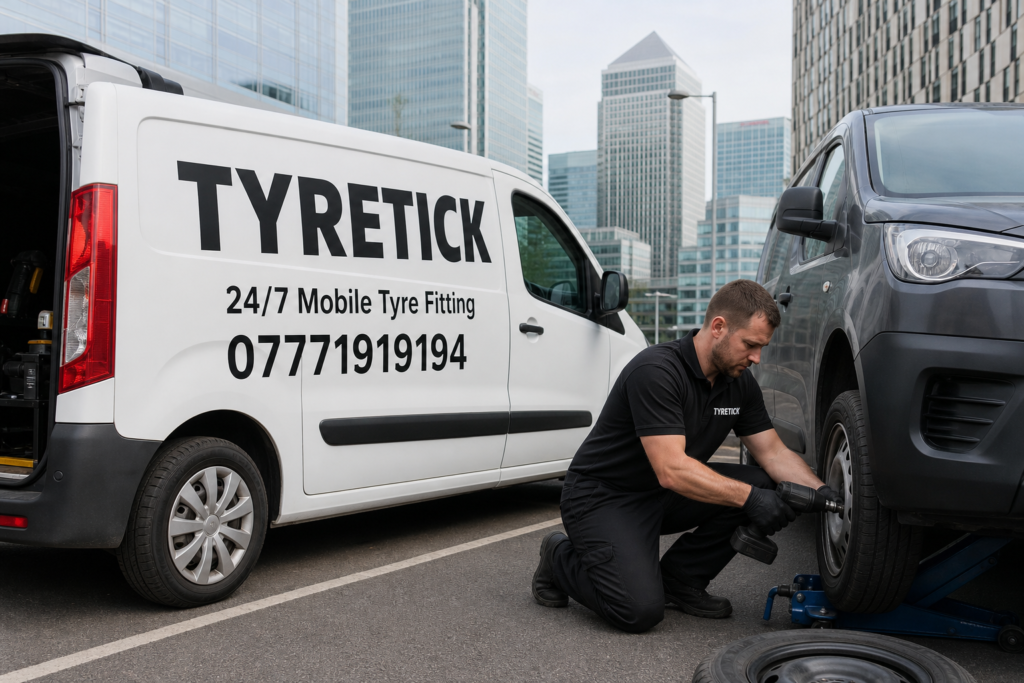
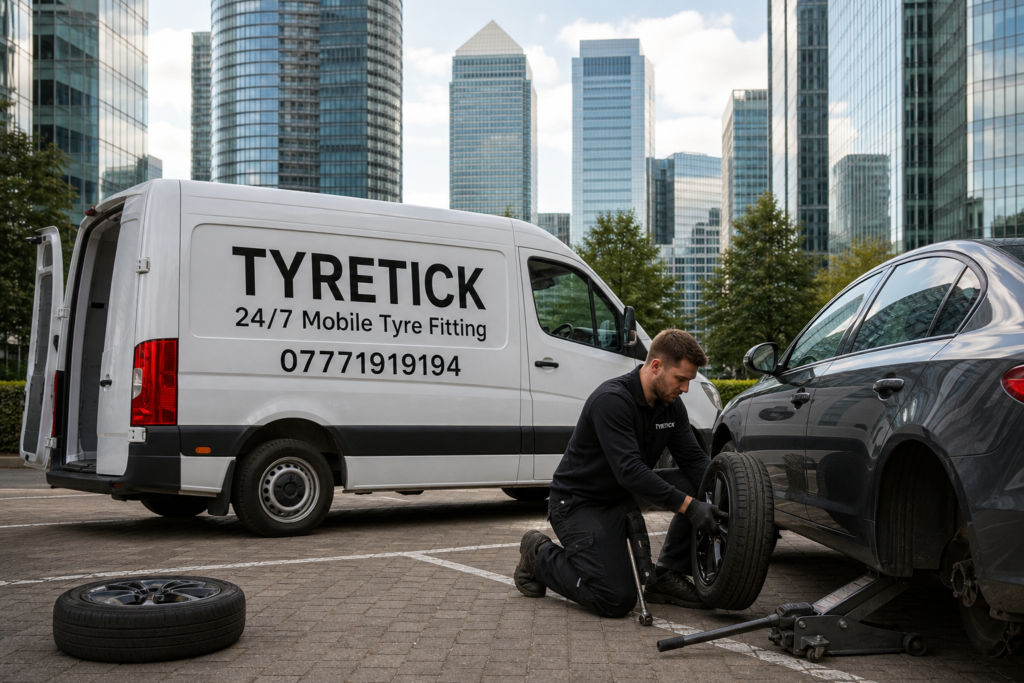
Tyre fitting at home is often easier than drivers expect, but it helps to know what a mobile fitter needs before they arrive. The good news is that a professional mobile tyre van is built to do the job without using your garage tools, your jack or your household electricity.
In this guide, we explain whether you need a driveway, power socket, water, parking permit or special access. You will also learn what to do if your car is on the road, in a shared car park, at work or stuck at the roadside.
Key takeaways
- Most mobile tyre fitting work can be done without access to your home power supply.
- A driveway is helpful, but not always essential if there is a safe, legal place to work.
- The fitter needs enough room around the wheel being changed and a stable surface for lifting the vehicle.
- If the car is on a busy road, safety may decide whether the job can be done there.
- Have your locking wheel nut key, tyre size and contact details ready before the fitter arrives.
Tyre fitting at home: do you need a power socket?
In most cases, no. A proper mobile tyre fitting van carries the specialist equipment needed to remove wheels, fit tyres, inflate them and balance them. That equipment is designed for mobile work, so the fitter should not need to plug into your house.
This is one of the main reasons drivers choose mobile tyre fitting London services. You do not need to clear the garage, find an extension lead or move the car close to an outdoor socket.
What equipment does the van normally carry?
A mobile tyre van is usually set up with tyre changing equipment, an air supply, wheel balancing equipment, jacks, torque tools and safety gear. The fitter brings the equipment to the car, rather than taking the car to a workshop.
If you are booking because of a puncture, explain what has happened when you call. A tyre repair service may be possible if the damage is in a repairable area, but sidewall damage, severe run-flat damage or a badly shredded tyre usually means replacement.
Do you need a driveway for tyre fitting at home?
A driveway is ideal for tyre fitting at home, but it is not always required. What matters most is that the fitter can park nearby and work safely around the vehicle.
A flat private driveway gives good control over traffic, pedestrians and space. If you do not have one, a quiet residential street or allocated bay may still work, as long as the vehicle can be accessed safely and legally.
What makes a good fitting spot?
- A firm, level surface such as tarmac, concrete or paving.
- Enough space beside the wheel for tools and safe movement.
- Room for the mobile van to park close enough to the car.
- No heavy traffic passing closely alongside the working area.
- No obstruction of emergency access, bus stops, junctions or crossings.
If you are unsure, look at what to check before booking a home tyre fitting service. It covers the basic information that helps a fitter decide whether your location is suitable.
Can mobile tyre fitting near me be done in a shared car park?
Yes, it can often be done in a shared residential car park, office car park or private bay, provided permission and safety are clear. If you searched for mobile tyre fitting near me because your car is not safe to drive, mention the exact parking situation when booking.
Shared car parks can be straightforward, but there may be extra issues such as barriers, height limits, narrow bays or private parking rules. The fitter may need a code, concierge access or clear directions to the vehicle.
| Location | Usually suitable? | What to check first |
|---|---|---|
| Private driveway | Often best | Clear space around the car and remove bins or obstacles |
| Shared residential car park | Often possible | Gate codes, bay access, parking rules and permission |
| Workplace car park | Often possible | Reception access, security rules and where the van can park |
| Public road outside home | Depends on safety | Traffic, road width, parking restrictions and lighting |
| Roadside after a flat | Case by case | Move to a safe place if possible and stay away from traffic |
If your appointment is at work, read what to know about mobile tyre fitting at your workplace. It explains how to make the visit easier for you, your employer and the fitter.
What space does a mobile fitter need around the car?
The fitter needs safe access to the damaged or worn tyre and enough room to lift the vehicle correctly. They also need to open the van equipment safely, move a wheel away from the car and work without being squeezed between traffic and the vehicle.
Before the appointment, try to park with the affected wheel facing an open side if you can do so safely. Leave the steering straight unless the fitter asks otherwise. If your car is very close to a wall, kerb, pillar or another vehicle, move it only if it is safe and legal to do so.
Simple steps before the fitter arrives
- Find your locking wheel nut key if your vehicle has locking nuts.
- Check the tyre size on the sidewall, or send a clear photo when asked.
- Remove heavy items from the boot if the spare wheel well or locking key is there.
- Tell the fitter about low suspension, damaged jacking points or previous wheel nut problems.
- Keep your phone on so the fitter can find you if access is unclear.
For a fuller checklist, use how to prepare your car for a mobile tyre fitting appointment. If you have lost the locking key, this guide to locking wheel nut removal when the key is missing is also useful.
Is tyre fitting at home possible if the tyre is completely flat?
Yes, tyre fitting at home can often be arranged even if the tyre is completely flat. Do not drive on the flat tyre to create a better parking space, because this can damage the sidewall, wheel and suspension.
If the vehicle is blocking traffic or in a dangerous position, personal safety comes first. Move yourself and passengers away from traffic and call for advice. If you need flat tyre help London, explain where the car is, which wheel is affected and whether it can be accessed safely.
A flat tyre might need a repair or a replacement. A tyre puncture service can assess the damage, but not every puncture is legally or safely repairable. Damage near the sidewall, a large cut, exposed cords or signs that the tyre has been driven flat usually mean a new tyre is the safer choice.
If you are deciding between repair and replacement, see when a flat tyre can be repaired or must be replaced. For replacement steps, this guide to mobile tyre replacement explains the process.
What if you need roadside tyre repair London instead?
Roadside jobs are different from driveway jobs because the fitter has to judge traffic risk, lighting, road layout and where the van can stop. Roadside tyre repair London may be possible in a safe lay-by, side street, car park or service area, but not every roadside position is suitable for fitting work.
If you get a flat on a busy road, do not stand beside the wheel or try to change it in live traffic. Put your hazard lights on, move away from the carriageway if it is safe, and call for guidance. A 24/7 emergency mobile tyre fitting service is there for urgent situations, but the fitter still needs a safe place to work.
If you are waiting at the roadside, read what happens during a roadside tyre repair. If you are not sure whether to keep moving, can you drive with a flat tyre explains the risks.
How do you make tyre fitting at home go smoothly?
The easiest appointments are the ones where the fitter has the right tyre size, a clear address and safe access. If you need same day tyre fitting London, give as much detail as possible when you call so the correct tyre and equipment can be arranged.
It also helps to describe the vehicle accurately. Say whether it is a car, SUV, van, EV or run-flat tyre. If you are unsure of the tyre size, use how to check your tyre size before booking.
You do not usually need to watch every step, but someone should be contactable. The fitter may need the locking wheel nut key, permission to move the car slightly, or confirmation of which tyre is being replaced. If you want to understand the visit from start to finish, read what happens on the day of a mobile tyre fitting appointment.
Frequently Asked Questions
Do mobile tyre fitters need my electricity?
Usually, no. A professional mobile van is equipped for independent work and should not need your house power supply for standard tyre fitting.
Can a tyre be fitted if my car is parked on the street?
Often yes, but it depends on safety, road width, traffic and parking rules. If the position is unsafe, the fitter may advise moving to a safer nearby place if the car can be moved without damaging the tyre.
Do I need to be at home during the fitting?
You should be reachable and able to provide access, the locking wheel nut key and any permission needed. Some situations may require you to be present, especially in private or controlled parking areas.
What if my parking area has a height barrier?
Tell the fitter before they travel. Mobile tyre vans need suitable access, and a height barrier, narrow ramp or underground car park can affect whether the job can be completed in that exact spot.
Will the fitter check my other tyres?
You can ask for the other tyres to be checked while the fitter is there. UK car tyres must have at least 1.6mm of tread across the central three-quarters of the tyre and around the full circumference.
Book tyre fitting at home with Tyretick
If you need tyre fitting at home, at work or at the roadside in London, Tyretick can help with mobile tyre fitting, puncture assessment and emergency tyre replacement. Call 07771919194 and explain where the vehicle is parked, what has happened and the tyre size if you know it.
You can also contact Tyretick or book a fitter online. We will help you work out whether your driveway, street, workplace car park or roadside location is suitable before the fitter comes out.