Skip to content

Van tyre load rating is a small marking with a big job. If your van carries tools, stock, parcels, equipment or passengers, the tyres must be able to carry that weight safely.
Fit a tyre with too low a rating and you can end up with excess heat, faster wear and a higher risk of damage. In some situations, it may also leave the vehicle unsafe or unroadworthy. This guide is for London trades, couriers, fleet managers and small businesses that need clear tyre decisions without taking vans off the road for longer than necessary.
Key takeaways
- Always fit tyres with a load rating that meets or exceeds the vehicle maker’s requirement.
- Check the size, speed rating and load index before booking van tyre fitting London services.
- Overloading, under-inflation and kerb damage can quickly shorten van tyre life.
- Regular fleet tyre checks help spot uneven wear, low pressure and illegal tread early.
- Tyretick can bring mobile tyre fitting to your home, workplace or roadside in London.
What Is Van Tyre Load Rating?
Van tyre load rating is the maximum weight a tyre is designed to support when it is correctly inflated. You’ll usually see it as a load index number on the tyre sidewall, close to the tyre size and speed rating.
For example, a tyre might show 215/65 R16C 109/107T. The 109/107 part is the load index marking, and T is the speed rating. The letter C usually points to a commercial tyre, but you should still check the full specification rather than guessing from one marking.
The safest approach is to match the vehicle manufacturer’s requirement. You can learn more about sidewall codes in Tyretick’s guide to reading tyre markings. If you’re not sure about the size, check our guide on how to check your tyre size before ordering replacements.
Why Van Tyre Load Rating Matters For Business Vehicles
A working van lives a harder life than most cars. It may have racking, ladders, tools, parcels, cleaning kit, building materials and two or three people on board. All of that weight goes through four small patches of rubber touching the road.
If the rating is too low, the tyre can flex more than it should and run hotter. That can affect stability, braking and steering feel, especially when the van is fully loaded or travelling at motorway speeds. A tyre that looks fine at a glance may still be wrong for the vehicle.
There’s also the business side. A van stuck with tyre damage can mean missed jobs, late deliveries and a driver waiting around instead of earning. Tyretick’s article on how London fleets reduce downtime with mobile tyre fitting explains why planned support can save hassle.
How To Check Van Tyre Load Rating Before Booking
Before arranging mobile tyre replacement, gather a few details. It helps the fitter choose suitable commercial vehicle tyres and reduces the chance of the wrong tyre being ordered for the van.
- Check the tyre sidewall for the full size, load index and speed rating.
- Look in the vehicle handbook, on the door sticker or inside the fuel flap for the recommended tyre specification.
- Find the vehicle identification plate and note the gross vehicle weight and axle weights.
- Check whether the van needs reinforced, extra load or commercial “C” rated tyres.
- Tell the fitter if the van carries heavy tools, fixed racking, regular payloads or passenger loads.
The replacement tyre should meet or exceed the vehicle maker’s required rating. Don’t choose a lower-rated tyre just because it is available sooner or looks similar. For booking several vehicles, see how to arrange mobile tyre fitting for multiple vans.
Which Tyres Suit Vans, Fleets And Business Mileage?
The best tyre depends on how the van is used. A plumber working around central London needs strong sidewalls and good kerb resistance. A courier doing long motorway runs needs stability, even wear and the correct rating for repeated loads.
| Vehicle use | Tyre priority | What to check |
|---|---|---|
| City trades van | Kerb resistance and load capacity | Correct load rating, sidewall condition and pressure |
| Delivery van | Durability and even wear | Tread depth, alignment symptoms and daily pressure checks |
| Motorway business mileage | Heat control and stability | Approved speed rating, balanced wheels and correct inflation |
| Small fleet | Consistency and downtime control | Matched specifications, planned inspections and quick replacement options |
For staff cars and vans, consistency matters. Avoid mixing very different tyre types on the same axle, as it can affect handling and grip. If you’re replacing only some tyres, Tyretick’s guide on whether to replace two tyres or all four explains the main safety points.
When Is A Van Tyre Unsafe Or Due For Replacement?
UK law requires car tyres to have at least 1.6mm of tread depth across the central three-quarters of the tread and around the full circumference. Vans used on the road must also be kept in a safe, roadworthy condition, and many operators replace tyres before they reach the legal minimum.
Replace a van tyre if you can see deep cuts, exposed cords, a bulge, serious sidewall damage, heavy cracking or repeated pressure loss. Don’t keep driving on a tyre that has been run flat. Internal damage may be hidden, even if the outside looks usable.
A repair may be possible if the puncture is in the repairable tread area and the tyre structure is sound. A professional tyre repair service or tyre puncture service should inspect it first. For more on legal defects, read Tyretick’s guide to what makes tyres illegal in the UK.
How Do Pressure, Balancing And Inspections Affect Van Tyres?
Even the correct van tyre load rating cannot protect a tyre that is under-inflated. Low pressure increases heat and wear, while too much pressure can reduce comfort and change the way the tread contacts the road. Use the pressures listed for your van and its load condition.
Ask drivers to check pressures when the tyres are cold where possible, including the spare if the van carries one. A quick walk round can also catch nails, cuts, uneven wear and damage from kerbs. Tyretick’s guide to what your tyre pressure should be explains where to find the correct figures.
Vibration, uneven wear or a shaking steering wheel can point to balancing or another wheel issue. If you need wheel balancing London support after new tyres are fitted, see why mobile wheel balancing matters after tyre fitting.
Can Mobile Tyre Fitting Help London Fleets Stay Moving?
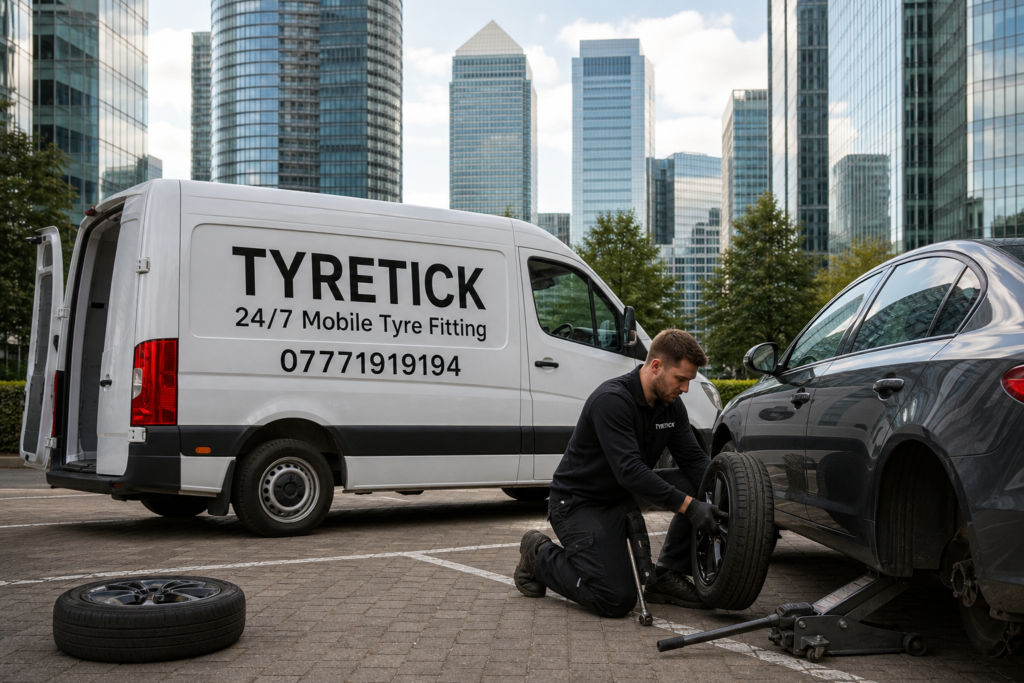
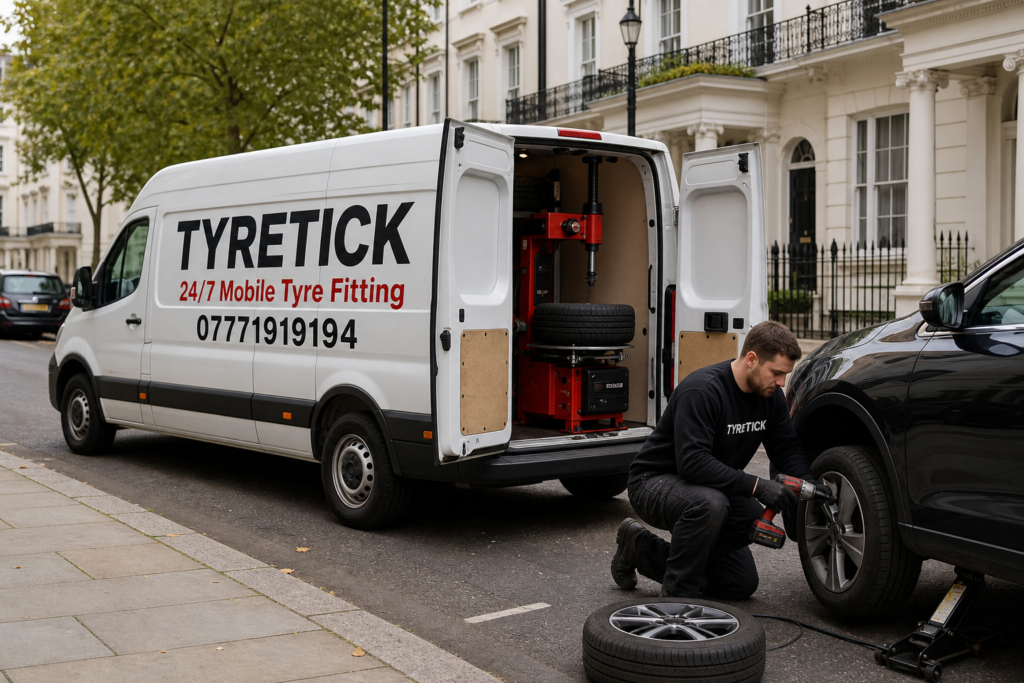
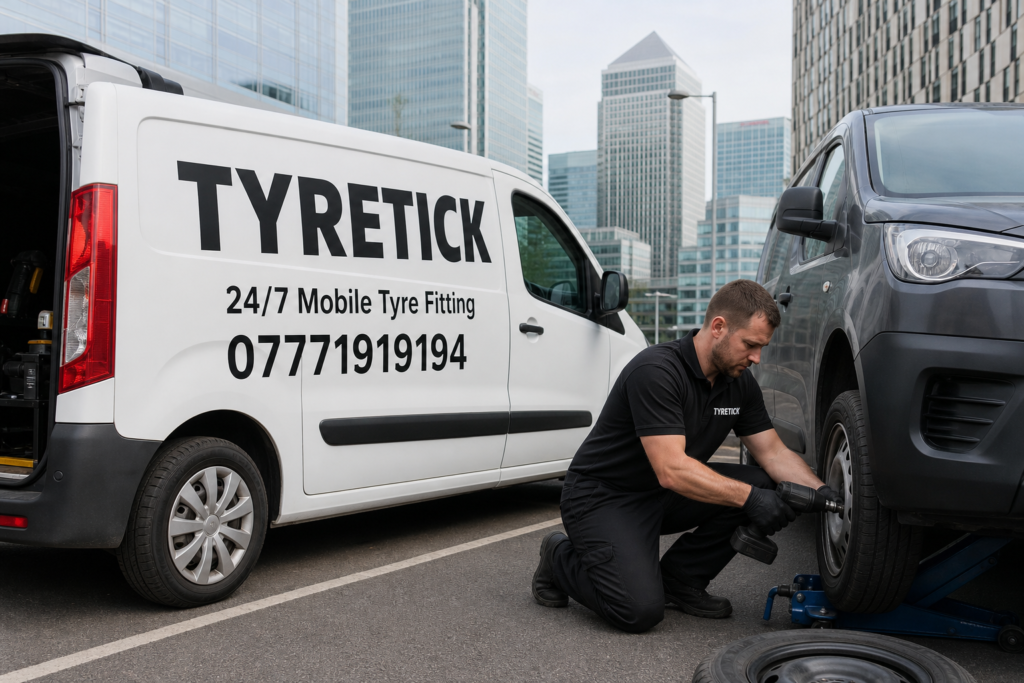
Yes. Mobile tyre fitting is useful for businesses because the fitter comes to the van, rather than sending the driver to a garage. Tyretick provides mobile tyre fitting in London at homes, workplaces and roadside locations.
That helps when a driver searches for mobile tyre fitting near me during a working day, or when a fleet manager needs mobile tyre fitting London support for several vehicles. For urgent tyre trouble, 24/7 emergency mobile tyre fitting can help when a van is stranded with a damaged tyre.
If a van is stuck at the roadside, get the driver to a safe place first and give clear location details. Tyretick has a separate guide on whether a mobile tyre fitter can repair a van tyre at the roadside.
Frequently Asked Questions
Can I fit car tyres to a van?
Only if they meet the exact specification required for the van, including load rating, size and speed rating. Many vans need reinforced or commercial tyres, so don’t assume a similar-looking car tyre is suitable.
Where do I find the correct van tyre load rating?
Check the vehicle handbook, door sticker, fuel flap or manufacturer information. Then compare it with the markings on the tyre sidewall. If you’re unsure, ask a professional fitter before buying.
How often should fleet van tyres be checked?
Drivers should carry out regular visual checks, especially before long journeys or heavy loads. Businesses should also schedule professional fleet tyre checks to look for pressure issues, tread wear, damage and ageing.
Can a punctured van tyre be repaired?
Sometimes, but only after inspection. The puncture must be in a repairable area, and the tyre must not have sidewall, run-flat or structural damage. A professional tyre puncture service can advise safely.
Should new van tyres be balanced?
Yes, balancing is normally recommended when new tyres are fitted. It helps reduce vibration and uneven wear, which is especially useful for business vehicles doing regular mileage.
Need Van Tyre Help In London? Call Tyretick
If you need help choosing the correct van tyre load rating, replacing a damaged tyre or arranging business vehicle support, Tyretick can come to you. Call 07771919194 or use the Tyretick contact page to book a mobile fitter.