Skip to content

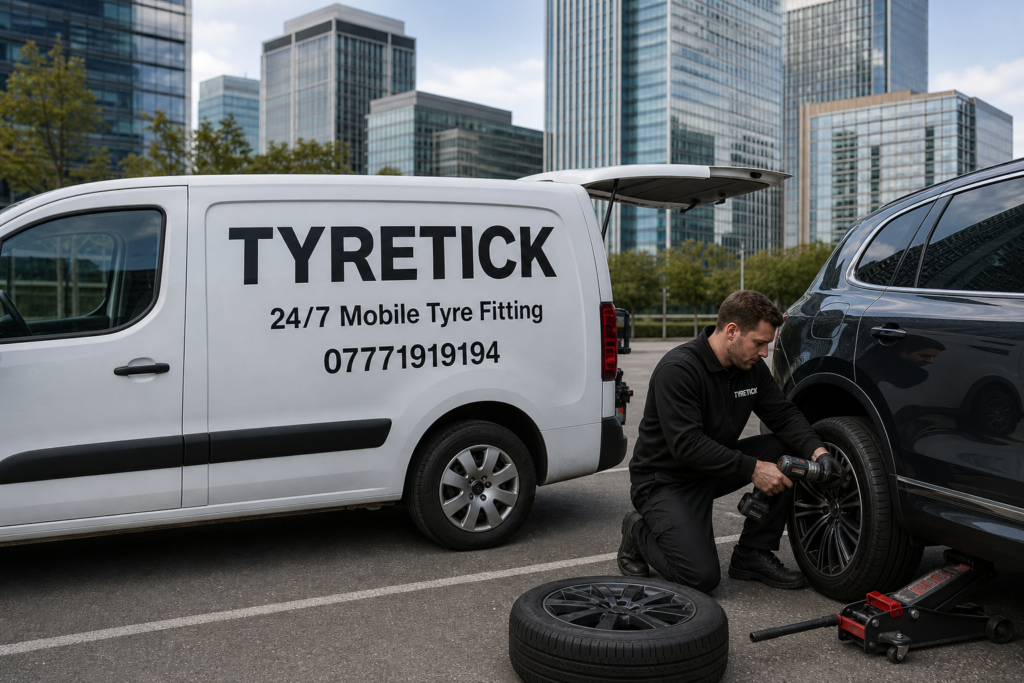
A flat tyre on motorway or a fast A-road is never a nice surprise. The main thing is to protect people first and worry about the vehicle afterwards. This guide explains where to stop, where to stand, what to avoid and when a mobile tyre fitter can safely help.
Motorways and busy roads are not normal breakdown spots. Even a small puncture can become risky when traffic is passing at speed and there is little room to work. If you need mobile tyre fitting London support after reaching a safe place, Tyretick can help with tyre repair, replacement and practical advice.
Key takeaways
- Do not try to change or inspect a tyre in a live lane or on a motorway hard shoulder.
- Move left, use hazard lights, leave by the left-side doors and get behind the barrier if safe.
- Never place a warning triangle on a motorway.
- Call for help with your exact location, tyre size if you know it, and details of the damage.
- A mobile fitter may be able to help once the vehicle is in a safe, legal working position.
What should you do first with a flat tyre on motorway?
If you suspect a flat tyre on motorway, do not brake hard or steer sharply. Ease off the accelerator, keep both hands on the wheel and indicate left when there is space to move over. Your aim is to leave the motorway completely if you can, or reach an emergency area, hard shoulder or the safest available refuge.
If the tyre fails suddenly, you may feel heavy steering, vibration, pulling to one side or loud flapping from the wheel arch. A serious failure can turn into a tyre blowout, so stay calm and let the vehicle slow down in a controlled way.
- Turn on your hazard warning lights as soon as you know there is a problem.
- Move left only when it is safe and avoid crossing lanes suddenly.
- Stop as far left as possible, with wheels turned left if you are on a hard shoulder.
- Switch on sidelights if it is dark, raining or visibility is poor.
- Leave the vehicle by the left-side doors, away from traffic.
If you cannot reach a safe place, keep your seat belt on, leave the hazard lights flashing and call 999 if you are in immediate danger. Do not stand in the carriageway or walk along a live motorway lane.
Where is the safest place to wait after a motorway tyre problem?
Once you have stopped, the safest place is usually behind the safety barrier and well away from the vehicle. Take passengers with you if they can leave safely from the left side. Keep children, pets and anyone vulnerable under control and away from the road edge.
Do not sit in the car unless getting out would put you at greater risk, for example if there is no barrier and fast traffic is very close. If you are in a smart motorway emergency area, use the emergency phone if one is available, as it helps identify your position. If you use your mobile, describe your location with marker posts, junction numbers, road direction and nearby signs.
What should you avoid?
- Do not attempt a wheel change on the motorway.
- Do not inspect the tyre from the traffic side of the vehicle.
- Do not use a warning triangle on a motorway.
- Do not let passengers wait in front of or behind the vehicle.
- Do not drive on a flat tyre to save time; read more about the risks of driving with a flat tyre.
On urban dual carriageways, red routes and busy London roads, the same rule applies: get people out of danger before thinking about the tyre. If you need flat tyre help London, the fitter still needs a safe working space, not a live traffic lane.
Flat tyre on motorway: repair, replacement or recovery?
A flat tyre on motorway may be caused by a puncture, sidewall damage, valve failure, impact damage or under-inflation. Whether it can be repaired depends on the tyre condition, where the damage is and whether the tyre has been driven while flat.
A professional tyre repair service can only repair certain punctures in the central tread area, and only when the rest of the tyre is safe. Sidewall damage, exposed cords, severe cracking, a damaged bead or signs of overheating usually mean replacement. If the car has travelled on the flat tyre, internal damage may not be visible from the outside.
| Situation | Likely next step | Why it matters |
|---|---|---|
| Nail in central tread, tyre kept inflated | Possible puncture repair after inspection | The casing may still be sound |
| Sidewall bulge, cut or split | Replacement needed | Sidewalls are structural and not safely repairable |
| Tyre driven flat for distance | Replacement likely | Heat and crushing can damage the inside |
| Run-flat tyre warning after motorway driving | Inspection and likely replacement | Run-flat limits vary and hidden damage is possible |
| Vehicle stopped in unsafe position | Recovery to a safer place first | No tyre job is worth working in live traffic |
If you are unsure what happened, describe the symptoms when you call. Tyretick may suggest mobile tyre replacement, a tyre puncture service, or recovery first if the vehicle is not in a safe place.
Can mobile tyre fitting help after a motorway breakdown?
Mobile tyre fitting can help many drivers after a motorway or busy-road tyre breakdown, but only when the vehicle is somewhere safe to work on. A fitter should not be expected to jack up a vehicle beside live motorway traffic. Safety comes before speed.
If you can get to a services, lay-by, private car park, workplace, home address or another protected location, a mobile fitter can usually assess the tyre and fit a suitable replacement if available. For a clear idea of how it works, see Tyretick’s guide to mobile tyre replacement step by step.
For London drivers, roadside tyre repair London can mean very different places: a quiet side street, a retail car park, a loading bay or a major road. The safer choice is often to move or recover the vehicle a short distance before fitting begins. You can also read where mobile tyre fitting can be done safely.
What information should you give when calling for help?
When searching for emergency tyre repair near me, have the key details ready before you call, if it is safe to gather them. Good information helps the fitter work out whether you need a repair, an emergency tyre replacement, or another type of assistance.
- Your exact location, including road name, direction, junction and nearby landmarks.
- Whether you are on a motorway, slip road, hard shoulder, services or side road.
- Your vehicle make, model and registration.
- Your tyre size, if you can read it safely from the sidewall.
- What happened: slow puncture, sudden bang, warning light, vibration or visible damage.
- Whether you have a locking wheel nut key.
Do not put yourself at risk to read the tyre size. If the traffic side is unsafe, leave it. Tyretick’s guide on what information to give during an emergency tyre call explains the details that are most useful.
How can you reduce the risk before a long or busy-road journey?
You cannot prevent every puncture, but quick checks reduce the chance of a roadside emergency. Before motorway driving, look for low pressure, cracks, cuts, bulges, nails and uneven wear. The UK legal minimum tread depth for cars is 1.6mm across the central three-quarters of the tread and around the full circumference.
Check pressures when the tyres are cold and follow the vehicle handbook or door-shut label. If you are carrying passengers, luggage or work tools, the loaded pressure may be different. For a quick routine, use Tyretick’s five-minute tyre check before a long journey.
It is also worth keeping a small tyre emergency kit in the boot. A torch, hi-vis clothing, a phone power bank and warm clothing can make a stressful wait safer and more comfortable. See the guide to what UK drivers should keep in a tyre emergency kit.
Frequently Asked Questions
Can I change a wheel myself on the motorway?
No, you should not attempt to change a wheel on a motorway hard shoulder or in a live traffic environment. Leave the vehicle safely, get behind the barrier if possible and arrange help. If the vehicle is in a dangerous position, call the emergency services.
Should I use tyre sealant after a flat tyre on motorway?
Only use sealant if the vehicle handbook allows it and you are in a safe place away from traffic. Sealant is not suitable for sidewall cuts, blowouts or badly damaged tyres. It may also affect whether a puncture can later be repaired.
Can a mobile fitter come to a motorway services?
In many cases, a motorway services car park is a much safer place for mobile tyre fitting than the roadside. You still need to give the exact location, vehicle details and tyre size if known. The fitter will confirm whether the location is workable.
What if I have run-flat tyres?
Run-flat tyres can allow limited driving after pressure loss, but you must follow your vehicle handbook and dashboard warnings. Do not assume the tyre is repairable afterwards. For more detail, read about run flat tyre replacement choices.
Is a puncture always repairable?
No. Repairs depend on the puncture position, tyre condition and whether the tyre has been driven flat. Damage to the sidewall, shoulder area or internal casing normally means replacement rather than repair.
Need safe tyre help after a busy-road breakdown?
If you have a flat tyre on motorway, a dual carriageway or a busy London road, make yourself safe first and call for help from a protected place. Tyretick provides 24/7 emergency mobile tyre fitting, tyre checks, puncture support and replacement tyres where it is safe to work.
For urgent advice or to book a fitter, call Tyretick on 07771919194. You can also contact Tyretick to book mobile tyre help once you are safely off the carriageway.