Skip to content

Run flat tyre replacement often brings up a bigger question: can you swap run flats for normal tyres, and what happens if you get a puncture later? This guide explains what to check before you change, how spare wheels and repair kits fit into the decision, and when a mobile fitter can help.
Plenty of London drivers ask us about this after finding there’s no spare wheel in the boot. Run flats can be handy, but they’re not the only answer. The right choice depends on your car, how you drive, your insurance position and how prepared you are if a tyre goes flat.
Key takeaways
- You may be able to switch from run flats to standard tyres, but check the vehicle handbook, tyre specification and insurer first.
- Don’t mix run flat and standard tyres on the same axle, and avoid mixed setups unless the vehicle maker allows it.
- If you remove run flats, you need a backup plan: a tyre repair kit, space saver spare wheel, breakdown cover or mobile help.
- A run flat driven with low or zero pressure may need replacing rather than repairing, because hidden internal damage is possible.
What Does Run Flat Tyre Replacement Mean?
In simple terms, run flat tyre replacement means fitting a new tyre designed to support the vehicle for a short distance after pressure loss. The tyre has reinforced sidewalls or internal support, depending on the design, so you may be able to drive carefully to a safer place rather than stopping immediately in a bad spot.
It can also mean replacing run flats with standard tyres. That’s where you need to slow down and check the details. A planned run flat tyre replacement is not just about choosing a tyre that fits the wheel; it’s about keeping the car stable, legal and properly prepared if a puncture happens.
If you’re not sure whether your tyres are run flats, check the sidewall markings, the vehicle handbook or ask a tyre professional. Some brands use markings such as RFT, ROF, SSR, ZP or similar. If you’re also checking tyre size, this guide on how to check your tyre size may help before you call.
Can You Switch From Run Flats To Normal Tyres?
Often, yes, but it’s not a change to make blindly. Some cars were supplied with run flats from new because they don’t have a spare wheel. Others have suspension and safety systems set up with run flat behaviour in mind.
Checks To Make Before Switching
- Vehicle handbook: look for advice on approved tyre types, sizes, load index and speed rating.
- TPMS: most cars using run flats rely on a tyre pressure monitoring system. Make sure it’s working correctly.
- Insurance: changing from the factory tyre type may count as a modification. Tell your insurer and follow their guidance.
- Axle matching: don’t mix run flat and standard tyres on the same axle, as handling can become unpredictable.
- Backup plan: standard tyres can’t usually be driven flat, so you need a safe way to deal with punctures.
If your current run flats are damaged, also read whether run flat tyres can be repaired. A tyre that has been driven deflated may look fine from the outside while the structure inside has been weakened.
For wider buying advice, Tyretick’s guide to whether run flat tyres are worth it explains comfort, convenience and cost considerations in more detail.
Run Flat Tyre Replacement: Spare Wheel Or Repair Kit?
Once you move away from run flats, the big practical question is what you’ll do after a puncture. Many modern cars don’t include a full-size spare wheel, so drivers rely on sealant, a compressor, a space saver spare wheel or roadside help.
| Option | Best for | Main limitation | Good to know |
|---|---|---|---|
| Run flat tyres | Getting to a safe stopping place after pressure loss | May not be repairable after being driven flat | Follow the car maker’s distance and speed guidance |
| Tyre repair kit | Small tread punctures as a temporary measure | Won’t fix sidewall damage, blowouts or large cuts | Sealant can expire, so check the date |
| Space saver spare wheel | Temporary onward travel after a puncture | Speed and distance are restricted | Follow the label and handbook, often 50 mph maximum |
| Mobile tyre replacement | Flat tyres at home, work or roadside | You need to provide tyre size and location details | A fitter can bring and fit a suitable replacement |
A tyre repair kit can be useful, but it’s not a permanent repair. It’s normally there to help you reach a place where the tyre can be inspected. If the puncture is in the shoulder or sidewall, or the tyre has been driven on while flat, a repair may not be safe.
A space saver spare wheel can be reassuring, especially if you drive at night or away from busier areas. Before buying one, check that it suits your exact vehicle, wheel size, brakes and boot space. You’ll also need the jack, wheel brace, locking wheel nut key and any required adaptors.
What Should You Do After A Puncture With No Spare?
If your car has no spare wheel and you suspect a puncture, avoid driving on a standard tyre that’s flat. This can destroy the sidewall, damage the wheel and put you at risk. If the car is on run flats, still slow down, avoid harsh steering and stop somewhere safe as soon as you reasonably can.
- Pull over safely, away from traffic if possible, and switch on your hazard lights.
- Check the tyre visually from a safe position, but don’t kneel close to live traffic.
- Look at the TPMS warning and note which tyre is affected.
- Don’t use sealant if there’s sidewall damage, a split, a blowout or the tyre has come off the rim.
- Call for flat tyre help London if you’re not sure the car is safe to move.
For more safety advice, read what to do if you have a flat tyre. If you want to understand the repair decision, Tyretick also explains tyre puncture repair cost factors without guessing whether a tyre is repairable before inspection.
How Can Mobile Fitting Help In London?
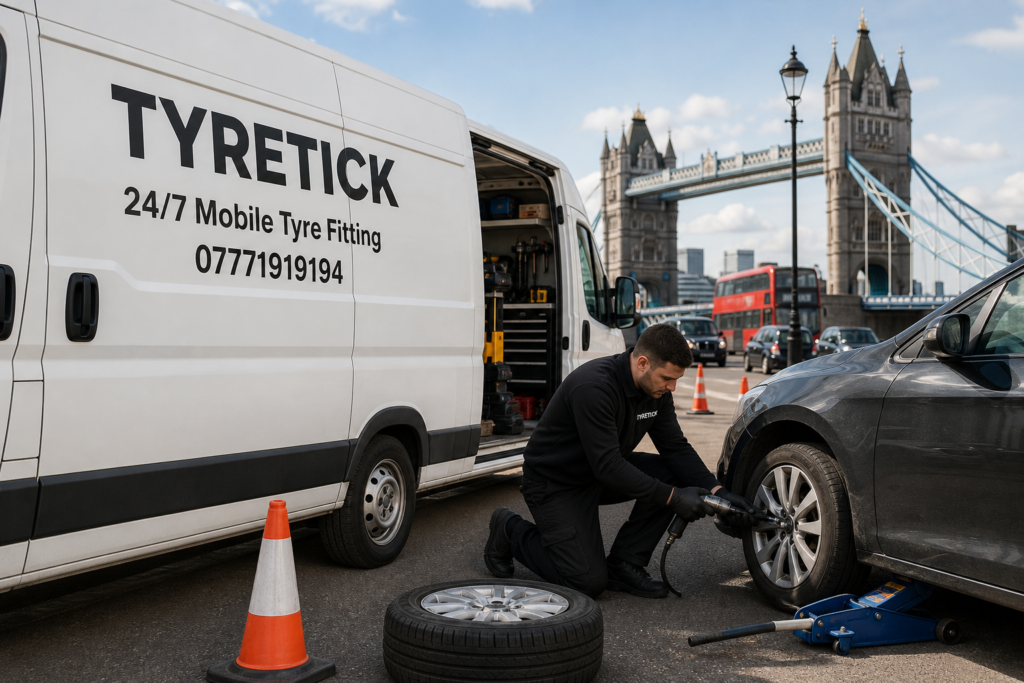
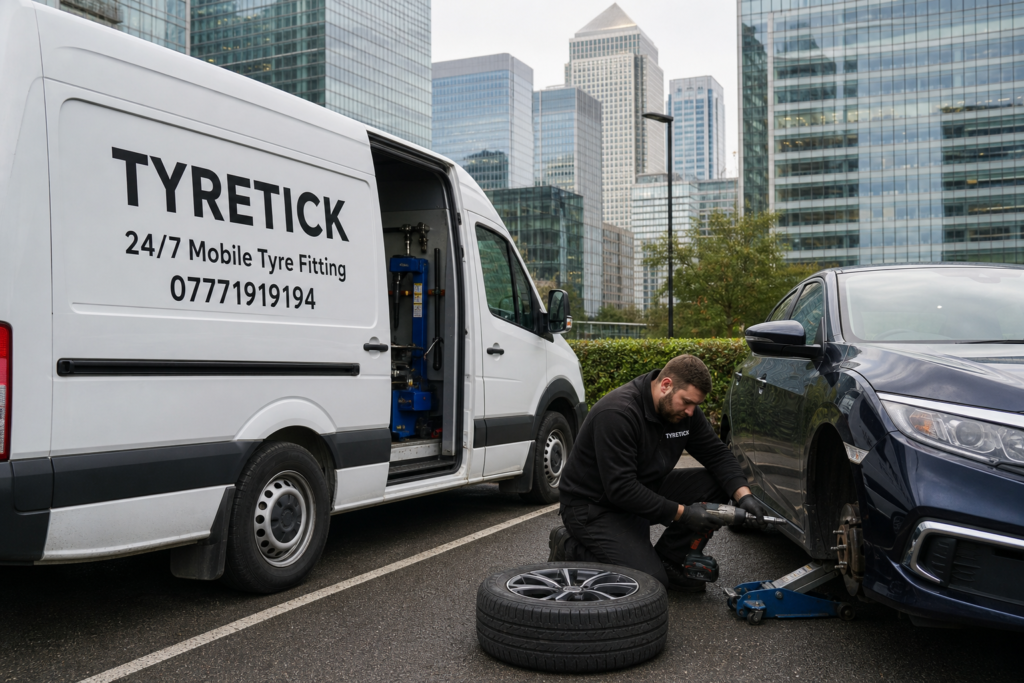
Mobile tyre fitting can save you from driving on a damaged tyre or waiting at a garage. Tyretick’s fitters come to your home, workplace or roadside with the equipment to remove the wheel, fit a suitable tyre and get you moving again when it’s safe to do so.
Drivers searching for mobile tyre fitting London are often dealing with a car that can’t be driven. This is where mobile tyre replacement is useful, especially if your run flat has already travelled deflated or your standard tyre has been ruined by a short drive on zero pressure.
Tyretick provides a tyre repair service and tyre puncture service where the damage is suitable for repair, but safety comes first. If the tyre structure is compromised, emergency tyre replacement is the safer option. You can learn more about how mobile tyre replacement works before booking.
If the vehicle is parked at home, this guide on tyre fitting at home explains what a fitter may need on the day. For general service information, visit Tyretick’s mobile tyre fitting in London page.
What Details Should You Check Before Booking?
For run flat tyre replacement, the more accurate your information, the easier it is to bring the right tyre. Take a clear photo of the sidewall if you can do so safely. The important details are width, profile, rim size, load index and speed rating.
Tell the fitter whether the tyre is marked as run flat, whether the TPMS warning is on, and whether you’ve driven any distance after the warning appeared. If your car has locking wheel nuts, find the key before the appointment. A missing key can delay any tyre work.
Before switching to standard tyres, check the condition of all four tyres. UK law requires car tyres to have at least 1.6mm of tread across the central three-quarters of the tyre and around the full circumference. If more than one tyre is worn, this guide on whether to replace two tyres or all four may be helpful.
If your TPMS light is part of the reason you’re investigating a puncture, read what to do when the TPMS warning light comes on. It can help you explain the problem clearly when you call.
Frequently Asked Questions
Is It Legal To Replace Run Flats With Normal Tyres?
It can be legal if the tyres are the correct size, load rating, speed rating and condition for the vehicle. However, you should check the handbook and tell your insurer, especially if the car was supplied with run flats from new.
Can I Have Run Flats On The Front And Normal Tyres On The Rear?
It’s not recommended unless the vehicle maker specifically allows it. Mixing tyre types can affect handling, braking and stability, especially in an emergency. Never mix run flat and standard tyres on the same axle.
Do I Need A Spare Wheel If I Change To Normal Tyres?
You don’t legally need a spare wheel in a private car, but you do need a realistic plan. That might be a tyre repair kit, space saver spare wheel, breakdown cover or 24/7 emergency mobile tyre fitting support.
Can A Run Flat Tyre Be Repaired After A Puncture?
Sometimes, but only after proper inspection. If the tyre was driven while underinflated, internal damage may make repair unsafe. A fitter will assess the puncture position, condition and manufacturer guidance.
Should I Keep Sealant In The Boot?
Sealant can help with some small tread punctures, but it can’t fix every flat. Check the expiry date and make sure you know how to use it before an emergency. Tyretick’s tyre emergency kit guide explains what else to keep in the car.
Need Run Flat Tyre Replacement In London?
If you have a damaged run flat, no spare wheel or you want advice before switching to standard tyres, Tyretick can help. For 24/7 mobile tyre fitting, call 07771919194 and explain your tyre size, location and whether the car is safe to move.
You can also use the Tyretick contact page to book a fitter. A technician can come to your home, workplace or roadside, inspect the tyre and fit the right replacement where it’s safe to work.