Skip to content

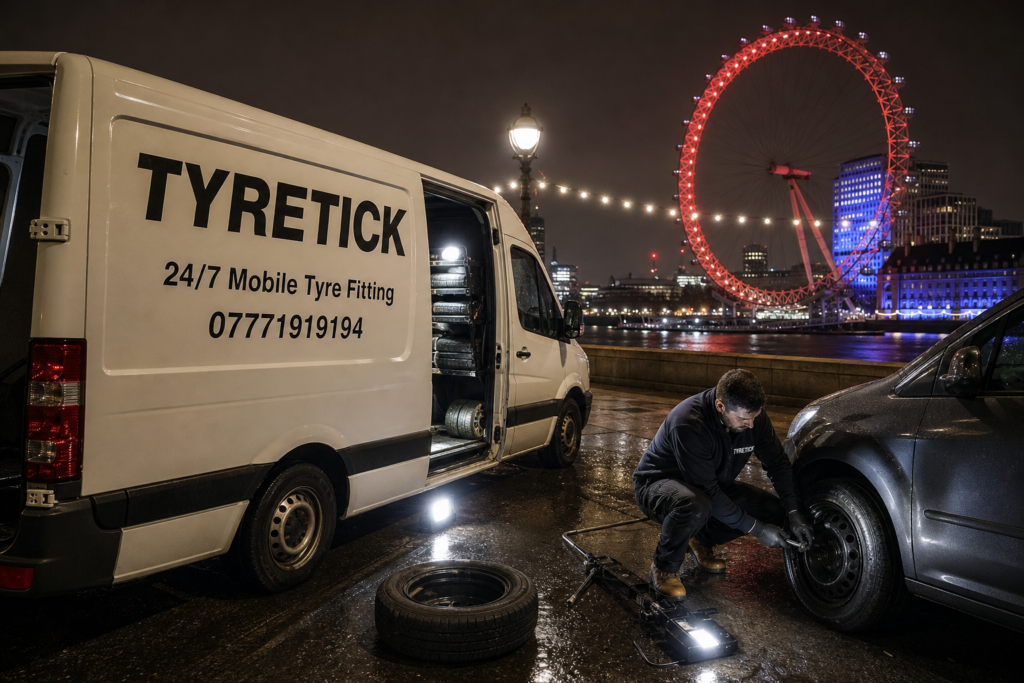
24 hour mobile tyre fitting is the service you need when a tyre gives up late at night and the car can’t be driven safely. This guide explains what to do first, what to check, and when it’s time to call a mobile fitter.
A flat after dark can rattle anyone, especially on a busy London road, outside work, or in a car park you don’t know well. Your job is simple: stay safe, protect the wheel, and give the fitter enough detail to bring the right help.
Key takeaways
- Don’t drive on a flat tyre unless you need to move a very short distance to safety.
- At night, focus on visibility, personal safety and finding a safer place to wait.
- A tyre can only be repaired if the damage is suitable and the tyre is otherwise safe.
- Keep your tyre size, exact location and locking wheel nut key ready when you call.
What Should You Do First After a Flat Tyre at Night?
First, don’t panic and don’t carry on as if nothing has happened. A flat tyre can damage the alloy wheel, upset the steering and braking, and make the car feel unstable very quickly.
If you’re already moving, ease off the accelerator, slow down gently and look for the safest nearby place to stop. Put your hazard lights on. Avoid heavy braking or sharp steering if you can.
- Pull over somewhere visible and away from moving traffic if possible.
- Switch on your hazard lights and sidelights so other drivers can see you.
- Put on a high-visibility jacket if you have one in the car.
- Keep passengers away from the traffic side of the vehicle.
- Don’t attempt a tyre change if the location feels unsafe.
If the flat happens on a motorway or fast road, the advice is different. Read Tyretick’s guide to a flat tyre on the motorway before arranging roadside help, as where you stand matters just as much as the tyre itself.
What Should You Check Before Booking 24 Hour Mobile Tyre Fitting?
Before you book 24 hour mobile tyre fitting, gather a few basic details if it’s safe to do so. This helps the fitter work out whether you may need a tyre repair service, a replacement tyre, or extra equipment.
- Your exact location, including the road name, postcode or a nearby landmark.
- Your vehicle make, model and registration number.
- The tyre size printed on the sidewall, if you can read it safely.
- Whether the tyre is fully flat, losing air slowly or visibly damaged.
- Whether you have the locking wheel nut key.
If you’re not sure where the tyre size is, Tyretick’s guide on how to check your tyre size explains what the numbers mean. If you searched for emergency tyre fitting London late at night, clear information can save back-and-forth calls and help the fitter prepare properly.
Can A Night-Time Flat Be Repaired Or Does It Need Replacing?
Not every flat tyre needs replacing, but not every puncture can be repaired either. A safe repair depends on where the damage is, the condition of the tyre, and whether the car has been driven while the tyre was flat.
| Situation | Likely outcome | Why it matters |
|---|---|---|
| Nail or screw in the central tread | May be repairable | A proper tyre puncture service can inspect and repair it if the tyre is otherwise safe. |
| Cut, bulge or damage on the sidewall | Usually replacement | Sidewall damage affects the tyre’s structure and is not normally safely repaired. |
| Tyre driven flat for a distance | Often replacement | The sidewall may be weakened even if the outside looks acceptable. |
| Tread below the legal limit | Replacement | UK cars need at least 1.6mm tread across the central three-quarters of the tyre. |
| Valve leaking or TPMS issue | Inspection needed | The tyre may not be punctured, but it still needs a proper diagnosis. |
For more detail, see Tyretick’s guide to tyre sidewall repair and the article on repairing or replacing a flat tyre. At night, guessing is never worth it. Let the tyre be inspected properly before you drive again.
Where Can A Mobile Fitter Work Safely After Dark?
Night work needs room, decent lighting and a stable surface. A mobile fitter may be able to help at home, at work, in some car parks or at the roadside, but the fitter still needs a safe place to work.
- A driveway or quiet residential bay is usually easier and safer.
- An office car park may be suitable if access is open.
- A narrow red route, blind bend or tight bus lane may be unsafe.
- A petrol station forecourt may be possible if there is permission and enough space.
Tyretick explains common fitting locations in where mobile tyre fitting can be done. For general mobile tyre fitting in London, you can also visit the Tyretick home page.
How Do You Stay Safe While Waiting For 24 Hour Mobile Tyre Fitting?
Treat the waiting time as part of the emergency. Don’t focus only on the tyre; think about where you’re standing, whether other drivers can see you, and whether the car is in a risky position.
- Wait away from traffic if it’s safe to leave the vehicle.
- Keep children and pets under control and well away from the road.
- Use your phone battery carefully and keep the phone within reach.
- Don’t accept roadside help from strangers if you feel uncomfortable.
- Tell someone you trust where you are.
If you keep an emergency kit in the boot, a torch, warm clothing and a warning triangle can help in the right setting. Tyretick’s tyre emergency kit guide explains what is useful for night-time flat tyre help, especially if you’re waiting outside in poor weather.
What Details Should You Have Ready When You Call?
Calling at night is much easier when you explain the problem clearly. If you need roadside tyre repair London, flat tyre help London, mobile tyre replacement or emergency tyre replacement, the fitter needs to know what they are coming out to.
- Give the exact location and say which side of the road you’re on.
- Say whether the vehicle is blocking traffic or parked in a safe bay.
- Describe visible damage, such as a split, bulge, nail or torn valve.
- Confirm your tyre size, or say that you can’t read it safely.
- Mention if your locking wheel nut key is missing or damaged.
For a fuller checklist, read what information to give when you call for emergency tyre help. If your locking nut is the problem, the guide to locking wheel nut removal may also help.
Frequently Asked Questions
Can I drive a short distance on a flat tyre at night?
You should avoid driving on a flat tyre. If you must move the car out of immediate danger, drive slowly for the shortest possible distance, then stop somewhere safer. Tyretick has a full guide on whether you can drive with a flat tyre.
Is 24/7 emergency mobile tyre fitting only for roadside breakdowns?
No. 24/7 emergency mobile tyre fitting can also be useful at home, at work, in a hotel car park or outside a venue after an evening out, as long as the fitter can work safely.
What if I cannot read the tyre size in the dark?
Don’t put yourself at risk. Give the vehicle registration, make and model, and explain that you can’t safely read the sidewall. A clear photo may help if the area is safe and well lit.
Will a mobile fitter repair the puncture or fit a new tyre?
That depends on the inspection. A puncture in a repairable area may be fixed, but sidewall damage, low tread or damage from driving flat usually means replacement is the safer option.
What if the tyre keeps going flat after repair?
There may be another cause, such as a valve, rim leak or hidden damage. Tyretick explains common reasons in why a tyre keeps going flat after puncture repair.
Need Night-Time Tyre Help In London?
If you have a flat tyre at night London drivers can call Tyretick for calm, practical help from a mobile tyre fitter. For 24 hour mobile tyre fitting, call 07771919194 or use the Tyretick contact page to book a fitter.