Skip to content

Can you mix tyre brands on a UK car? It’s a question we hear all the time, usually after one tyre has picked up a puncture, hit a kerb or worn faster than the others. The answer depends on tyre size, axle position, tread pattern, vehicle type and what the car maker recommends.
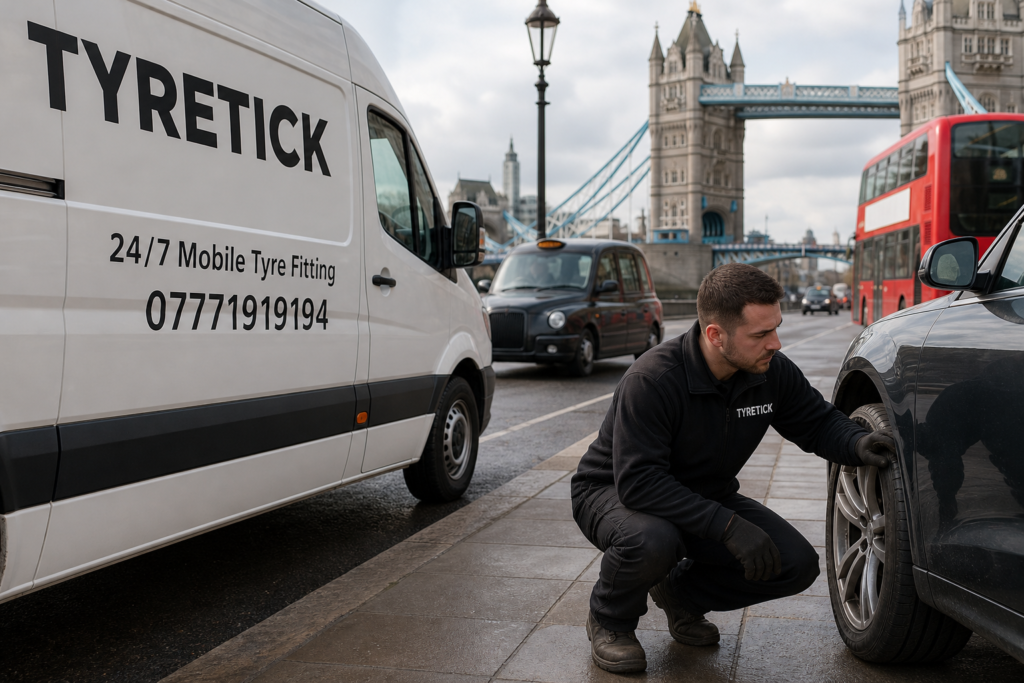
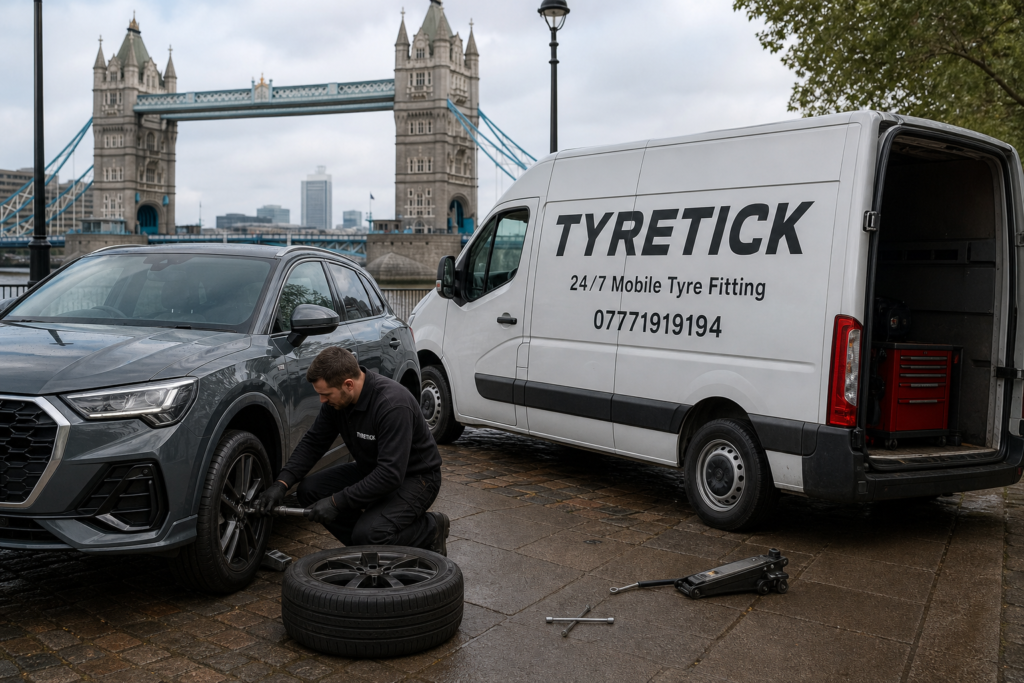
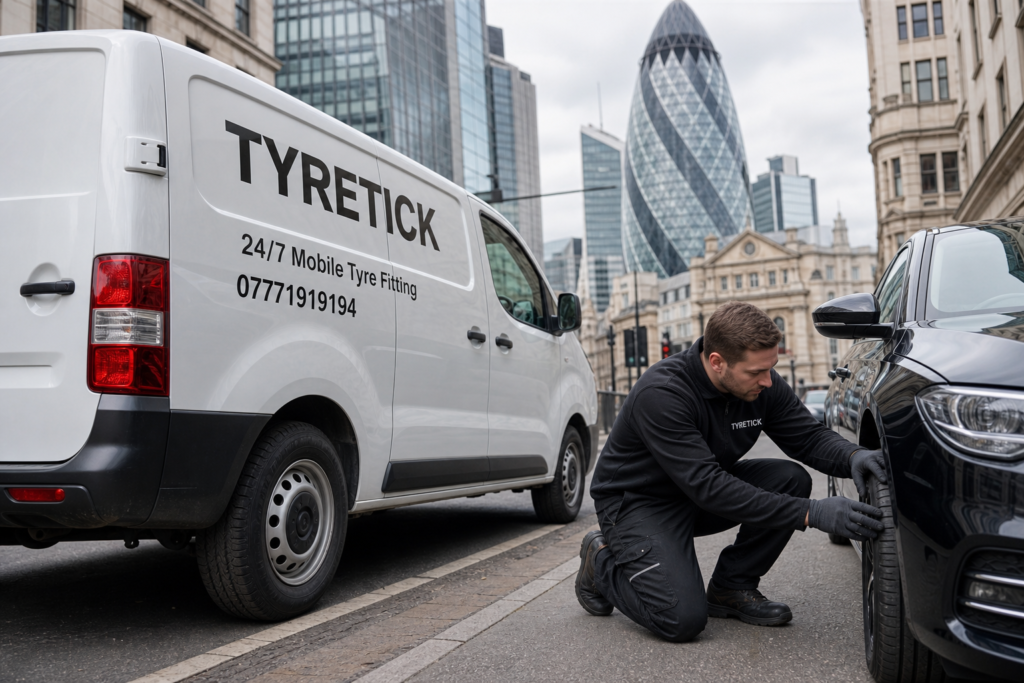
This guide explains what’s legal, what’s sensible, and where mixing brands can upset handling or braking. If you need help at home, work or at the roadside, Tyretick provides mobile tyre fitting in London, so you don’t have to get the car to a garage.
Key takeaways
- It is not usually illegal simply to have different tyre brands on a car, but every tyre must be the correct size, rating and condition.
- Matching tyres across the same axle is strongly recommended because the two tyres work together under braking, steering and cornering.
- Never mix different tyre constructions, and be careful with run flat, EV, 4×4 and performance tyres.
- If only one tyre is replaced, the fitter should check the opposite tyre for wear, age and damage before advising.
- Tyre tread depth, pressure and load rating matter just as much as the name on the sidewall.
Is It Legal To Mix Tyre Brands In The UK?
In the UK, there is no blanket rule saying every tyre on a car must be the same brand. The legal basics are more direct: tyres must be suitable for the vehicle, in good condition, correctly inflated, and have at least 1.6mm of tread across the central three-quarters of the tread and around the whole circumference.
So, in many day-to-day cases, you can mix tyre brands without breaking the law. That doesn’t automatically make it the best choice. A car with four different brands, ages and tread patterns may pass a quick tread check, yet still feel unsettled in wet weather or under hard braking.
Tyres on the same axle should ideally match in brand, model, size, speed rating, load rating and tread depth. If you’re weighing up one tyre, two tyres or a full set, this guide to replacing two tyres or all four explains the decision clearly.
When Is It Safe To Mix Tyre Brands?
The safest time to mix tyre brands is when the tyres are close in specification and fitted in a sensible position. On most front-wheel-drive and rear-wheel-drive cars, the first job is keeping each axle balanced.
Match The Same Axle First
If your front left tyre is a premium touring tyre and your front right tyre is a budget sports-style tyre with a very different tread pattern, the car may not respond evenly. You might not notice much at low speed on dry roads, but heavy rain, emergency braking or a quick motorway lane change can show up the difference.
If one tyre is damaged beyond repair and the opposite tyre on that axle is already worn, replacing both is often the better call. If the opposite tyre is nearly new, a fitter may be able to recommend a close match instead.
| Tyre mix | Usually acceptable? | What to check |
|---|---|---|
| Same brand and same pattern on each axle | Best option | Size, load rating, speed rating and pressure |
| Different brands front to rear | Often acceptable | Both tyres on each axle should still be closely matched |
| Different brands on the same axle | Use caution | Tread depth, pattern type, age and wet grip |
| Run flat mixed with non-run flat | Usually not advised | Vehicle handbook and tyre pressure monitoring system |
| Winter tyre mixed with summer tyre | Not recommended | Seasonal grip and braking balance |
If you’re unsure what your tyre size and ratings mean, start with the sidewall. Tyretick’s tyre markings guide explains the numbers and letters before you book a replacement.
Which Tyre Myths Make Mixing Brands Risky?
Some tyre myths sound harmless, but they can lead to poor choices. The issue is not just the brand name; it’s how that tyre works with the rest of the set.
- Myth: any tyre in the right size is fine. Size matters, but so do speed rating, load rating, tread pattern and suitability for the vehicle.
- Myth: the best tyres always go on the front. Many tyre professionals recommend fitting the tyres with the best grip to the rear axle to reduce the risk of oversteer, though the right advice can depend on the vehicle and tyre condition.
- Myth: budget and premium tyres only differ in price. Tyres can differ in wet braking, noise, comfort, wear rate and fuel efficiency. This budget versus premium tyre guide explains the trade-offs.
- Myth: tread depth is the only safety check. A tyre can have legal tread and still be unsafe because of sidewall damage, cracking, bulges, puncture damage or age.
- Myth: wheel balancing is optional. A new tyre should be balanced correctly to reduce vibration and uneven wear, especially at higher speeds.
Tyre labels can also help you compare options. Wet grip, fuel efficiency and noise information are useful when you’re choosing the closest replacement, and Tyretick’s tyre labels explained guide shows what those ratings mean.
How Do You Choose A Replacement When The Same Tyre Is Unavailable?
Sometimes the exact tyre on your car has been discontinued, is out of stock, or can’t be supplied quickly. Don’t pick at random. A good fitter will narrow the choice by specification, axle position and how you use the car.
- Check the tyre size, load index and speed rating on the sidewall.
- Check whether the vehicle needs a specific type, such as XL, run flat, EV-ready or manufacturer-marked tyres.
- Compare tread depth on the opposite tyre on the same axle.
- Choose a tyre with a similar use category, such as touring, performance, all-season or commercial.
- Ask whether replacing the pair would give safer, more predictable handling.
If you’re choosing a full set rather than replacing one tyre, this guide to the best tyres for your car can help you compare budget, mid-range and premium options for UK driving.
Run flat vehicles need extra care. Mixing run flat and standard tyres can affect ride, handling and pressure warning behaviour, so check the vehicle handbook and get professional advice. Tyretick also has a separate guide to run flat tyre replacement if you’re thinking of changing type.
Can You Mix Tyre Brands After A Puncture?
A puncture is one of the most common reasons drivers ask if they can mix tyre brands. If the puncture is in a repairable area and the tyre is otherwise safe, a tyre repair service may avoid the need for replacement altogether.
A proper tyre puncture service should inspect the tyre internally where possible, check the position of the damage, look for sidewall harm, and confirm that the tyre hasn’t been driven flat for too long. If it can’t be repaired safely, the fitter can recommend a suitable replacement.
This is where tyre tread depth makes a real difference. If the damaged tyre has 6mm of tread and the opposite tyre is at a similar level, one close-matching replacement may be reasonable. If the opposite tyre is close to the legal limit, replacing the pair may be safer and better value over time.
Uneven or rapid wear can also affect the advice. If one tyre is badly worn while the others are not, read Tyretick’s guide to worn tyres, braking and fuel economy and ask the fitter to check for pressure, alignment or suspension issues.
How Can Mobile Fitting Help If You Need To Mix Tyre Brands?
Mobile tyre fitting is useful when you’re stuck with a damaged tyre and need advice before driving anywhere. Instead of taking a chance on the road, a mobile fitter can inspect the tyre, read the sidewall details and fit a suitable replacement where the car is parked.
For London drivers, mobile tyre fitting London services are handy where parking is tight, garages are not nearby, or the car isn’t safe to drive. Tyretick can help with mobile tyre replacement, tyre fitting at home, roadside tyre problems and same day tyre fitting London where suitable tyres are available.
If new tyres are fitted, balancing should be part of the job. Poor balance can make the steering wheel shake and can shorten tyre life, so see Tyretick’s wheel balancing London guide if you’re unsure what’s involved.
For emergencies outside normal garage hours, a 24/7 emergency mobile tyre fitting service can help you avoid driving on a flat or unsafe tyre. If you’re preparing for an appointment at your property, this tyre fitting at home guide explains access, power and driveway questions.
Frequently Asked Questions
Can I Have Four Different Tyre Brands On My Car?
It may not be illegal if every tyre is the correct size, rating and condition, but it is not ideal. Four different tyres can behave differently in wet braking, cornering and ride comfort. Matching tyres by axle is a much better approach.
Is It Bad To Mix Premium And Budget Tyres?
It can be fine if they are on different axles and are suitable for the car, but mixing very different tyres on the same axle is best avoided. The issue is not status; it is how evenly the tyres grip and respond.
Can I Mix Tyre Brands On An Electric Car?
Be careful. EVs are often heavier than petrol or diesel cars and may need tyres with the correct load rating, noise performance and efficiency characteristics. Always check the size, load rating and manufacturer guidance before fitting a different brand.
Can I Mix Tyre Brands On A 4×4 Or SUV?
Some 4×4 systems are sensitive to differences in rolling circumference between tyres. If the tyres vary too much in tread depth or size, it can put strain on the drivetrain. For many SUVs and 4x4s, matching tyres more closely is especially important.
Should I Replace One Tyre Or Two After A Puncture?
It depends on the tread depth and condition of the opposite tyre on the same axle. If it is nearly new, one close-matching replacement may be suitable. If it is worn, aged or a different type, replacing the pair may be safer.
Need Help Choosing The Right Tyre In London?
If you’re unsure whether to mix tyre brands, Tyretick can inspect your tyres and advise on a safe replacement option at your home, workplace or roadside. For mobile help in London, call 07771919194 or contact Tyretick to book a fitter.