Skip to content

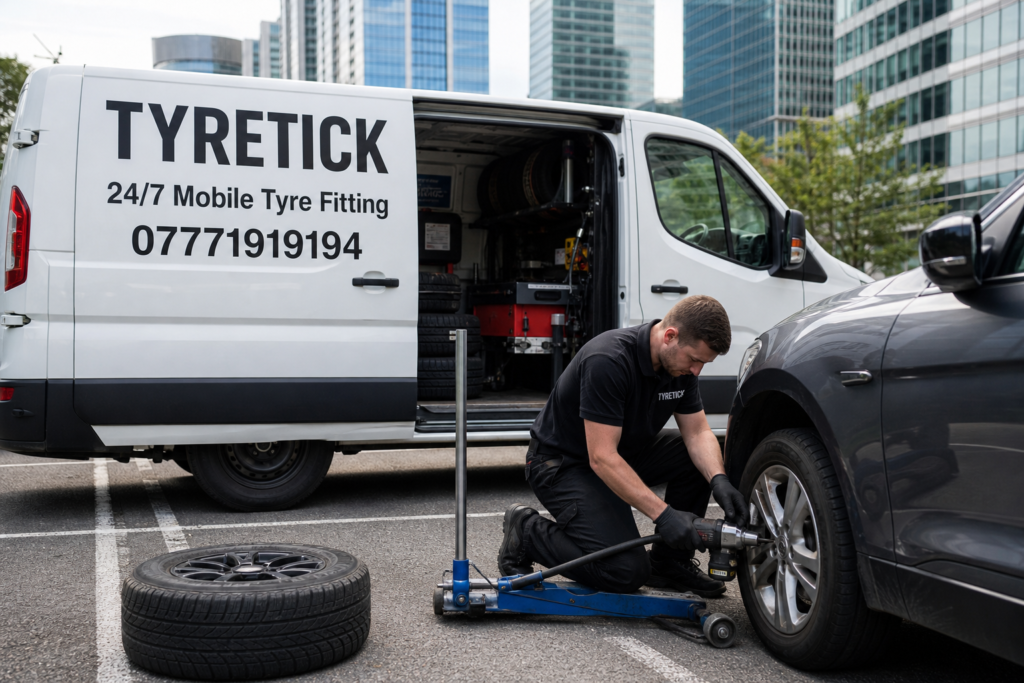
Wheel balancing London appointments can hit a snag if your car has locking wheel nuts and the key is missing, damaged or sitting in a drawer at home. It’s a small part, but without it a simple job can turn into a delay.
This guide explains when the key is needed, where to look for it, and what to do if a fitter can’t remove a wheel safely. Locking wheel nuts are useful for security, but they can cause problems when you need new tyres, a puncture repair or balancing after a vibration.
If you use mobile tyre fitting in London, a quick check before the fitter arrives can save time and help the work run more smoothly.
Key takeaways
- A locking wheel nut key is usually needed before a wheel can be removed for balancing or tyre fitting.
- If the key is missing or damaged, tell the fitter before booking so the right tools can be planned.
- Balancing and alignment are different jobs; balancing corrects wheel and tyre weight, while alignment adjusts steering geometry.
- Don’t keep forcing a rounded locking nut, as this can make removal harder and may mark the alloy.
- Tyretick can help with tyres, punctures and locking wheel nut removal in London.
Do You Need A Locking Nut Key For Wheel Balancing London?
In most cases, yes. For wheel balancing London work, the wheel normally has to come off the vehicle and be placed on balancing equipment. If one bolt or nut on that wheel is a locking type, the correct key or adaptor is needed to remove it.
Plenty of drivers only find this out when they’ve got a flat tyre or when a steering wheel vibration starts to annoy them. From the outside, the wheel may look ordinary, but one nut will have a shaped pattern that matches a small metal key supplied with the car.
The same issue can affect new tyre fitting, a mobile puncture repair appointment, brake checks and many roadside jobs. If the wheel can’t be removed, the fitter may not be able to complete the work safely.
Why Locking Wheel Nuts Matter For Mobile Tyre Fitting
Locking wheel nuts are fitted to help reduce the risk of wheel theft. They replace one standard nut or bolt on each wheel with a special pattern that ordinary sockets can’t grip properly.
That security is helpful, but it also means the fitter needs the right key. With mobile tyre fitting, the technician is working where the car is parked rather than in a workshop with shelves of manufacturer tools close by.
What The Fitter Needs Before Starting
Before any wheel comes off, the fitter will usually check that the locking key fits firmly and that the locking nut is not rounded, cracked or seized. If the key slips, forcing it can damage the key, the nut or the alloy wheel.
If you’re searching for mobile tyre fitting near me because you’ve got a flat, try to find the locking key while you wait. You can also read Tyretick’s guide on how to prepare your car for a mobile tyre fitting appointment.
Wheel Balancing London And Alignment: What’s The Difference?
Drivers often use balancing and alignment as if they mean the same thing, but they fix different problems. Understanding wheel alignment vs balancing helps you book the right service and describe the symptoms clearly.
| Issue | What it means | Common symptoms | Does the wheel usually come off? |
|---|---|---|---|
| Wheel balancing | Corrects uneven weight around the wheel and tyre | Vibration through the steering wheel, seat or floor | Yes, usually |
| Wheel alignment | Adjusts the angles of the wheels and steering geometry | Car pulls to one side, steering wheel sits off-centre, uneven tyre wear | Not always, but specialist equipment is needed |
| Tyre replacement | Removes the old tyre and fits a new one to the rim | Worn, damaged, aged or illegal tyres | Yes |
| Puncture repair | Checks whether a puncture is legally and safely repairable | Slow pressure loss or a visible object in the tread | Often yes |
Mobile wheel balancing is normally linked to tyre fitting or vibration checks. Full wheel alignment usually needs a level bay and specialist alignment equipment, so it isn’t the same as a roadside tyre job.
How To Find And Check Your Locking Wheel Nut Key
The key is often small, greasy and easy to miss. It may be in a plastic case, a cloth pouch or loose with the jack and wheel brace.
- Check the glovebox, centre console and door pockets.
- Look under the boot floor with the spare wheel or inflator kit.
- Check the tool tray, jack bag and locking wheel nut packet.
- Look inside any service wallet or pouch from the dealer.
- If you recently had work done, ask the garage whether it was left out or stored elsewhere.
Once you find it, inspect the pattern. If the edges look cracked, worn or twisted, mention this when booking. A damaged key can fail under load, especially if the locking nut has been overtightened.
It also helps to tell the fitter the vehicle make and model, tyre size, and whether the car has run flat tyres. Tyretick’s guide to checking your tyre size explains where to find the sidewall markings.
What If The Locking Wheel Nut Key Is Missing Or Damaged?
If the key is missing, don’t try random sockets, chisels or cheap removal tricks from online videos. You may damage the locking nut, mark the alloy or make professional locking wheel nut removal more difficult.
Tell the fitter before they attend. A trained technician can assess whether removal is possible with suitable tools and care. If the nut is already rounded or stuck, that’s different from a simple lost key situation.
For more detail, read Tyretick’s guide on what to do if you lose the locking wheel nut key. If the nut is damaged, this article on damaged, rounded or stuck locking wheel nuts explains why careful removal matters.
It’s also worth checking all four wheels, not just the one with the flat tyre. Some cars have different locking nuts fitted after previous repairs, especially if the vehicle was bought used.
When Should You Book Wheel Balancing London After Tyre Trouble?
You should consider wheel balancing London after a new tyre is fitted, if a balance weight has fallen off, or if you feel vibration at certain speeds. The vibration can come through the steering wheel, the seat or the whole car, depending on which wheel is affected.
Balancing is especially useful after tyre replacement because even a good tyre and wheel can have small weight variations. The aim is simple: help the wheel rotate smoothly at road speed.
You may also need further checks if the car has hit a pothole, kerb or raised road edge. A heavy impact can damage a tyre, bend a rim or disturb alignment. Tyretick has a useful guide on spotting damage after a pothole impact.
If vibration continues after balancing, there may be another fault. Possible causes include a buckled wheel, uneven tyre wear, suspension wear or a tyre with internal damage. This guide on why a car still vibrates after wheel balancing explains the next checks.
What Should You Tell Tyretick Before A Booking?
Clear information helps the fitter bring the right tyres, tools and equipment. This matters whether you need mobile tyre fitting London support at home, help at work or a tyre repair service at the roadside.
- Your exact location and whether the car is parked safely.
- The tyre size, speed rating and load rating, if you can read them.
- Whether the tyre is flat, damaged, worn or losing pressure slowly.
- Whether the locking wheel nut key is present and in good condition.
- Any vibration, pulling, steering wobble or recent pothole impact.
If the car is on a busy road, safety comes first. Move away from traffic if you can do so safely, use hazard lights where appropriate, and avoid standing between vehicles.
Tyretick provides a 24/7 emergency mobile tyre fitting service for London drivers who need help at awkward times. If the issue is a puncture, a tyre puncture service may be possible depending on the damage and where the puncture sits. The legal minimum tread depth for car tyres in the UK is 1.6mm across the central three-quarters of the tread and around the full circumference.
Frequently Asked Questions
Can A Wheel Be Balanced Without Removing It?
For normal mobile tyre work, balancing usually involves removing the wheel and placing it on balancing equipment. That means the locking wheel nut key is normally needed if locking nuts are fitted.
Is Vibration Always Caused By Poor Wheel Balance?
No. Poor balance is common, but vibration can also come from a damaged tyre, bent wheel, worn suspension part, brake issue or alignment problem. If you’re unsure, describe when the vibration happens and whether it changes with speed.
Can A Mobile Fitter Remove A Locking Wheel Nut Without The Key?
Sometimes, but it depends on the nut, the wheel design and whether previous attempts have damaged it. The safest approach is to explain the situation before booking so the fitter can advise on locking wheel nut removal.
Should I Replace Locking Wheel Nuts After Removal?
If the locking nuts or key are worn, damaged or awkward to use, replacement may be sensible. Some drivers choose standard nuts instead, but you should use the correct type and specification for the vehicle.
Can Wheel Balancing Fix A Car Pulling To One Side?
Usually not. Pulling to one side is more often linked to alignment, tyre pressure, uneven tyres or suspension issues. Balancing is mainly about smooth rotation and reducing vibration.
Need Help With Locking Nuts, Tyres Or Balancing In London?
If you need wheel balancing London advice, new tyres, puncture help or a locking nut checked before work starts, Tyretick can help. Call 07771919194 or use the Tyretick contact page to book a fitter.
If you’re at home, at work or safely parked after a flat tyre, Tyretick’s mobile service can make the problem easier to deal with. For more practical advice, visit the Tyretick blog.