Skip to content

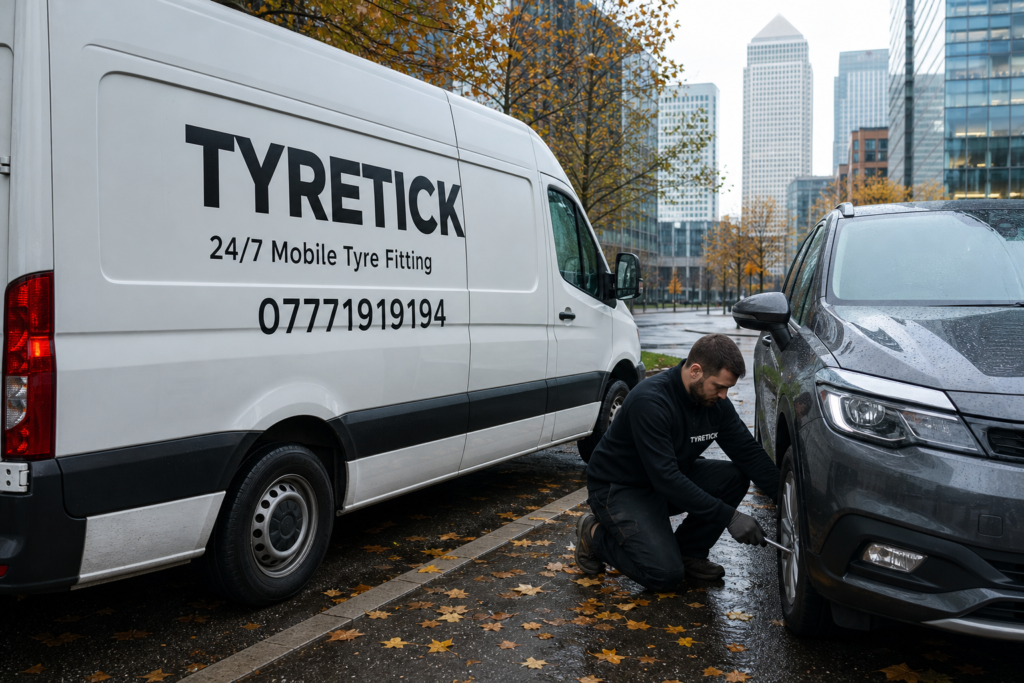
24/7 emergency mobile tyre fitting can often be arranged in rain, cold weather or after dark, as long as the fitter can work safely. This guide explains what makes a home, workplace, car park or roadside spot suitable, and what you should do while you’re waiting for help.
London drivers rarely get a flat tyre at a handy time. If you’re stuck outside your house, leaving work late or parked in foul weather, a mobile tyre fitting London service can stop you driving on a damaged tyre or hunting around for an open garage.
Key takeaways
- Bad weather or darkness does not automatically stop a mobile fitter, but safety comes first.
- A safe, level and well-lit position makes tyre fitting quicker and lowers the risk.
- Do not stay in a live traffic lane or try roadside work in a dangerous place.
- Tell the fitter your tyre size, location, vehicle type and whether you have a locking wheel nut key.
- Use 24/7 emergency mobile tyre fitting when the car cannot be driven safely to a garage.
Can 24/7 emergency mobile tyre fitting happen in rain or darkness?
Yes, in many cases it can. Mobile fitters use equipment made for working away from a garage, and plenty of tyre trouble happens in exactly these conditions: wet roads, poor light, cold evenings and busy parking areas.
The point is not the weather on its own. The real question is whether the vehicle is in a safe place with enough room to work around the wheel. Heavy rain, strong wind, flooding, ice, poor visibility or fast-moving traffic can make a job unsafe until the car is moved or recovered to a better position.
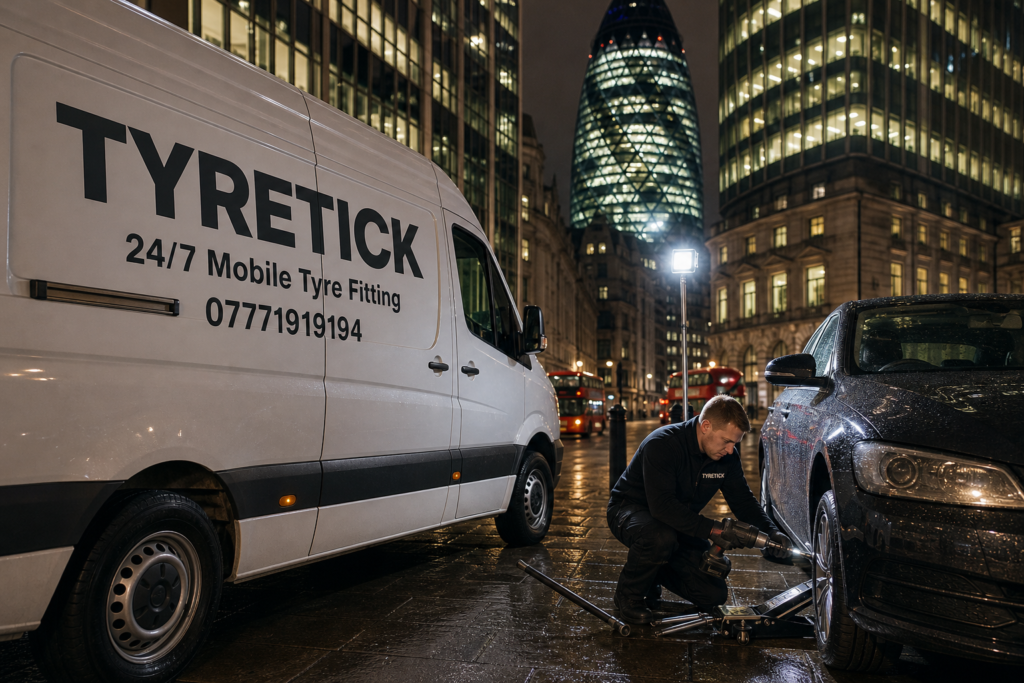
If your flat tyre happens late at night, Tyretick’s guide to night-time flat tyres is worth a read. A 24 hour mobile tyre fitting service is there for urgent situations, but no responsible fitter should put you, themselves or other road users in danger.
What makes a location safe enough for mobile tyre fitting?
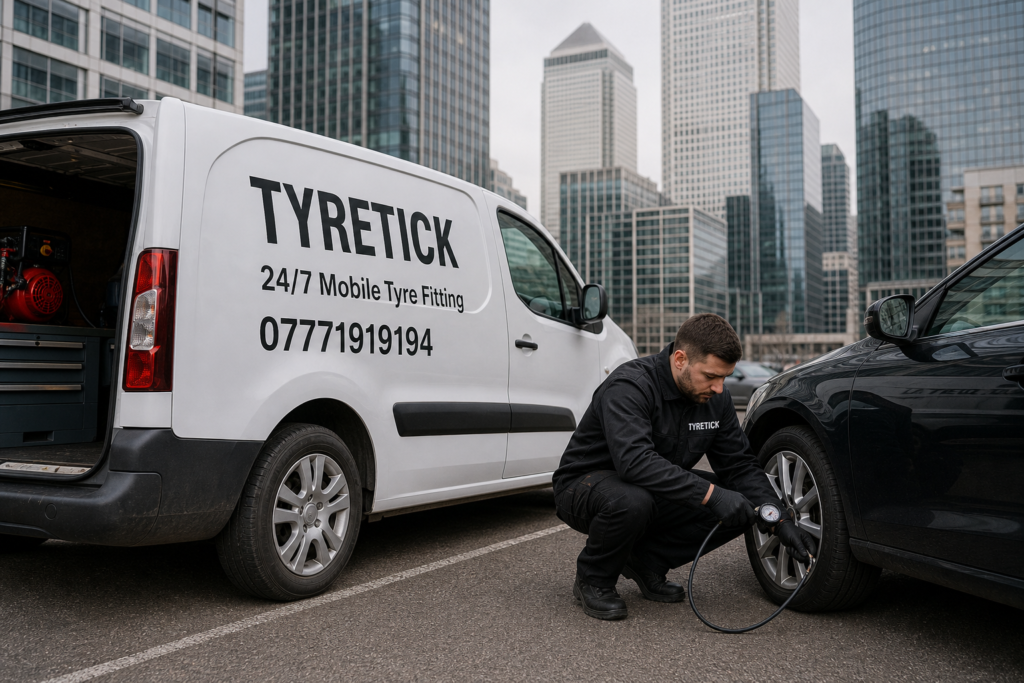
A safe fitting location is stable, visible and away from moving traffic. The van needs to park close enough for tools and equipment to reach the car, and the fitter needs space to remove the wheel, inspect it and fit or repair the tyre.
Good signs that the location may be suitable
- The car is on firm, level ground rather than soft mud, a steep slope or a broken kerb.
- There is clear space around the damaged wheel.
- The vehicle is not blocking traffic, a bus lane, a cycle lane or an emergency access route.
- There is enough lighting, or the fitter can safely use work lights.
- You can stay away from the working area while the job is being done.
For tyre fitting at home, a driveway is useful but not always needed. If you’re not sure, the guide to whether fitters need power or a driveway explains what helps before a fitter arrives.
Warning signs that the fitter may need another plan
- The car is on a blind bend or narrow road with no safe space.
- The damaged wheel is beside live traffic.
- The vehicle is on a motorway hard shoulder.
- The ground is flooded, icy or too soft to support lifting equipment.
- The locking wheel nut key is missing and the wheel cannot be removed safely.
If the place is not safe, the best answer may be to move only if you can do so without risk, or arrange recovery to a nearby safe area. A good tyre repair service will be straight with you about this rather than taking chances.
24/7 emergency mobile tyre fitting at home, work or roadside: what changes?
The service may be similar, but the risks and preparation change depending on where the car is. Tyretick has a separate guide on where mobile fitting can be done, but rain and darkness add a few extra checks.
| Location | What helps | What to watch for |
|---|---|---|
| At home | Clear driveway, quiet street, access to all wheels | Tight parking, sloped kerbs, blocked wheel access |
| At work | Permission to work in the car park, visible bay, security access | Underground car parks, height restrictions, busy loading bays |
| Public car park | Space around the vehicle, safe lighting, easy directions | Closing times, payment barriers, low ceilings |
| Roadside | Car fully off the carriageway, hazards on, safe waiting place | Fast traffic, bends, poor visibility, no hard standing |
Workplace call-outs are common when a tyre goes flat during the day, or when you spot damage before driving home. If that sounds familiar, see Tyretick’s advice on workplace tyre fitting before arranging access.
Roadside jobs need the most care. If you’re on a motorway, follow the safety advice in the guide to a flat tyre on a motorway and do not stand near the vehicle in live traffic.
What should you do before the fitter arrives?
Your first job is to get yourself safe. Put on your hazard lights if appropriate, move passengers away from traffic, and wait in a safe place. At night, avoid standing between vehicles or behind the car where other drivers may not see you.
Next, gather the details the fitter will ask for. This helps them work out whether you need a tyre puncture service, a replacement tyre, help with a locking wheel nut or roadside tyre repair London support.
- Check the tyre size on the sidewall if you can do it safely.
- Tell the fitter the vehicle make, model and registration.
- Explain whether the tyre is completely flat, losing air slowly or visibly damaged.
- Share your exact location, including postcode, car park level, entrance or nearby landmark.
- Say whether the car has a locking wheel nut key and where it is kept.
If you’re searching for mobile tyre fitting near me because you’re stranded, give clear access notes. Tyretick also explains the information to give when you call, which is especially useful in poor weather or at night.
When is a repair not safe, even if help can come to you?
A mobile fitter may be able to inspect the tyre at your location, but not every damaged tyre can be repaired. A puncture in the central tread area may be repairable if it meets safety rules, but sidewall damage, exposed cords, run-flat damage after driving deflated, or a large split usually means replacement.
The tyre also needs to be legal and structurally sound. For cars in the UK, the minimum tread depth is 1.6mm across the central three-quarters of the tread and around the full circumference. If a tyre is below the limit, badly worn or perished, repair is not the right fix.
If your pressure keeps dropping but the tyre is not fully flat, the cause could be a small puncture, a valve issue or a rim leak. The guide to slow pressure loss versus a puncture explains what might be happening before you book.
For severe damage, emergency tyre replacement is safer than trying to patch a tyre that should not go back on the road. A reliable emergency tyre fitting London service will explain why replacement is needed if that is the safer option.
How can you make a bad-weather booking smoother?
Good information saves time. If you know the tyre size, send it or read it clearly from the sidewall. If the wheel is hard against a kerb or another car, say so before the fitter sets off.
It also helps to describe the surface. A flat driveway, open car park or quiet residential bay is very different from a muddy verge or a steep hill. If security gates, underground parking or height barriers are involved, mention them early.
If you’ve already booked, Tyretick’s guide to what happens on appointment day shows the usual steps. For urgent mobile tyre replacement, you can also read about how a mobile fitter reaches you without assuming every job will be the same.
Keep your phone on and stay reachable. If conditions change, such as a car park closing or the vehicle being moved, tell the fitter straight away.
Frequently Asked Questions
Can a mobile fitter work in heavy rain?
Sometimes, but only if the job can be done safely. Light rain is often manageable, while flooding, poor visibility, lightning, ice or a dangerous roadside position may mean the car needs moving first.
Can mobile tyre fitting be done at night?
Yes, night work is possible where there is safe access and enough visibility. 24/7 emergency mobile tyre fitting is useful for evening and overnight flats, but the fitter still needs a safe working space.
Do I need to provide lighting or power?
Usually no, because mobile fitters carry their own equipment. Good access and lighting around the vehicle can still help, especially at home or in a workplace car park.
What if I am stuck on a busy road?
Do not stand in the road or try to change the tyre beside fast traffic. Move to a safe place if you can, use hazard lights where appropriate, and call for advice before arranging any roadside work.
Should I book repair or replacement?
If you’re unsure, explain the damage when you call. An emergency tyre repair near me search may lead you to a repairable puncture, but cuts, sidewall damage and very worn tyres often need replacement.
Need Tyretick in rain, darkness or at the roadside?
If you need 24/7 emergency mobile tyre fitting in London, Tyretick can help with home, workplace and safe roadside tyre problems. Call 07771919194 or contact Tyretick to book a fitter.