Skip to content

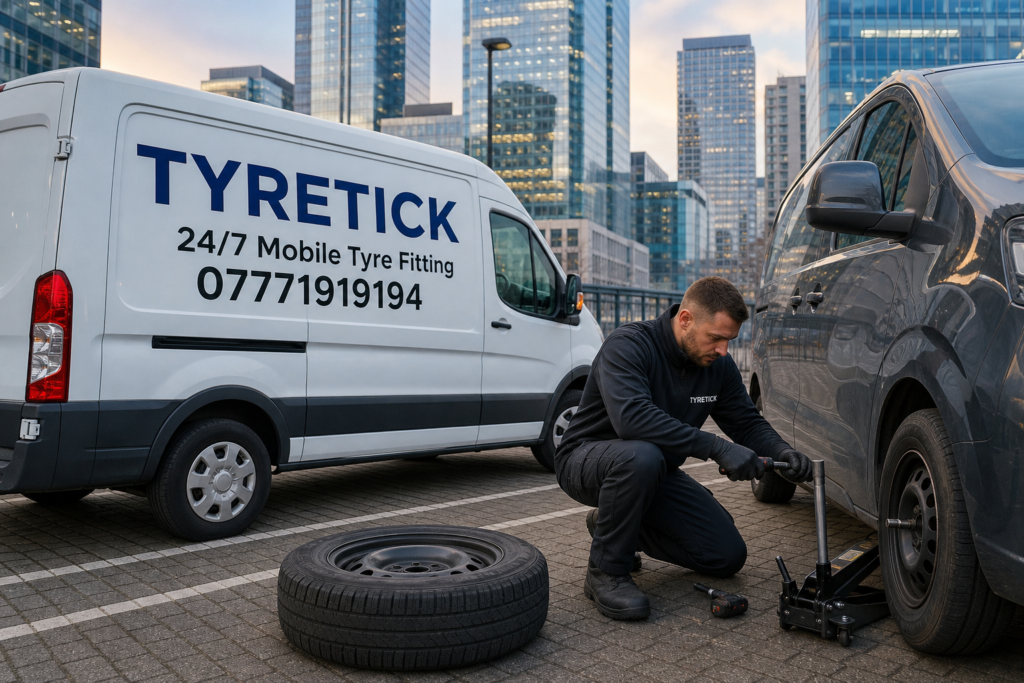
Van tyre fitting London is about more than swapping a flat tyre. For a business, it keeps vans legal, safe and ready for the next job. One tyre fault can hold up deliveries, delay appointments and leave a driver stuck at the roadside.
This guide sets out the checks fleet managers, tradespeople and owner-drivers should make before booking tyre work. We’ll cover tread depth, load ratings, punctures, mobile fitting and the signs that a van should stay parked until a fitter has seen it.
Key takeaways
- Company vans need regular tyre checks because they often carry heavy loads and cover stop-start city miles.
- The UK legal minimum tread depth for most vans and cars is 1.6mm across the central three-quarters of the tread.
- A repair is only safe in certain cases; sidewall damage, exposed cords or severe run-flat damage usually means replacement.
- Mobile support can reduce downtime by fitting tyres at a depot, workplace, customer site or safe roadside location.
Why van tyre fitting London matters for working vehicles
Vans have a tough life. They carry tools, parcels, stock or equipment, then spend hours in traffic, tight loading bays and kerbside parking spaces. That mix can wear tyres quickly, especially when the van is heavily loaded or used by different drivers.
Tyre condition is also part of your duty of care. A driver shouldn’t be sent out in a van with low tread, a bulge, a cut sidewall or a tyre that keeps losing air. If you need help at the vehicle rather than at a garage, Tyretick’s mobile tyre fitting in London service is built around coming to you.
Shared vans need extra attention. One driver may notice a slow puncture at the end of a shift, but the next person might only spot the warning light once the tyre is already unsafe. A quick handover note can prevent a long wait later.
What company van tyre checks should be done weekly?
A simple routine prevents a lot of avoidable breakdowns. It doesn’t need to take long, but it should be done properly and recorded where possible. That’s especially useful if several people use the same vehicle.
- Check tread depth. Look across the full width of the tyre, not just the outside edge. For a clear method, read Tyretick’s guide to measuring tyre tread depth properly.
- Look for cuts, bulges and exposed cords. These are warning signs that the tyre may be unsafe, even if the tread still looks legal.
- Check pressures when tyres are cold. Use the van maker’s recommended pressure for the load being carried.
- Inspect valves and caps. Missing caps and damaged valves can contribute to slow air loss.
- Watch for uneven wear. One shoulder wearing faster than the rest may point to alignment, suspension or pressure problems.
The legal tread limit is only the baseline. A business van can still feel poor in heavy rain or under load when tyres are close to the minimum. If you manage a small fleet, it’s sensible to set an internal replacement point before tyres become illegal.
If you need a clearer legal overview, see Tyretick’s guide to what makes tyres illegal in the UK. For planned inspections, the article on how often tyres should be professionally checked is useful too.
When should you book van tyre fitting London instead of waiting?
Book help as soon as a tyre is visibly damaged, keeps losing pressure or has tread close to the legal limit. Don’t wait for the next planned service if the van is being used every day. The risk sits with the driver and the business.
A tyre puncture service may be enough if the puncture is in the repairable tread area and the tyre hasn’t been driven while flat. A tyre repair service isn’t right for every tyre, so the fitter needs to inspect the damage before deciding what can be done.
| What you find | What it may mean | Usual next step |
|---|---|---|
| Small nail in central tread | Possible repair if the tyre is otherwise sound | Ask for inspection and repair advice |
| Bulge on sidewall | Internal tyre damage | Stop using the van and replace the tyre |
| Tread near 1.6mm | Close to legal minimum | Plan replacement before more work journeys |
| Vibration after a new tyre | Possible balancing issue | Ask about wheel balancing London support |
| Pressure drops again after inflation | Puncture, valve or rim leak possible | Arrange a proper inspection |
If the van has a slow puncture, don’t just keep topping it up and sending it back out. Air loss usually gets worse, and a tyre that has been run underinflated may not be repairable. Tyretick explains repair timing in its guide to mobile puncture repair.
How can mobile tyre fitting help a small fleet?
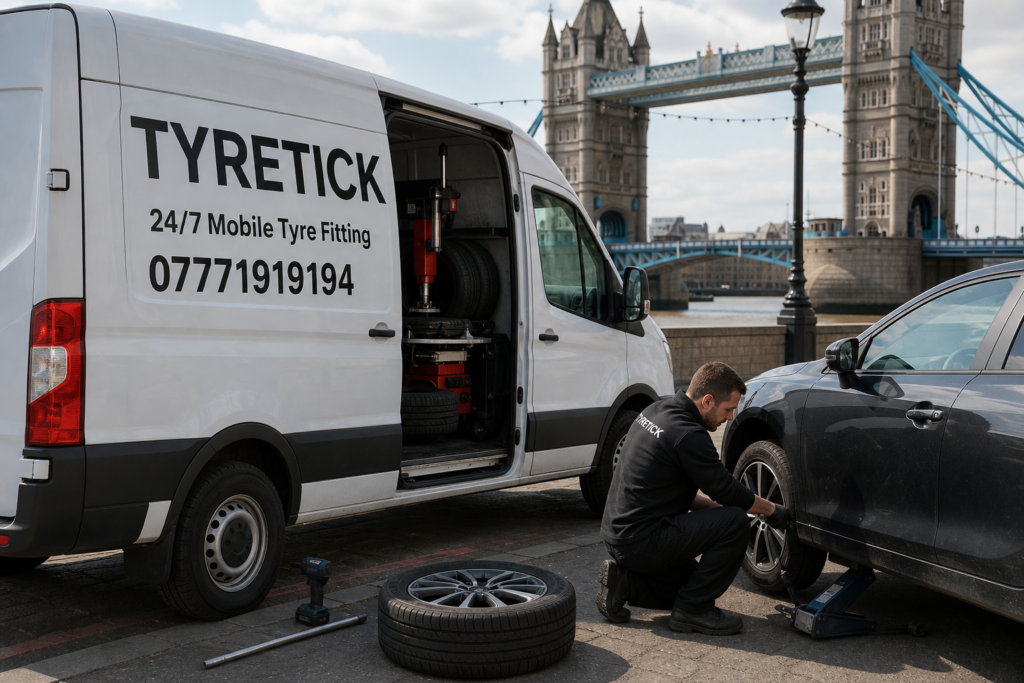
Mobile tyre fitting can be very handy when vans are spread across London or can’t easily visit a garage during working hours. Depending on access and safety, a fitter may be able to attend a depot, home address, workplace car park or roadside location.
This is where mobile tyre fitting London can cut the admin for a business. Instead of moving the van, changing driver plans and waiting at a tyre bay, the job can often be arranged around where the vehicle already is. For planning several vehicles, read how to arrange mobile tyre fitting for multiple vans.
For punctures away from base, roadside tyre repair London support can help if the van is in a safe place to work. A fitter still needs enough room around the vehicle and a sensible surface to jack it safely. Tyretick has a separate guide on whether a mobile fitter can repair a van tyre at the roadside.
What information should a business give when booking?
Good information helps the fitter bring the right tyre and equipment. Before booking van tyre fitting London, collect the tyre size, load rating, speed rating and the van’s exact location. You’ll find the tyre size on the sidewall, and the load rating matters a lot on commercial vehicles.
If your vans carry tools, stock or heavy materials, don’t choose tyres by size alone. Check Tyretick’s guide to van tyre load rating so the replacement suits the vehicle and the work it does.
Also tell the fitter if the van has locking wheel nuts, no spare wheel, restricted parking, underground access or a loaded rear compartment. Small details can affect the equipment needed and where the work can be done. If you’re unsure where a fitter can work safely, see where mobile tyre fitting can be done.
How do you reduce downtime from van tyre problems?
Prevention is usually easier than recovery. Keep a tyre log for each van, note pressure checks and ask drivers to report vibration, pulling, warning lights and repeated air loss early. Don’t let a small warning become a missed job.
For busy businesses, mobile tyre replacement can sometimes be planned around quieter parts of the day. If tyre stock and availability allow, same day tyre fitting London may also help get a vehicle back into use sooner than waiting for a garage appointment.
Some problems need urgent help. A flat at night, a damaged sidewall or a van stranded after a job may need emergency tyre fitting London support or 24/7 emergency mobile tyre fitting. For wider fleet planning, Tyretick’s guide on cutting vehicle downtime with mobile tyre fitting is worth reading.
If steering vibration appears after tyre work, ask whether the wheels were balanced. Tyretick’s article on wheel balancing London and locking wheel nut keys explains what can affect the job.
Frequently Asked Questions
Can a business book tyre fitting for more than one van?
Yes. If several vans need tyres, it helps to provide registration numbers, tyre sizes, locations and the order of priority. This makes it easier to plan the visit and match each van with the correct tyre.
Can a punctured van tyre always be repaired?
No. A repair depends on the position and type of damage, the tyre’s condition and whether it has been driven while flat. Sidewall damage, large cuts, exposed cords or severe heat damage usually mean replacement is safer.
Should all fleet tyres be the same brand?
Not always, but they must be the correct size, load rating and specification for the van. For predictable handling, avoid mixing unsuitable tyre types across the same axle and follow the vehicle maker’s guidance.
What should a driver do if a van tyre goes flat on a job?
The driver should stop in a safe place, avoid driving on the flat tyre, switch on hazard lights if appropriate and call for help. Tyretick also has practical advice for what to do with a flat tyre.
Is mobile fitting suitable at a workplace car park?
Often, yes, if there is safe access and enough space around the vehicle. The fitter will need to work safely away from moving traffic and with permission where the car park is privately managed.
Book van tyre fitting London with Tyretick
If your business van has a flat, damaged or worn tyre, Tyretick can come to your location for mobile tyre support across London. For van tyre fitting London, call 07771919194 or use the Tyretick contact page to book a fitter.
For more practical guides, you can also browse the Tyretick blog.