Skip to content

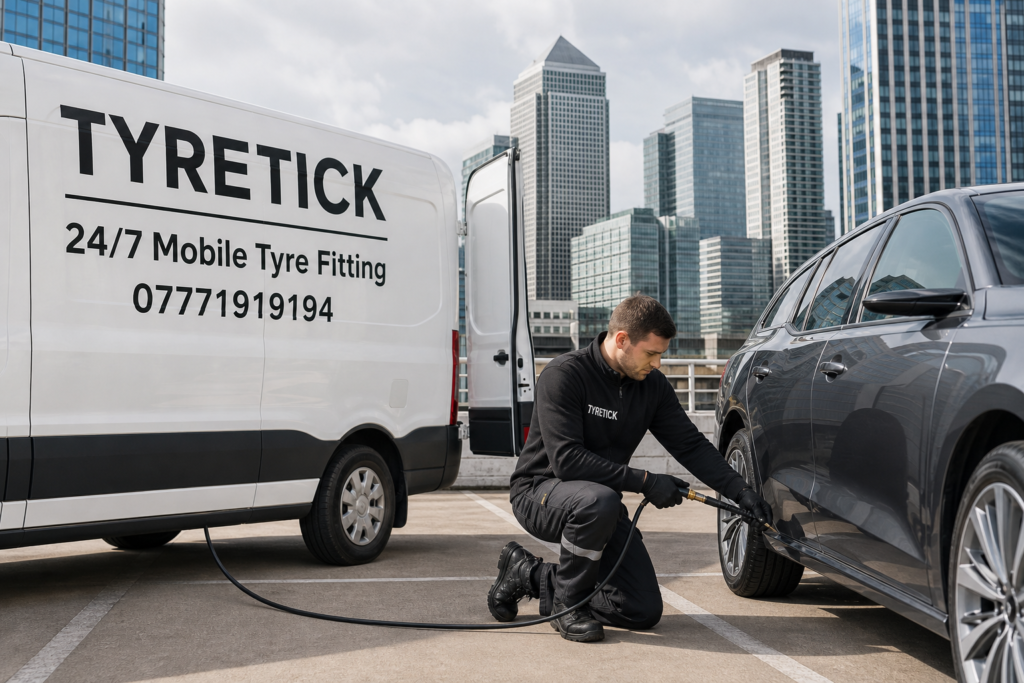
Fuel efficient tyres can reduce wasted energy, but it’s fair to ask whether they give up braking grip to save fuel. The short answer is no, not if you choose the right tyre and look after it properly. This guide explains what matters in day-to-day driving: tyre labels, tread depth, pressure, damage and knowing when replacement is safer than trying to squeeze out a few more miles.
For London drivers, economy and safety often meet on the same roads: wet tarmac, stop-start traffic, speed humps, potholes and sudden braking. By the end, you’ll know how to compare tyres for better fuel economy, what to check before buying, and when a mobile tyre fitting visit is the sensible next step.
Key takeaways
- Look at fuel efficiency and wet grip together, not as separate decisions.
- Correct pressure is one of the simplest ways to protect braking and fuel economy.
- The legal minimum tread depth for UK cars is 1.6mm across the central three-quarters of the tread, but performance can reduce before then.
- Low rolling resistance tyres can be a good choice if they also suit your car, load and driving.
- If a tyre is damaged, flat or unsafe, arrange a professional check before driving further.
Are fuel efficient tyres safe for braking?
Yes, fuel efficient tyres can be safe for braking when they’re correctly chosen, fitted and maintained. The trick is not to buy on the fuel rating alone. A tyre also needs good wet grip, the correct size, the right load and speed rating, and enough tread to clear water properly.
Tyres save energy mainly by reducing rolling resistance. In plain English, less energy is lost as the tyre flexes and rolls along the road. Modern tyre design can do this while still giving dependable grip, although very cheap, worn or unsuitable tyres may not strike the same balance.
Think about how you really use the car. If most of your driving is short London trips in mixed weather, predictable wet braking matters more than chasing the best-looking fuel label. For more help reading the label, see Tyretick’s guide to what tyre fuel, grip and noise ratings mean.
What affects braking most?
- Wet grip rating: a useful comparison point when buying new tyres.
- Tread depth: shallow tread clears water less effectively.
- Pressure: under-inflation can distort the tyre and increase heat.
- Condition: cuts, bulges, cracking and puncture damage are safety concerns.
- Vehicle weight: vans, EVs and loaded cars place extra demand on tyres.
How do tyre labels help you choose fuel efficient tyres?
The tyre label gives you a quick way to compare new tyres before fitting. It shows fuel efficiency, wet grip and external noise. For fuel efficiency, an A rating is generally the most efficient on the label scale, while lower ratings mean more rolling resistance.
Wet grip deserves just as much attention. A tyre with a strong fuel rating but weaker wet grip may not be the right choice for a car used daily in rain, traffic and emergency stops. In most cases, the best pick is a balanced tyre that suits how and where you drive.
| Label or check | Why it matters | What to look for |
|---|---|---|
| Fuel rating | Shows rolling resistance and energy loss | A balanced rating that suits your budget and use |
| Wet grip | Helps compare braking performance on wet roads | Do not ignore this for London driving |
| Noise rating | Affects outside road noise | Useful for comfort, but not the main safety factor |
| Size and load rating | Makes sure the tyre is suitable for the vehicle | Match the vehicle handbook or existing approved size |
| Tread and condition | Shows whether your current tyre is still safe | Check depth, damage, age and uneven wear |
If you’re choosing between budget, mid-range and premium options, compare the whole tyre rather than one rating. Grip, wear, comfort and suitability all play a part. Tyretick’s guide to budget versus premium tyres explains the trade-offs in plain English.
Can tyre pressure improve fuel economy and braking?
Correct pressure is one of the easiest ways to protect both safety and economy. Under-inflated tyres create more rolling resistance, so the engine or motor works harder. They can also overheat, wear on the shoulders and feel less stable when you’re braking or cornering.
Over-inflation isn’t the answer either. Too much pressure can reduce the contact patch and make the ride harsh. It may also cause uneven centre wear, which shortens tyre life and can affect grip.
Use the pressure figures given by your vehicle manufacturer, often found in the handbook, fuel flap or door frame. Check pressures when the tyres are cold where possible, and adjust for heavy loads if separate loaded settings are listed. If you’re unsure, this guide on what your tyre pressure should be is a useful place to start.
A quick pressure routine
- Find the correct pressure for your exact vehicle and tyre size.
- Check all four tyres, not just the one that looks low.
- Do not forget the spare if your car has one.
- Look for nails, cracks, sidewall bulges or valve damage while you are there.
- If one tyre keeps dropping, book a tyre puncture service rather than repeatedly topping it up.
When do economical tyres become false economy?
Trying to get extra miles from worn or damaged tyres can cost you more in the long run. Poor grip, uneven wear and incorrect pressure can increase fuel use and reduce braking confidence. More importantly, the car may feel less predictable when you need it to stop sharply.
The UK legal minimum tread depth for cars is 1.6mm across the central three-quarters of the tread and around the full circumference. Many drivers replace tyres before they reach that point, especially if wet braking, aquaplaning resistance or winter use is a concern. Tyretick has a clear guide on how to measure tyre tread depth properly.
Fuel economy can also suffer when tyres wear unevenly. Feathered edges, one-sided wear or bald patches may point to pressure, suspension, alignment or balancing problems. If your car shakes at speed, mobile wheel balancing near you may help protect the new tyres from early wear, and wheel balancing London support is especially useful after pothole impacts or kerb knocks.
If your tyres are already near the limit or visibly damaged, read Tyretick’s advice on worn tyres, braking and fuel economy. It explains why replacement can be safer than waiting for an MOT failure or a roadside problem.
How to choose fuel efficient tyres for London driving
Choosing fuel efficient tyres starts with the correct size and specification. Check the sidewall, handbook or manufacturer data before ordering. If the vehicle needs XL, run-flat, EV-specific or van-rated tyres, don’t downgrade just to get a lower price or a better-looking fuel rating.
For London use, wet grip, pothole resistance, braking feel and comfort all matter. Stop-start traffic can make wear more noticeable, and tight parking near kerbs can damage sidewalls. A tyre that lasts well and stays stable may be better value than the cheapest option on the screen.
Use this simple buying checklist:
- Match the tyre size, load rating and speed rating to the car.
- Compare fuel and wet grip ratings together.
- Consider your mileage, driving style and regular loads.
- Replace tyres in sensible pairs where needed, keeping the best grip on the rear unless your vehicle maker advises otherwise.
- Ask for mobile tyre replacement if the car is not safe to drive to a garage.
If you need help quickly, a same day tyre fitting London service can be useful when your existing tyres are unsafe. You can also read Tyretick’s guide to signs you need new tyres before deciding.
What should you check after fitting new tyres?
New tyres still need basic care. After fitting, check that the pressures are set correctly for your vehicle and load. If the steering feels odd, the car pulls to one side, or vibration appears at higher speeds, arrange a check rather than assuming it will settle down.
A professional fitter should use suitable equipment, fit the correct valve where needed and balance the wheel when appropriate. If you’re booking tyre fitting at home, make sure there is safe access around the vehicle and that the locking wheel nut key is available if your car uses one. Tyretick explains what to expect from tyre fitting at home.
Drivers who want mobile tyre fitting London support can also use Tyretick’s wider mobile tyre fitting in London service guide. For general service information, the Tyretick home page explains mobile tyre fitting, roadside help and repair options.
Frequently Asked Questions
Do low rolling resistance tyres always save fuel?
Low rolling resistance tyres can help reduce energy loss, but the result depends on the vehicle, pressure, driving style, load and road conditions. If they’re under-inflated or unsuitable for the car, the benefit can be reduced.
Are tyres for better fuel economy worse in the rain?
Not necessarily. Many modern tyres are designed to balance economy and wet grip. Always compare the wet grip rating as well as the fuel rating, especially if you drive regularly in London rain and traffic.
Can a puncture reduce fuel economy?
Yes. A slow puncture or leaking valve can lower pressure, which increases rolling resistance and heat. If one tyre keeps losing air, use a professional tyre repair service or mobile puncture repair rather than driving on it.
Should I replace all four tyres for better economy?
Not always. It depends on wear, vehicle type and tyre condition. Replacing in axle pairs is common, but some vehicles have specific requirements, so check the handbook or ask a fitter before mixing tread depths or tyre types.
What if I get a flat tyre at night?
Do not drive on a flat tyre, as it can damage the wheel and make the vehicle unsafe. Move to a safe place if possible and call for 24/7 emergency mobile tyre fitting if you need roadside help outside normal hours.
Need help choosing safer, efficient tyres?
Tyretick can help with mobile tyre fitting, tyre checks, puncture help and replacement tyres at your home, workplace or roadside in London. If you’re unsure whether your current tyres are safe, call 07771919194 for advice or use the contact page to book a fitter.