Skip to content

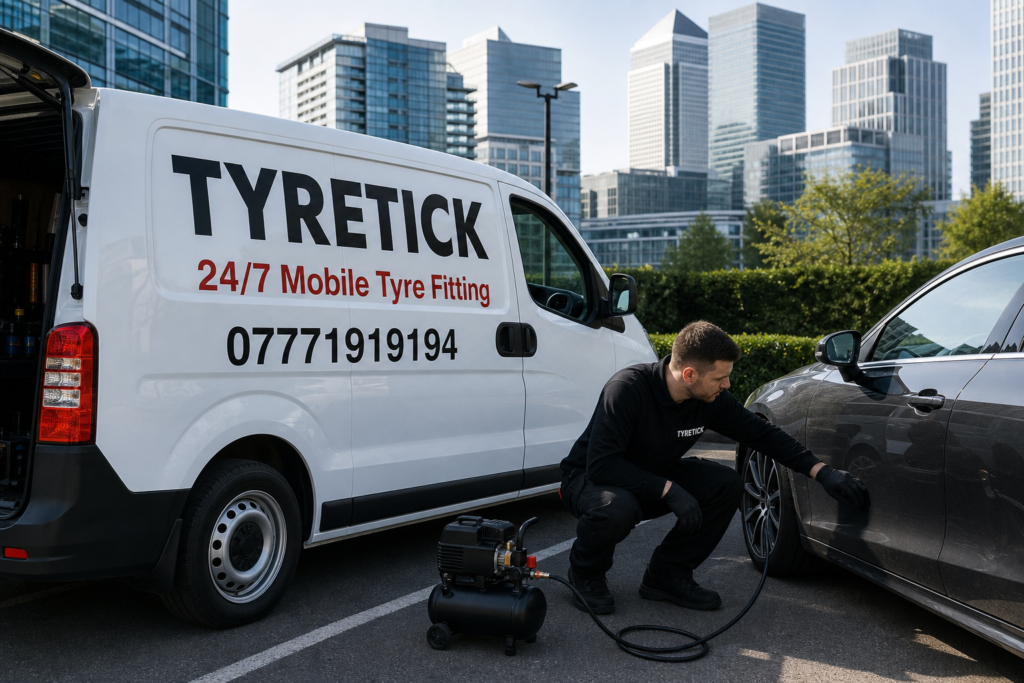
A tyre repair kit can be handy on some standard tyres, but run-flat tyres need more care. If your car has run-flats and no spare wheel, you need to know when sealant might help, when it can cause trouble, and when it’s better to stop and call a tyre expert.
This guide explains how repair kits, spare wheels and run-flat tyres compare. We’ll also cover what to check before using sealant, what to do when the TPMS warning comes on, and when to arrange mobile tyre fitting London instead of risking the drive to a garage.
Key takeaways
- Always check your vehicle handbook before using sealant on a run-flat tyre.
- A run-flat tyre can hide damage because it may still support the car after pressure loss.
- Sealant is not suitable for sidewall damage, large cuts, blowouts or tyres driven too far underinflated.
- If you are unsure, stop safely and call a professional tyre repair service.
Can You Use a tyre repair kit on Run-Flat Tyres?
Sometimes, but don’t assume it’s safe. Most kits include a bottle of sealant and a small compressor. They are meant to seal a small puncture in the tread and inflate the tyre just enough to get you somewhere safe for inspection.
Run-flat tyres are built differently from standard tyres. Their reinforced sidewalls can carry the vehicle for a limited distance after pressure loss, depending on the tyre and the vehicle manufacturer’s instructions. That’s useful in an emergency, but it also means damage inside the tyre can be harder to spot from the outside.
Some manufacturers do not recommend sealant with certain run-flat systems. Sealant can also make later inspection messier, and in some cases it may affect TPMS sensors. If your handbook says not to use it, don’t use it.
If you’ve picked up a nail or screw in the tread, read our guide to whether run-flat tyres can be repaired. If the casing has been damaged or the tyre has been driven too far while low, a run flat tyre replacement is usually the right answer.
Tyre repair kit, Spare Wheel or Run-Flat: What’s the Difference?
Not every car has the same back-up plan. Some carry a space-saver spare, some have no spare at all, and others rely on run-flat tyres or a repair kit. It’s worth checking your boot before a puncture catches you out on a wet evening or at the roadside.
| Option | Best for | Main limit | What to do next |
|---|---|---|---|
| Tyre repair kit | Small tread punctures on suitable tyres | Not for sidewall damage or large cuts | Drive only as your handbook allows, then get the tyre inspected |
| Space-saver spare | Temporary movement after a flat | Speed and distance restrictions apply | Replace or repair the main tyre promptly |
| Full-size spare | Replacing a flat wheel safely | Must be legal, inflated and compatible | Check the damaged tyre before reusing it |
| Run-flat tyre | Controlled driving after pressure loss | Internal damage may not be visible | Follow TPMS and handbook advice, then arrange inspection |
If you’re not sure which system your car uses, start with the handbook and the tyre sidewall markings. Our guide to reading tyre markings can help you check the size, load rating and specification before booking help.
What to Check Before Using a tyre repair kit
Before you connect a compressor or pour in sealant, stop in the safest place you can. Put your hazard lights on, keep well away from moving traffic, and don’t work on the road side of the vehicle unless you are fully clear of danger.
Run through these checks first:
- Read the handbook. It should tell you whether sealant is allowed with your car’s tyres and TPMS system.
- Look at the damage. A small object in the central tread may be repairable, but a torn sidewall is not.
- Check the wheel. If the alloy is cracked, bent or badly kerbed, inflating the tyre may not fix the problem.
- Think about how far you’ve driven. A tyre driven flat or underinflated may have hidden internal damage.
- Check the expiry date. Sealant can go out of date, and an old kit may fail when you need it most.
If the TPMS warning came on before the tyre looked flat, see our advice on what to do when the TPMS warning light is on. If the pressure keeps dropping after inflation, the cause could be a puncture, faulty valve, cracked wheel or poor rim seal.
When Is a tyre repair kit Unsafe or Pointless?
Sealant is not a magic fix for every flat. It is only a temporary measure, and only when the tyre type, puncture position and vehicle instructions allow it.
Do not use sealant if you can see:
- Sidewall bulges, cracks, splits or cuts
- A puncture outside the repairable tread area
- A large hole, blowout or shredded tyre
- Smoke, heat damage or a strong rubber smell
- A wheel that is visibly damaged or sitting badly on the rim
Sidewall damage is especially serious because that part of the tyre carries load and flexes constantly. Our guide to tyre sidewall repair explains why it cannot be treated like a simple tread puncture.
If you have already driven on a fully flat tyre, don’t add sealant and carry on as if nothing happened. Read why driving with a flat tyre is risky, then arrange proper help.
What Should You Do if Your Run-Flat Has No Spare?
Many cars with run-flats do not carry a spare wheel. The tyre is designed to help you leave a dangerous spot after pressure loss, not to finish the rest of your journey as normal.
Slow down, avoid sharp steering and harsh braking, and follow the handbook for any speed or distance limits. If you are on a motorway or fast A-road, get to a safe place first. Never attempt a repair in a live lane.
If the tyre looks damaged, the warning has been on for a while, or you’re not sure what happened, call for help. A mobile puncture repair may be possible on a standard tyre, but a run-flat often needs careful inspection before anyone can make a safe repair decision.
For London drivers, mobile tyre fitting London can be more practical than trying to limp to a garage on a suspect tyre. If the tyre is beyond repair, a fitter can discuss emergency tyre replacement options at your home, workplace or roadside where it is safe to work.
How Can You Avoid Being Caught Out Next Time?
Check your boot before you need it. Look for a spare wheel, compressor, sealant bottle, locking wheel nut key, towing eye and any jack tools supplied with the car. If something is missing, replace it before your next long drive.
Keep an eye on tyre condition too. UK law requires car tyres to have at least 1.6mm of tread across the central three-quarters of the tread and around the full circumference. Replacing tyres before they reach the legal minimum can make a real difference in wet weather.
If you often drive at night, on motorways or across London for work, have a simple plan for tyre trouble. Our UK tyre emergency kit guide covers useful items to keep in the car.
You can also book checks before a long journey or after a warning light. If getting to a garage is awkward, tyre fitting at home lets you deal with worn or damaged tyres without losing half the day.
Frequently Asked Questions
Will sealant ruin a run-flat tyre?
It depends on the tyre, sealant and vehicle system. Some manufacturers advise against sealant, and even when it is allowed, the tyre still needs professional inspection afterwards. Never treat a sealed run-flat as permanently repaired.
Can I call a tyre puncture service after using sealant?
Yes, but tell the fitter that sealant has been used. A tyre puncture service will need to inspect the tyre carefully, and some sealed tyres may not be suitable for repair afterwards.
Is a spare wheel better than a repair kit?
A usable spare can be more flexible because it does not rely on the puncture being small or in the tread. That said, space-saver spares still have speed and distance limits, and many modern cars do not have room for a full-size spare.
Should I search for emergency tyre repair near me or keep driving?
If the tyre is losing pressure, visibly damaged or the car feels unstable, stop safely and look for emergency tyre repair near me rather than carrying on. The same applies if you are searching for flat tyre repair near me after hitting a kerb or pothole.
Can mobile tyre fitting help if I have no spare?
Yes. A mobile tyre fitting service can come to your vehicle where it is safe to work, inspect the problem and fit a replacement if needed. For urgent situations, 24/7 emergency mobile tyre fitting can be especially useful.
Need Help with a Run-Flat, Spare or Repair Kit?
If you are unsure whether to use a tyre repair kit, it is safer to ask before driving further. Tyretick helps London drivers with flat tyres, run-flats, punctures and replacement tyres at home, at work or at the roadside where safe.
Call Tyretick on 07771919194 for advice or to book a fitter. You can also use our contact page to arrange tyre help, including a professional tyre repair service when repair is safe and suitable.