Skip to content

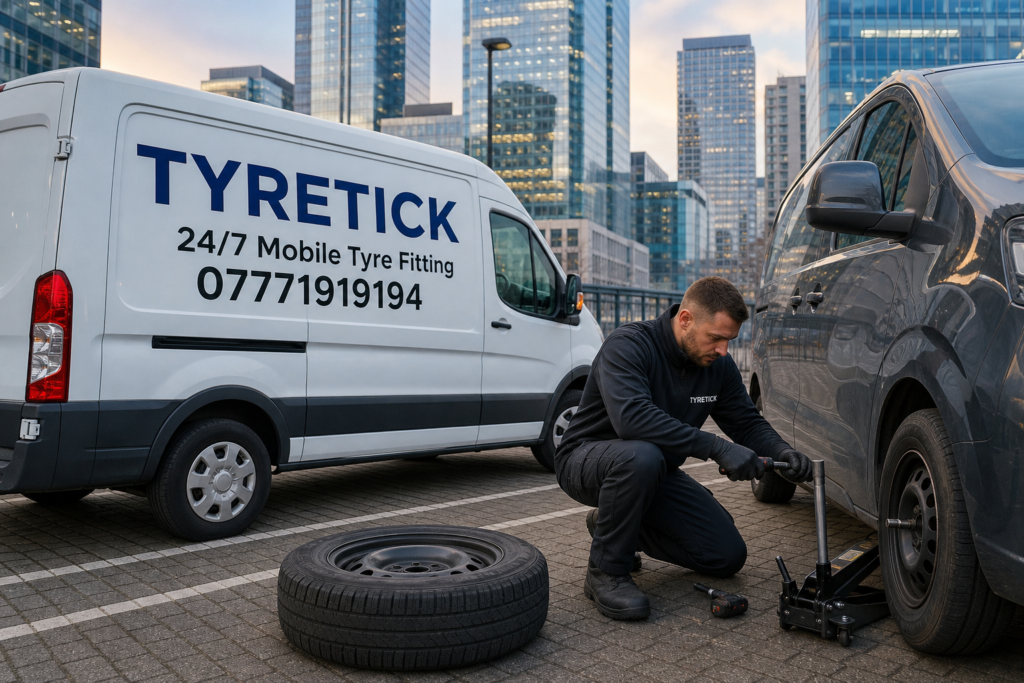
If you have searched for wheel alignment London, there is a good chance something feels off with the car. It may be pulling to one side, wearing a tyre on one edge, or leaving the steering wheel slightly crooked when you are driving straight.
One question we hear a lot is this: will a missing locking wheel nut key stop the job? The answer depends on what actually needs doing. A good wheel alignment London booking may not need the wheels removed, but tyre damage, punctures and balancing can change things quickly.
Key takeaways
- Wheel alignment normally measures and adjusts wheel angles without removing the wheels.
- A locking wheel nut key may still be needed if a tyre must be removed, replaced, repaired or balanced.
- Uneven wear, pulling and a crooked steering wheel can point to alignment issues, but tyre pressure and damage can feel similar.
- If the key is missing, do not force the locking nut; arrange proper locking wheel nut removal.
- Tyretick can help with mobile tyre fitting, punctures, tyre checks and wheel balancing before you arrange alignment.
Do you need a locking nut key for wheel alignment London?
For most alignment checks, the wheels stay on the car. The technician attaches measuring heads or targets to the wheels, checks the angles, then adjusts the steering and suspension components where adjustment is possible. Because the wheels are not normally removed, the locking wheel nut key is not always needed for the alignment itself.
Tyre work is where things can get awkward. If a tyre is illegal, badly worn, punctured, bulged or sitting on a damaged wheel, it may need sorting before alignment is worth doing. At that point, the key matters, because a fitter cannot safely remove a locked wheel without the correct tool or a proper specialist method.
If you are unsure whether the fault is alignment or balance, Tyretick’s guide to wheel alignment versus wheel balancing explains the difference between wheel angle problems and rotating weight imbalance.
What does a locking wheel nut affect during tyre and wheel work?
A locking wheel nut is there to make wheel theft harder. Instead of a standard hexagonal head, it has a shaped pattern that needs a matching key. Many cars have one locking nut on each wheel, alongside the normal wheel bolts or nuts.
It can affect any job where the wheel has to come off. That includes new tyres, puncture checks from inside the tyre, many wheel repairs, brake access and wheel balancing. It can also delay roadside help if a flat tyre has made the car unsafe to drive.
If you need locking wheel nut removal, arrange it properly rather than letting someone hammer on the wrong socket. For more detail, read whether a locking wheel nut can be removed without damaging the alloy and what to do with a damaged, rounded or stuck locking nut.
What signs point to wheel alignment London problems?
Drivers often book wheel alignment London services after hitting a pothole, clipping a kerb or noticing a sudden change in the way the car steers. Common signs include drifting left or right, the steering wheel sitting off-centre on a straight road, or one shoulder of a tyre wearing faster than the other.
Do the simple checks first. Low or uneven tyre pressure can make a car pull, vibrate or feel heavy through the steering. A damaged tyre can feel very similar, especially after a sharp impact on a London road.
- Check tyre pressures when the tyres are cold, using the figures for your vehicle.
- Look for cuts, bulges, nails, cracks and exposed cord.
- Measure tread depth across the tyre, not just in the centre.
- Compare wear on the inner edge, centre and outer edge.
- Think back to any recent pothole, kerb strike or hard braking.
The legal minimum tread depth for cars in the UK is 1.6mm across the central three-quarters of the tread, around the full circumference. Tyretick’s guides to measuring tyre tread depth properly and what uneven tyre wear is telling you can help you spot trouble early.
Alignment, balancing or tyre replacement: which job needs the key?
Alignment, balancing and tyre replacement often get mentioned in the same conversation, but they are separate jobs. Alignment adjusts the direction the wheels point. Balancing corrects uneven weight around the wheel and tyre assembly. Tyre replacement means taking the old tyre off the rim and fitting another one.
The table below shows where a locking wheel nut key is most likely to matter.
| Job | Main purpose | Is the locking nut key usually needed? | Why it matters |
|---|---|---|---|
| Wheel alignment | Corrects wheel angles | Usually no | Wheels normally stay on, but tyre faults may need fixing first. |
| Wheel balancing | Reduces vibration from imbalance | Yes | The wheel is removed and placed on balancing equipment. |
| Tyre replacement | Fits a new tyre | Yes | The wheel must come off the vehicle. |
| Puncture repair inspection | Checks if a repair is safe | Yes | The tyre often needs removing from the rim for proper inspection. |
| Visual tyre check | Looks for wear or damage | Not always | Many checks can be done with the wheel on the car. |
If the steering shakes at speed, you may need wheel balancing London help rather than alignment. Tyretick has a separate guide on whether you need a locking nut key for wheel balancing, plus advice on why a car can still vibrate after balancing.
What should you do if the key is missing before your appointment?
Do not leave it until the car is on a ramp or stuck at the roadside. Check for the key before you book tyre or wheel work. It is often in the glovebox, a boot side pocket, under the boot floor, with the jack kit, or in a small pouch from the locking nut set.
- Find the locking nut on each wheel and check the key fits before you need it.
- Look for rounding, cracking or signs that someone has already damaged the locking nut.
- If the key is missing, check the owner’s pack for the locking nut code if supplied.
- Do not use impact tools, chisels or random sockets to force it off.
- Tell the fitter in advance so the right help can be arranged.
If the tyre is flat or unsafe, mobile puncture repair or a tyre repair service may still be possible, but the fitter needs clear information before setting off. Tyretick’s guide to what information to give during an emergency tyre call explains which details help most.
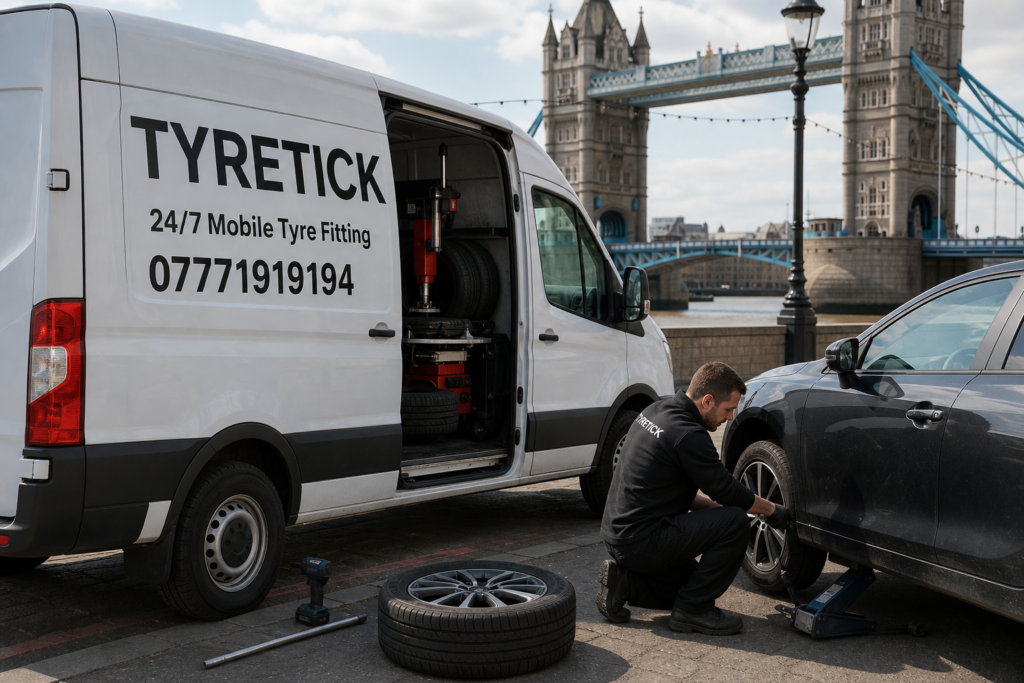
For drivers needing mobile tyre fitting London, it also helps to check the tyre size, parking access and whether the locking key is present. You can read more about Tyretick’s mobile tyre fitting London service and where a fitter can work safely.
How do potholes and kerbs change the answer?
After a pothole or kerb hit, do not focus only on alignment. The impact can bend a rim, damage a sidewall, knock off balancing weights, affect tyre pressure or disturb the suspension geometry. A missing locking wheel nut key becomes a bigger problem if the tyre or wheel needs to come off for inspection.
Look for a bulge on the tyre sidewall, fresh cuts, a dented rim edge, sudden vibration or a tyre pressure warning. If the car pulls strongly, the steering wheel is badly off-centre, or the tyre is losing air, avoid driving further than you have to.
Tyretick’s guide to spotting pothole damage gives practical checks after an impact. If you need flat tyre help London or emergency tyre fitting London, a mobile fitter can assess the tyre situation before you arrange a workshop alignment.
Frequently Asked Questions
Can alignment be done if my locking wheel nut key is missing?
Often, yes, because wheel alignment usually does not require the wheels to be removed. But if the tyre is unsafe, worn out, punctured or needs balancing first, the missing key can stop the wider job from being completed.
Can a mobile fitter do full four-wheel alignment at home?
Full alignment normally needs specialist measuring equipment and a suitable alignment bay. A mobile tyre fitter can still check tyre condition, fit replacement tyres, balance wheels where equipped, and advise if alignment is likely to be needed afterwards.
Should I replace tyres before wheel alignment?
If tyres are badly worn, damaged or illegal, replace them first. Aligning a car on poor tyres may hide the real issue and can waste time. After new tyres are fitted, alignment can help protect them from uneven wear if the vehicle geometry is out.
Is vibration an alignment problem?
Vibration is more commonly linked to wheel balance, tyre damage, wheel damage or suspension wear. Alignment problems more often cause pulling, off-centre steering and uneven shoulder wear, although symptoms can overlap.
What if I only need tyre fitting at home before alignment?
Tyretick can help with tyre fitting at home where it is safe and practical to work. If new tyres are fitted because of uneven wear, consider arranging an alignment check afterwards to help protect the replacement tyres.
Need tyre help before alignment? Call Tyretick
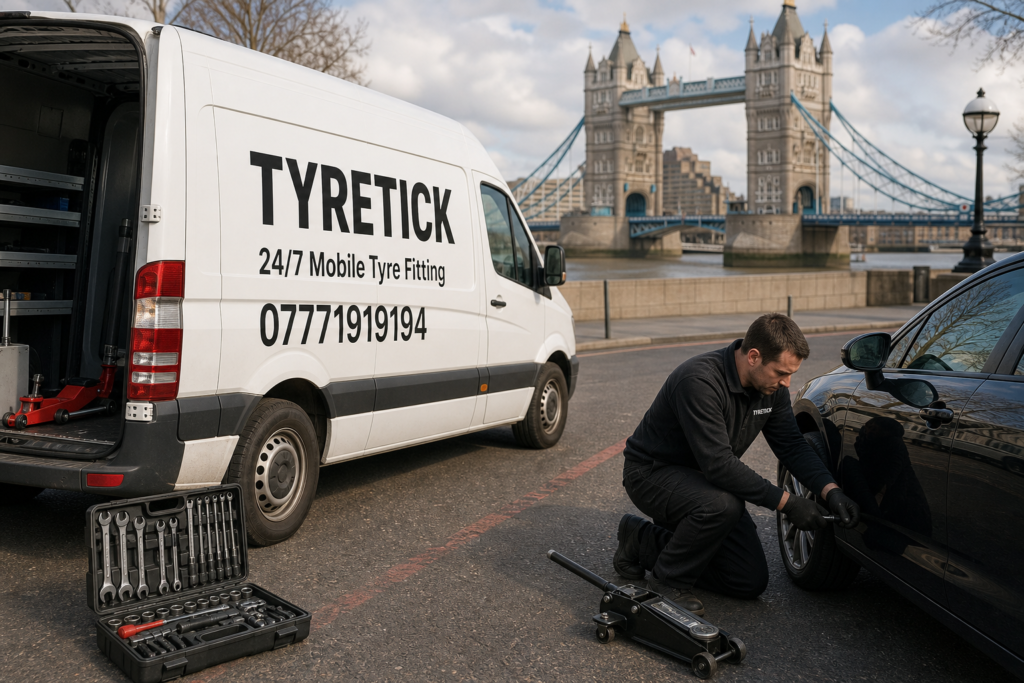
If you are booking wheel alignment London work but your tyre is flat, worn, vibrating or blocked by a missing locking nut key, Tyretick can help with the tyre side first. We provide mobile tyre fitting, 24/7 emergency mobile tyre fitting, tyre puncture service, tyre replacement and practical roadside tyre support across London.
Call Tyretick on 07771919194 to explain what has happened, where the car is, and whether you have the locking wheel nut key. You can also contact Tyretick or book a fitter online.