Skip to content

Cheap tyres London is a common search when you need new rubber quickly but don’t want to spend more than you have to. The real question is whether a lower-priced tyre suits your car, your mileage and the way you drive around the capital.
This guide explains when budget tyres can be a sensible choice, when mid-range or premium tyres may be better value, and what to check before you book fitting. It’s written for everyday London drivers who want safe, legal tyres without the guesswork.
Key takeaways
- Budget tyres can suit low-mileage, steady city driving if they’re the correct size, load rating and speed rating.
- Mid-range tyres often strike a good balance for mixed London and motorway use.
- Premium tyres may be worth it for high mileage, performance cars, EVs, heavy vehicles and frequent wet-road driving.
- Always check the tyre label, sidewall markings, tread depth and age before deciding.
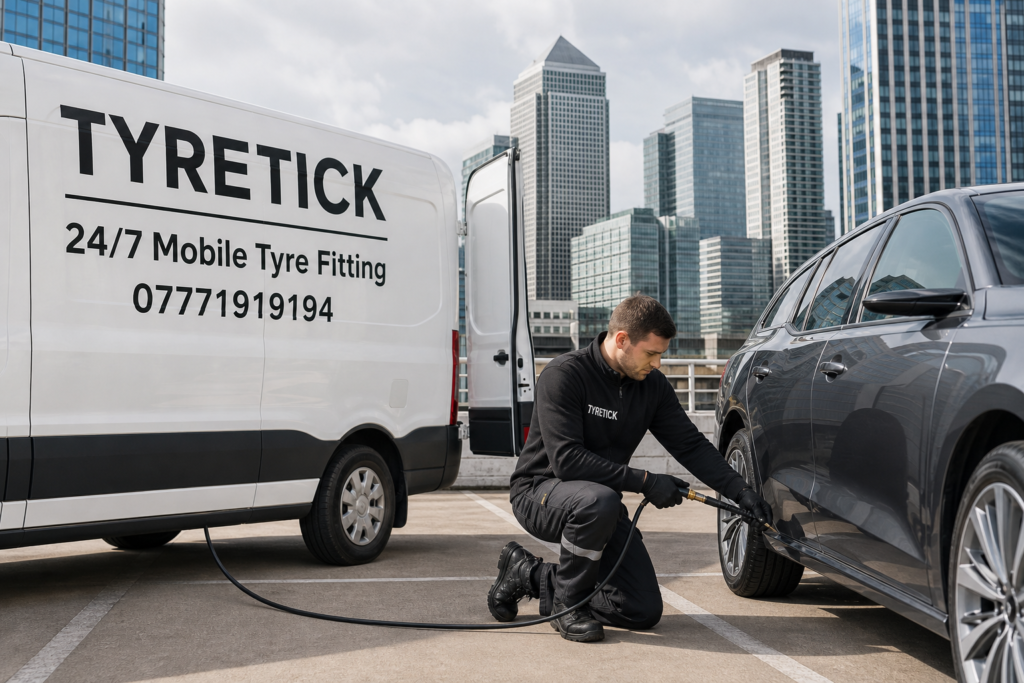
- Tyretick can help with mobile tyre fitting at home, work or roadside when you need advice and fitting.
Are cheap tyres London drivers buy actually safe?
Yes, a new tyre sold for UK road use should meet the required standards, but that doesn’t mean every tyre performs in the same way. The differences usually show up in wet grip, noise, comfort, wear rate, braking feel and how settled the car feels in poor weather.
A budget tyre isn’t automatically unsafe. It becomes a poor choice if it’s the wrong specification, fitted to the wrong vehicle, used beyond its limits, or picked only because it’s the lowest price on the screen.
For a small car doing short urban trips at sensible speeds, budget tyres for city driving may be perfectly reasonable. For a powerful SUV, loaded van, electric vehicle or long motorway commute, spending more can be the smarter decision.
If you’re not sure what your car needs, start with the basics: tyre size, load index and speed rating. Tyretick’s guide on how to check your tyre size shows you where to find the markings on the sidewall.
When do cheap tyres London drivers choose make sense?
Cheap tyres London drivers choose can make sense when the car is used lightly and you understand the trade-offs. Many London journeys are short, slow and stop-start, so high-speed performance may not be your main priority.
Budget tyres may be suitable if:
- You drive a small or medium car mainly around town.
- Your annual mileage is low.
- You rarely carry heavy loads.
- You drive calmly and leave a good braking distance.
- You need a legal replacement because a tyre is damaged or worn.
They can also be useful if you plan to sell the car soon but still need safe, legal tyres. The legal minimum tread depth for cars in the UK is 1.6mm across the central three-quarters of the tread and around the full circumference, although replacing tyres before they reach that point is often wiser.
For more detail on measuring tread correctly, see Tyretick’s tyre tread depth guide.
When are budget tyres a false economy?
A cheaper tyre can cost more in the long run if it wears quickly, gives poorer wet grip, adds road noise or simply doesn’t suit the vehicle. The cheapest option at checkout isn’t always the lowest-cost option over the life of the tyre.
Be cautious about budget tyres if you regularly use fast roads, drive late at night in bad weather, carry passengers and luggage, or rely on the car for work. London roads can be tough on tyres too, with potholes, speed humps, kerbs and tight parking taking their toll.
You should also think carefully if your car is an EV, SUV, sports model or heavy executive car. These vehicles may need tyres with stronger construction, the correct load rating, low rolling resistance or manufacturer-approved specifications.
If you’re comparing price bands, Tyretick’s budget vs premium tyres guide is a useful read alongside this article. For many drivers, the middle ground is worth a look too; see whether mid range tyres are worth it for London driving.
Budget, mid-range or premium: what should you compare?
Don’t compare tyres by price alone. Look at the tyre label, correct size, load rating, expected use and whether the tyre suits your vehicle. The label helps you compare fuel efficiency, wet grip and external noise.
The table below gives a simple way to think about the three main price tiers.
| Tyre type | Best suited to | Watch out for | Good question to ask |
|---|---|---|---|
| Budget | Low-mileage town driving and older small cars | May have less refinement, grip or wear life than dearer tyres | Is it the correct size and rating for my car? |
| Mid-range | Everyday mixed driving around London and occasional motorways | Quality varies by brand and model | Does it offer better wet grip or comfort for a modest extra cost? |
| Premium | High mileage, performance cars, EVs, SUVs and frequent motorway use | Higher upfront cost | Will better braking, wear or efficiency justify the spend? |
| Specialist | Run flat, van, XL, EV, all-season or winter use | Wrong specification can affect safety or handling | Does my vehicle require a specific tyre type? |
To understand the fuel, grip and noise ratings before you buy, read Tyre labels explained. If price is your starting point, the UK new tyre cost guide explains why costs vary by type and size.
Which premium tyre brands are worth considering?
Premium tyre brands such as Michelin, Goodyear, Continental, Bridgestone and Pirelli are often chosen by drivers who want strong all-round performance, especially in wet conditions, at higher speeds or over higher mileage. These brands invest heavily in tyre development, but you still need the right model for your car.
The name on the sidewall isn’t the whole story. A premium touring tyre, a performance tyre and an all-season tyre are built for different jobs. The best choice depends on your vehicle, wheel size, driving style and whether you mostly drive in town, on the motorway or through all seasons.
Some mid-range brands can also be a strong fit for everyday use. If you’re considering a specific name, Tyretick’s article on Hankook tyres for everyday London driving shows how to think beyond the badge.
If you’re replacing only two tyres, keep handling in mind. Tyretick’s guide on whether you can mix tyre brands explains the risks and best practice.
How should you choose cheap tyres London fitting services supply?
Before booking cheap tyres London fitting, give the fitter clear information. Share the tyre size, registration number, whether the vehicle has run flats, and whether the tyre is flat, damaged or simply worn.
A good fitter should help you choose a tyre that is legal, suitable and safe for the vehicle. That applies whether you book mobile tyre fitting London, visit a garage or need emergency help at the roadside.
Check these points before you confirm:
- Correct tyre size, load index and speed rating.
- Whether your car needs XL, run flat, EV, van or all-season tyres.
- The tyre label ratings for wet grip, noise and efficiency.
- The age and condition of any remaining tyres on the car.
- Whether wheel balancing is included or recommended after fitting.
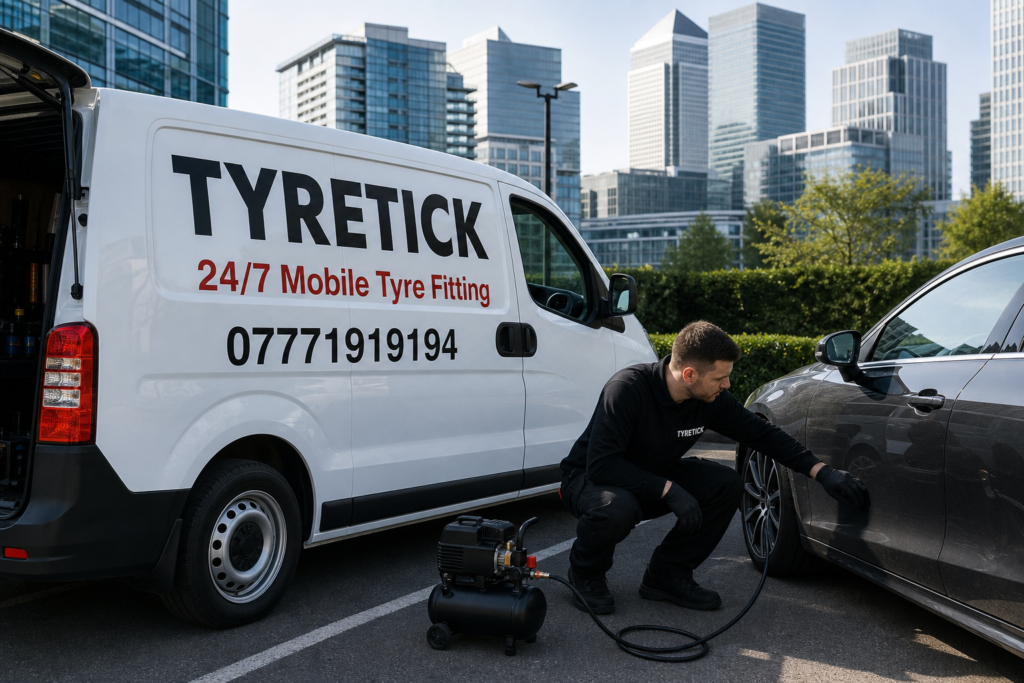
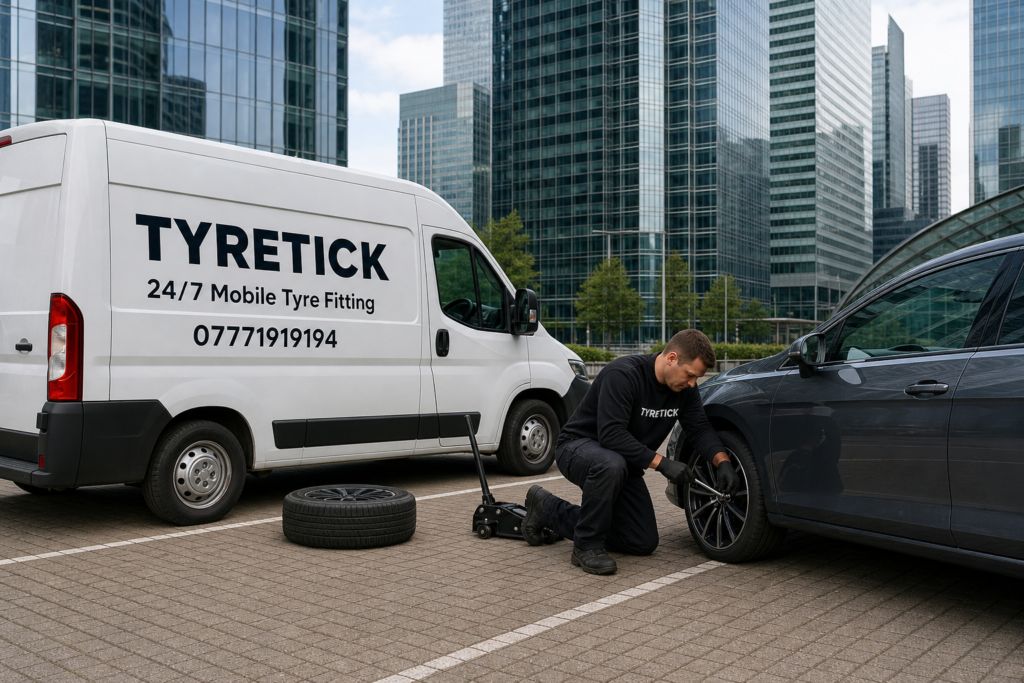
If you want fitting without visiting a garage, tyre fitting at home can be a convenient option. For urgent flats, a mobile tyre replacement may be safer than trying to drive on a damaged tyre.
Tyretick also provides a tyre repair service and tyre puncture service where a repair is safe and legal. If the damage is in the sidewall, the tyre has been driven flat, or the structure is compromised, replacement is usually the safer route.
What if you need same day or emergency fitting?
If a tyre fails suddenly, your priority is safety rather than hunting for the cheapest possible option. Pull over only where it is safe, avoid driving on a flat tyre, and call for help if the car cannot be moved safely.
Tyretick offers same day tyre fitting London support where available and can help with 24/7 emergency mobile tyre fitting in difficult situations such as rain, darkness or a roadside flat. The fitter can advise whether a repair is possible or whether replacement is needed.
If you have time to choose, compare budget, mid-range and premium options calmly. If you’re stuck at night, parked at work or dealing with a flat at the kerb, the right tyre in the correct size, fitted safely, comes first.
Frequently Asked Questions
Are cheap tyres legal in the UK?
They can be, provided they’re approved for road use, correctly sized, correctly rated and in safe condition. They must also meet the legal tread depth requirement and have no dangerous damage.
Do budget tyres wear out faster?
Some may wear faster than mid-range or premium tyres, but wear depends on driving style, alignment, pressure, vehicle weight and road conditions. A cheap tyre that is neglected can become expensive quickly.
Should I put premium tyres on an old car?
Not always. If the car is low value and used lightly, a sensible budget or mid-range tyre may be enough. If you drive long distances or in poor weather, better tyres can still be worthwhile.
Can I mix budget and premium tyres?
It’s legal in many cases if the tyres are the correct size and type, but it can affect handling. Avoid mixing different constructions on the same axle, and get advice if you’re unsure.
What is the best tyre choice for London driving?
For many drivers, a good mid-range tyre is a balanced choice. Budget tyres can suit light city use, while premium tyres are often better for high mileage, heavier cars, EVs and frequent motorway driving.
Need help choosing tyres? Call Tyretick
If you’re comparing cheap tyres London options and want clear advice, Tyretick can help you choose a suitable tyre and fit it at your home, workplace or roadside. Call 07771919194 or use the Tyretick contact page to book a fitter.
Tell us your tyre size, vehicle details and what has happened. We’ll help you decide whether repair, budget replacement, mid-range or premium is the safest fit for your situation.