Skip to content


SUV tyre pressure matters more than many drivers realise, especially on electric SUVs, 4x4s and larger family cars. These vehicles are heavier, often carry more passengers or kit, and can wear tyres quickly if the pressures are off. This guide explains where to find the right setting, when to adjust it, and which warning signs mean you should stop driving and get help.
We’ll also cover how pressure affects grip, tread wear, punctures and ride comfort. If you’re stuck at home, at work or at the roadside, Tyretick provides mobile tyre fitting in London for drivers who can’t safely get to a garage.
Key takeaways
- Always use the pressure listed for your exact vehicle, tyre size and load, not a generic SUV figure.
- Heavy loads, motorway journeys and seven-seat use may need a higher pressure setting.
- Low pressure can overheat tyres, damage sidewalls and increase the risk of a blowout.
- Uneven wear, vibration or repeated pressure loss should be checked professionally.
- If a tyre is flat or visibly damaged, don’t keep driving on it.
Why SUV tyre pressure matters more on EVs and 4x4s
SUVs and 4x4s usually put more strain through their tyres than smaller hatchbacks. They’re taller, heavier and often used for school runs, shopping, airport trips, towing, work equipment or family holidays. That extra weight changes how the tyre flexes, heats up and wears.
Electric SUVs add another factor: instant torque. The motor can deliver strong acceleration from low speeds, so tyres may wear faster if pressures are too low or if the tyres are not suited to the vehicle. You can read more about the construction of EV tyres compared with standard car tyres.
Correct pressure helps the tread sit flat on the road. Too little pressure makes the shoulders work harder, which can lead to heat build-up and scrubbing on the edges. Too much pressure can shrink the contact patch and wear the centre of the tread more quickly.
Where do you find the correct SUV tyre pressure?
The correct figure is set by the vehicle manufacturer, not by the tyre brand on its own. You’ll usually find it in one or more of these places:
- Inside the driver’s door frame or fuel flap
- In the vehicle handbook
- On the infotainment screen in some newer cars
- On the manufacturer’s official tyre pressure chart for your model
Make sure you’re reading the figure for your exact tyre size and load condition. Many SUVs list separate pressures for light loads and full loads. A seven-seat SUV carrying passengers and luggage may need a different setting from the same car with only the driver on board.
If you’re not sure what the codes on the sidewall mean, use Tyretick’s guide to reading tyre markings. It explains size, load index, speed rating and other details that matter when choosing replacement tyres.
SUV tyre pressure: when should you adjust it?
Check pressures when the tyres are cold, ideally before you drive far. Pressure rises as tyres warm up, so a hot reading can be misleading. If you’ve just driven, follow the vehicle handbook guidance rather than guessing.
Adjust the pressure when your use changes. A quick local trip with one person in the car is not the same as a fully loaded motorway run. If your dashboard TPMS warning light comes on, Tyretick’s guide to the TPMS warning light explains what to check before calling a fitter.
| Driving situation | What to check | Why it matters |
|---|---|---|
| Normal city use | Use the normal load pressure for your exact model | Helps keep wear even in stop-start driving |
| Full family load | Check the full load pressure on the vehicle label | Extra weight can make tyres flex and heat up |
| Long motorway trip | Set pressures before leaving, while tyres are cold | Reduces heat build-up at higher speeds |
| After a pressure warning | Inspect for nails, cuts, valve leaks or sidewall bulges | A slow puncture may return after reinflation |
What happens if pressure is wrong on electric SUV tyres?
Wrong pressure can make electric SUV tyres wear unevenly. Low pressure often causes shoulder wear and extra heat. High pressure can make the ride feel harsh and may wear the centre of the tread faster.
It can also affect braking and steering feel. A heavy SUV with underinflated tyres may feel vague when turning, especially in wet weather or on uneven London roads. If your steering feels odd, this guide to steering that feels off may help you narrow down the cause.
Pressure problems can hide other faults too. A tyre that keeps losing air may have a puncture, a damaged valve, a cracked rim or a bead-seating issue. If there’s a nail in the tread, don’t pull it out at the roadside; see Tyretick’s advice on whether a nail in a tyre can be repaired safely.
Can mobile tyre fitting help with SUV tyre pressure problems?
Yes, if the issue is linked to a puncture, damaged tyre, unsafe tread or a tyre that won’t hold pressure. A mobile fitter can inspect the tyre, check whether a repair is safe, and fit a replacement if needed. That’s useful if your SUV is too risky to drive or the tyre is already flat.
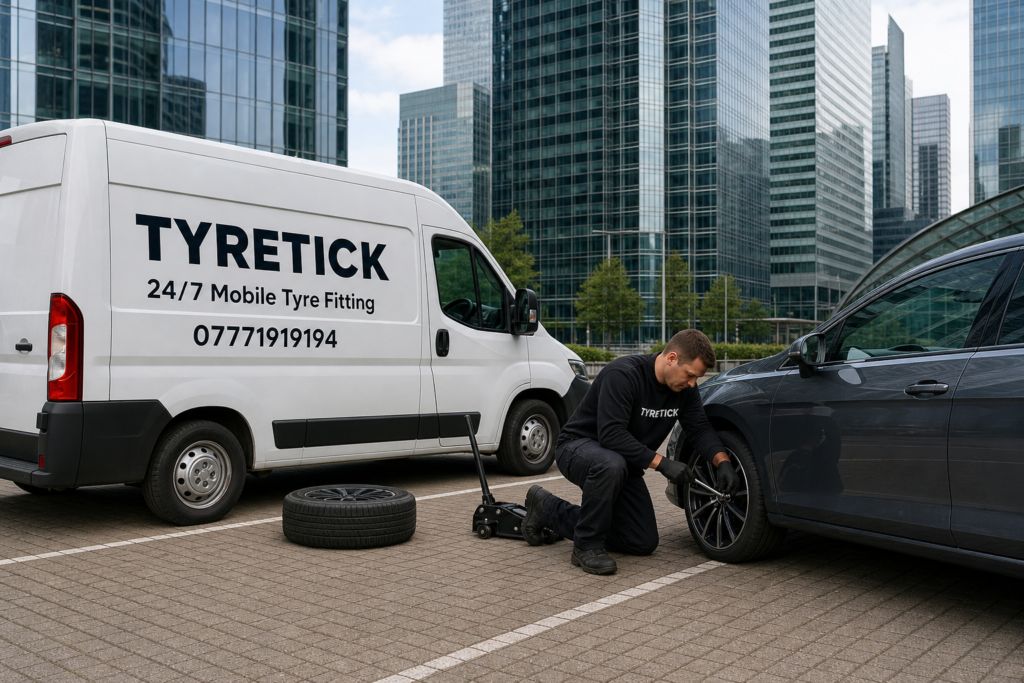
Tyretick offers mobile tyre fitting for cars, SUVs, 4x4s and many other vehicle types. If you searched for mobile tyre fitting London after finding a flat tyre, a fitter can come to your home, workplace or roadside where it’s safe to work.
A tyre repair service may be possible if the puncture is in the repairable tread area and the tyre has not been driven on while flat. A tyre puncture service is not suitable for every case, especially where there is sidewall damage, exposed cords, a bulge or severe wear.
If the tyre needs replacing, mobile tyre replacement means you don’t have to drive on a damaged tyre. Tyretick can also help with flat tyre help London drivers need at awkward times, including when a car is parked tightly on a residential street.
If you prefer the car to stay where it is, tyre fitting at home can be easier than arranging recovery. For vibration after new tyres, wheel balancing London services may also be relevant.
How should you inspect SUV tyres between pressure checks?
A quick visual check can stop a small problem becoming a dangerous one. Walk around the vehicle and compare all four tyres. One tyre sitting lower than the others often needs attention, even if the dashboard hasn’t shown a warning.
- Look for nails, screws or sharp objects in the tread.
- Check for cuts, cracks, bulges or sidewall scuffs.
- Measure tread depth across the tyre, not just in the centre.
- Compare wear on the inner and outer shoulders.
- Check pressures again after a few days if one tyre was low.
The UK legal minimum tread depth for cars is 1.6mm across the central three-quarters of the tread and around the full circumference. Tyretick’s guide to measuring tyre tread depth properly explains how to check it at home.
If your SUV is used on rough tracks, building sites or pothole-heavy routes, inspect the tyres more often. A heavy vehicle can suffer hidden damage after an impact, even if the tyre still holds air at first.
Frequently Asked Questions
Should all four SUV tyres have the same pressure?
Not always. Some vehicles specify different front and rear pressures, especially under load. Always follow the pressure chart for your exact model and tyre size.
Can I use the pressure printed on the tyre sidewall?
No. The sidewall usually shows a maximum pressure, not the correct daily driving pressure. Use the vehicle manufacturer’s recommended figure instead.
Why does my SUV pressure warning come back after topping up?
There may be a slow puncture, valve leak, rim issue or TPMS fault. If the same tyre keeps dropping, have it inspected rather than repeatedly adding air.
Are 4×4 tyres repaired in the same way as normal car tyres?
The repair rules depend on the tyre’s condition, puncture position and internal damage. Large tread blocks do not make sidewall or shoulder damage repairable.
Can I drive a short distance on a low SUV tyre?
If the tyre is visibly flat, bulging, damaged or very low, don’t drive on it. The weight of an SUV can quickly destroy the sidewall and make repair impossible.
Need help with SUV tyre pressure or a flat tyre?
If your SUV, EV or 4×4 has a flat tyre, repeated pressure loss or visible damage, Tyretick can help at home, work or roadside. For 24/7 emergency mobile tyre fitting, call 07771919194.
You can also contact Tyretick or book a fitter online. If the tyre can be repaired safely, we’ll advise you; if it needs replacing, we can fit a suitable tyre where the vehicle is parked.