Driving past Wembley Stadium along High Road during rush hour traffic the steering wheel pulls hard left. Not a slow drift either. A sharp tug. Once parked near the retail park, stepping out into cool rain reveals the trouble quickly. The front tyre sits totally flat.
North West London roads punish rubber constantly. Construction debris around new build sites, raised drain covers down Harrow Road, and rough tarmac create daily hazards. RAC Pothole Index data shows patrols attended 26,048 pothole-related breakdowns across the UK in 2025 alone, and the RAC has also recorded a sharp year-on-year rise in pothole-linked punctures moving into 2026.
Quick Answer
Emergency mobile tyre fitters bring equipped workshop vans straight to stranded vehicles within 15 to 30 minutes, fixing punctures, blowouts, or valve leaks on location 24/7 without costly recovery towing or long garage wait times.
Key Takeaways
- Emergency Definition: Mobile mechanics replace ruined rubber or plug fixable tread right where cars stop, on roadsides office car parks or home driveways.
- Response Timing: Vans reach stranded drivers in roughly 15 to 30 minutes across Wembley plus nearby North West London areas.
- Typical Costs: Basic emergency callout charges run £45 to £90, before adding replacement tyre costs or repair patch fees.
- Actionable Safety Tip: If a flat happens on fast roads like the A406, exit the vehicle right away and wait behind safety barriers.
- Tyre Preservation: Park the car immediately when pressure lights turn on to stop inner sidewalls from shredding completely.
What Causes Sudden Roadside Tyre Breakdown?
Sudden air loss usually occurs when sharp metal pierces rubber casings or old bead seals fail completely under load. Striking stray screws or hitting deep tarmac holes damages tyre structures instantly without warning.
- Puncture Damage: Drywall screws, small tacks or shattered glass fragments piercing through tread lines.
- Sidewall Bulges: Internal cord layers breaking when wheels hit tall concrete kerbs or strike deep potholes.
- Bead Leaks: Air leaking around rim edges because of rust, grime build, or bad initial bead seating.
RAC research shows just 3% of new cars sold in the UK today come with any form of spare wheel as standard, as brands cut weight for lower emissions targets. Drivers must count on mobile units when flat tyres happen.
What Is a Sudden Highway Blowout?
A blowout is different from a slow leak. It’s fast, violent, and the tyre structure just gives out mid drive.
- Under-Inflation Fatigue: Low air pressure builds up heat inside the tyre, and over distance the internal layers start to separate.
- Impact Breaks: A speed bump or a chunk of road debris hit at speed can tear straight through the carcass.
- Overloading: Load the car past the rating printed on the sidewall and you’re asking for trouble.
A slow puncture gives you days of subtle hints. A blowout gives you none. One loud bang, and suddenly the car is unstable, right there on the road.
How Does a Valve or Rim Leak Cause a Flat?
Not every flat start with a hole in the tread. Sometimes it’s the valve. Sometimes it’s the rim itself.
- Rubber Stem Degradation: Old valve stems get brittle and crack under the centrifugal force of fast driving.
- TPMS Sensor Corrosion: The electronic sensors built into some valve stems seize up or snap with age.
- Alloy Rim Deformation: A cracked or bent rim lets pressurised air seep past the bead seal, slowly but surely.
Mobile vans carry rim-sealing compounds, spare valves and replacement TPMS units so these non-tread leaks get sorted at the kerb without a trip to a garage.
A quick side-by-side so you don’t have to scroll back up looking for it:
| Feature / Issue | Roadside Puncture Repair | Emergency Tyre Replacement | Locking Wheel Nut Removal |
| What’s Involved | Cleaning entry hole, inserting internal rubber plug patch | Removing damaged tyre, fitting and balancing new tyre | Extracting stripped, damaged, or lost wheel nut key |
| Average Cost | £30 – £60 total | £70 – £220+ (varies by brand and size) | £50 – £90 per vehicle |
| Average Time | 10 to 15 minutes | 15 to 20 minutes | 15 to 30 minutes |
| Best For | Small clean tread punctures under 6mm | Sidewall tears, blowouts shredded rubber | Lost key socket or over-torqued lug nuts |
| Edge Cases | Unrepairable if within 25mm of sidewall edge | Requires precise tyre sizing matches on total AWD setups | Badly rounded nuts may require specialised reverse-thread sockets |
British Standard BS AU 159 specifies that repairs can only take place within the central 75% of the tread width, using a proper plug-and-patch combination repair rather than an external plug alone. Any puncture in the shoulder or sidewall falls outside this zone, so those tyres need a full replacement rather than a repair.
What Are the Signs Your Tyre Is About to Fail?
Catch the warning signs early and you might avoid the whole breakdown scenario altogether.
- Steering wheel vibration that won’t quit, or the car pulling hard to one side.
- A thumping sound that gets faster the more you accelerate.
- Cracks, deep cuts, or bulges showing on the outer sidewall.
- The tyre pressure warning light staying lit on the dash.
People mix up tread imbalance with misaligned steering fairly often. Tracking problems tend to cause smooth, uneven wear across the inside shoulder, building up slowly over thousands of miles. An unbalanced tyre, on the other hand announces itself immediately usually as a shake through the wheel somewhere between 40 and 60 mph.
When Should You Call for Immediate Roadside Help?
Some situations mean you shouldn’t drive another yard. Not one.
Cracked Alloy Rims
Hit a deep dip at speed and an aluminium rim can split outright, letting air escape instantly. No sealant can fix that.
Unresponsive Steering
When a fully deflated front tyre drags along the road surface, steering around a corner becomes close to impossible.
Severe Sidewall Tears
Clip a kerb while parking and you can cut straight through the structural cords, which risks a blowout later at speed, say on the North Circular.
Stripped Lug Nuts
Over-tightened bolts can leave you unable to fit a spare yourself, and that calls for specialised extraction tools.
Tyre fitters see this often: driving on a fully flat tyre for even 100 yards can wreck the internal rubber lining completely. What could’ve been a quick repair turns into a full wheel replacement.
How Does Our Mobile Service Keep You Moving in Wembley?
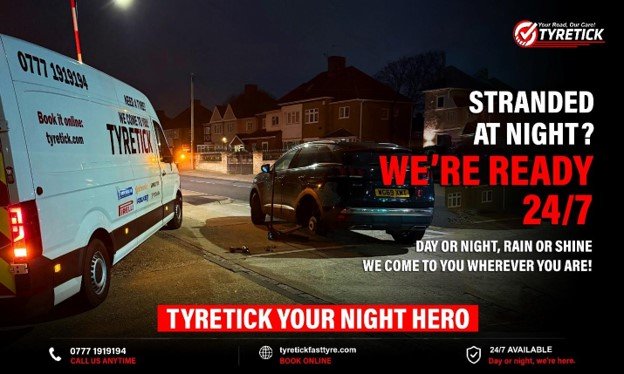
Our mobile units operate around the clock with professional tools, run-flat changing gear, and dynamic wheel balancers mounted inside every van. We focus strictly on rapid response wheel and tyre needs across Wembley and North West London.
What we do cover:
- On-site emergency mobile tyre fitting for cars, 4x4s and commercial vans.
- BS AU 159-compliant mobile puncture repair service at home or roadside.
- Safe locking wheel nut removal when keys are stripped or missing.
- Precision mobile wheel balancing to eliminate high-speed vibration.
What we don’t cover:
- Major mechanical repairs, engine diagnostics or oil servicing.
- Bodywork repairs or vehicle towing over long distances.
We keep our focus narrow so we can reach stranded drivers faster than general breakdown trucks. If you want to check what size code your car takes before calling, browse our guide on how to read tyre markings correctly or check our details on what happens during a mobile fitting appointment. You can also learn more about our local coverage on our main mobile tyre service options.
RAC Pothole Index Demands Fast Action
The technical terms matter far less than getting your car back on the road safely. If you call an emergency van line, just explain what you hear and see clearly. A good technician will figure out if you need a plug or a fresh wheel setup without fuss.
A handy rule of thumb for any road emergency is simple: if the damage touches the side wall or if you drove more than a hundred yards on a flat rim, order a full replacement tyre immediately. Trying to patch a shredded side wall just wastes time and money.
If you want the wider picture on how UK road conditions affect your wheels, the official RAC Pothole Index breaks down seasonal road-damage trends across the country.