Tyre puncture repairs in the UK range from £15 to £60, with most drivers paying around £25 for a standard plug repair. The £15 rate applies only if the puncture is in the tread’s center and under 6mm. Sidewall damage requires full tyre replacement. The price increases to £35-£60 for professional patch repairs, mobile tyre repair service, or emergency callouts. London rates are 30-40% higher than regional prices, and home tyre fitting services add £10-£15. This guide explains UK pricing, when repair is worth it, and when replacement is necessary.
Here’s a conversation on Reddit that might help you understand tyre repair costs better: Price to Get a Puncture Fixed – Reddit
UK Tyre Puncture Repair Prices
Forget the advertised £15 specials. Actual repair costs depend on puncture location, repair method, and whether you’re in Manchester or Mayfair.
London and southeast England command premium pricing. A £20 repair in Birmingham costs £28-£32 in central London. Weekend and after-hours callouts add another £15-£25 to base prices.
Budget tyres (£40-£60 new) rarely justify professional patch repairs. Why pay £35 to fix a tyre that costs £50? But premium brands like Michelin tyres make repair financially sensible since new replacements run £120-£180.
BS AU 159 Safety Standards When Repair Is Allowed vs Forbidden
UK law, through BS AU 15,9 draws hard lines on tyre repairs. Cross them and you’re stuck buying new rubber.
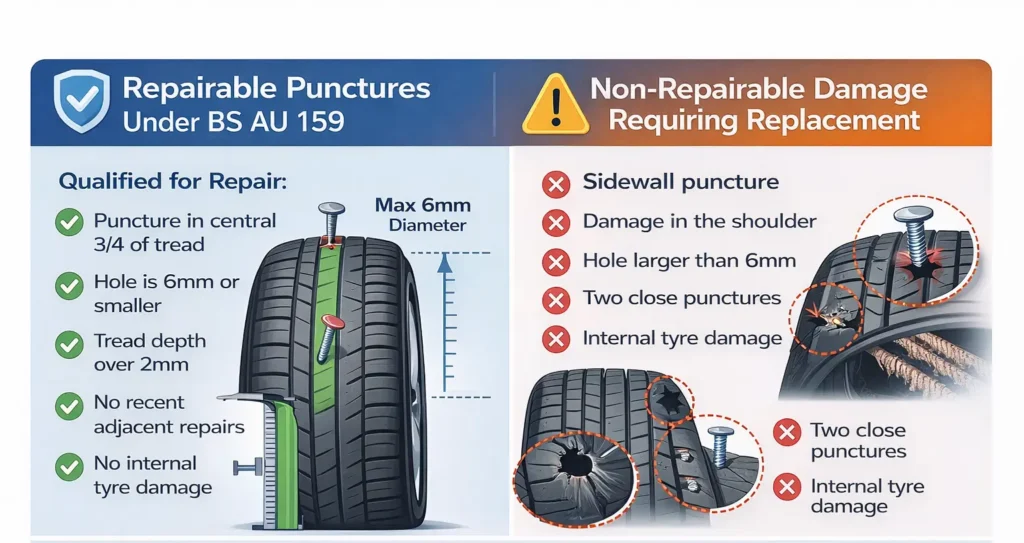
Repairable Punctures Under BS AU 159
Your puncture qualifies for repair when:
- Damage sits within the central three-quarters of the tread
- Puncture diameter measures 6mm or less
- Tread depth exceeds 2mm after repair
- No previous repairs exist within 40mm of the puncture
- Internal tyre structure shows no damage
That 6mm limit matters more than most realize. A nail creates roughly a 3-4mm hole. Screws and bolts often exceed 6mm, automatically disqualifying repair. You can learn more about driving safely with a punctured tyre and damage assessment in our detailed safety guide.
Non-Repairable Damage Requiring Replacement
These scenarios demand immediate tyre replacement:
- Sidewall punctures (structural integrity compromised)
- Shoulder damage in the outer tread quarters
- Holes exceeding 6mm in diameter
- Run-flat tyres with any puncture damage
- Two or more punctures within 40mm of each other
- Visible internal liner damage or casing separation
Insurance companies specifically check repair compliance during claims. Non-compliant repairs void coverage and potentially trigger legal liability in accidents. Worth knowing before accepting that suspiciously cheap quote.
Plug vs Patch: Which Repair Method Actually Works
The repair method determines both cost and longevity. Here’s what actually happens during each process.
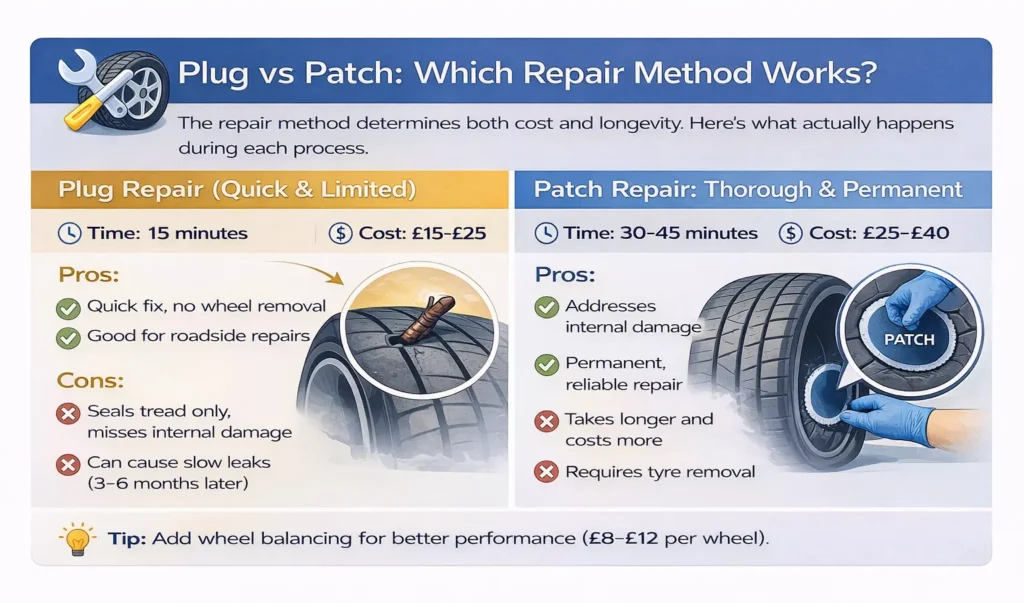
Plug Repair: Fast But Limited
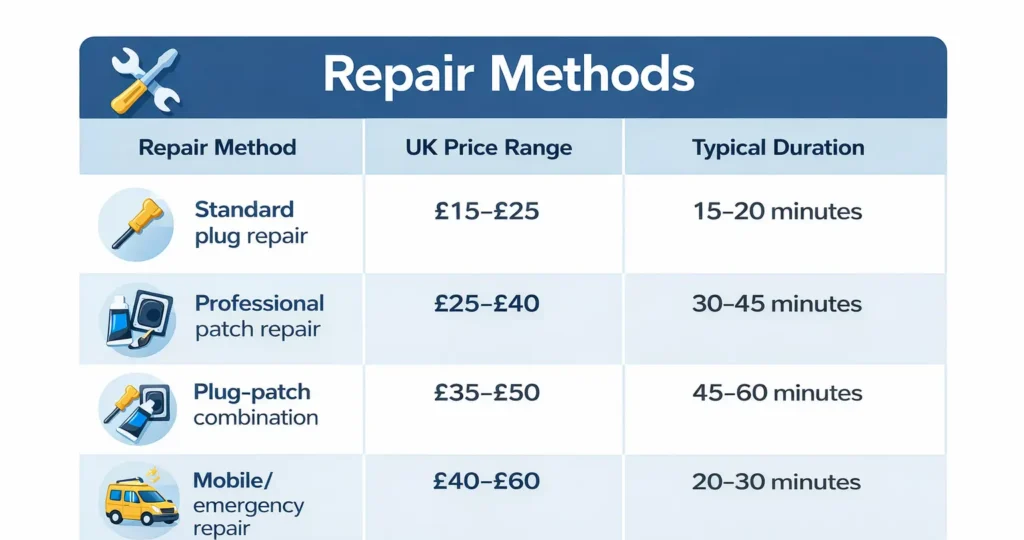
Mechanics insert a rubber plug coated with sealant through the puncture hole from outside the tyre. Takes 15 minutes. Costs £15-£25.
Pros:
Quick turnaround means you’re back driving within the hour. No wheel removal required for roadside fixes.
Cons:
Plugs only seal the tread surface. They don’t address internal liner damage, which causes slow leaks three to six months post-repair. BS AU 159 technically requires simultaneous internal inspection, which plug-only repairs skip.
Patch Repair: Thorough and Permanent
Technicians remove the tyre, inspect internal damage, buff the liner, and apply vulcanizing rubber patches from inside. Costs £25-£40. Takes 30-45 minutes.
This method identifies hidden damage that plug repairs miss. Casing separations, liner tears, and moisture intrusion all become visible during internal inspection. Professional patches bond chemically to tyre rubber, creating permanent seals that match original tyre integrity.
Add wheel balancing to your puncture repair for optimal performance. Balancing costs an additional £8-£12 per wheel but prevents uneven wear that shortens tyre lifespan.
Plug-Patch Combination: Best of Both
Premium repairs use both methods simultaneously. The external plug fills the puncture channel while the internal patch seals the liner. This prevents moisture infiltration that causes steel belt corrosion.
Expect £35-£50 pricing and 45-60 minute completion time. Worth it for premium tyres or when you need maximum repair durability. Most manufacturers warranty combination repairs for the tyre’s remaining tread life.
Before looking at official prices, it helps to see what real UK drivers are actually paying and saying about puncture repairs. This Reddit thread gives a clear, honest picture.
Price to get a puncture fixed
byu/throwawaycoldandhot inMotoUK
Real-World Puncture Scenarios
Different puncture causes create different repair situations and costs.
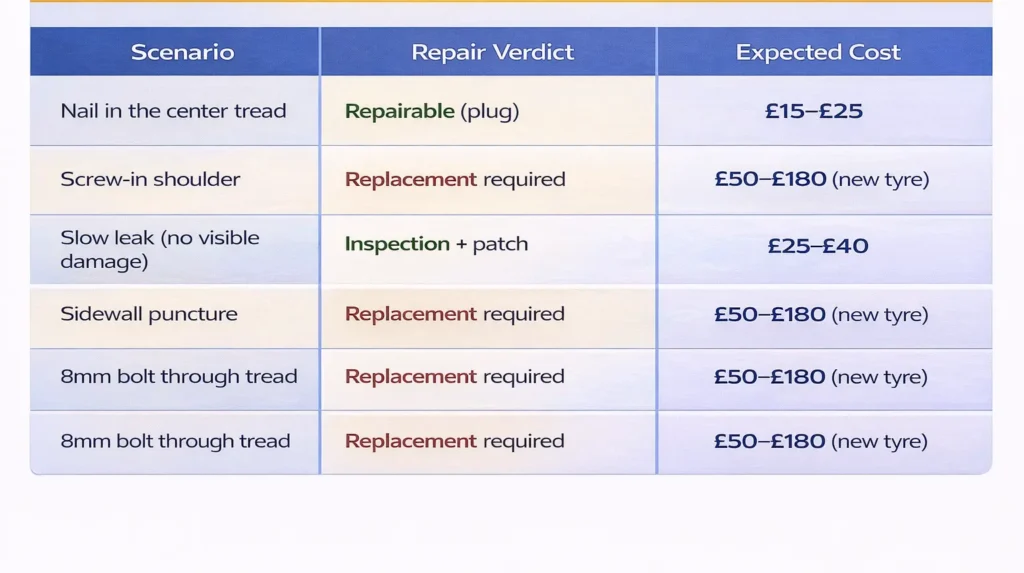
Dealing with Debris in Construction and Industrial Areas
Construction sites and industrial areas scatter the most problematic debris. Screws and bolts typically exceed the 6mm repair threshold. If you work in these environments, consider 4×4 tyres for rugged puncture resistance with reinforced sidewalls and thicker tread compounds.
Identifying and Handling Slow Leaks
Slow leaks frustrate drivers because damage isn’t always visible. These require internal inspection to locate micro-punctures or valve stem failures. Professional diagnosis costs £10-£15 before repair charges apply. Our step-by-step guide to changing a punctured tyre covers emergency procedures when slow leaks become sudden failures.
Winter Tyre Considerations and Cold Weather Vulnerabilities
Winter compounds add complexity. Cold temperatures below 7°C make rubber brittle, increasing puncture vulnerability. Always check if your summer tyres are safe in winter conditions before relying on repaired tyres during freezing months.
Need Immediate Mobile Tyre Help?
Fast roadside rescue, expert fitting, and friendly support across the UK.
Hidden Costs That Change Your Final Bill
Base repair prices tell half the story. These factors push your final invoice higher.
Vehicle Type Multiplies Labor Time
Standard cars take 20 minutes for wheel removal and refitting. SUVs and vans require hydraulic jacks and extended labor, adding £5-£10 to repair costs. Specialized vehicles like EVs with reinforced tyres sometimes demand manufacturer-specific repair protocols that command premium pricing.
Run-Flat Tyres Cannot Be Repaired
BMW, Mini, and some Mercedes models come factory-equipped with run-flat technology. Any puncture damage requires full tyre replacement. No exceptions under manufacturer warranty terms.
Replacement run-flats cost £120-£250 each. Many drivers switch to conventional tyres plus spare wheels to avoid this expense, though this voids certain vehicle warranties.
Tyre Age Determines Repair Worthiness
Tyres older than three years with less than 3mm remaining tread depth rarely justify repair investment. You’ll extract maybe six months of additional use before replacement becomes mandatory anyway.
Do the math. Spending £35 on professional patch repair makes zero financial sense when your tyre has twelve months maximum remaining life. Just budget for new rubber instead.\
Making the Smart Repair Decision
Tyre puncture repair costs depend on the damage and repair type. A £15 plug repair is fine for small nail punctures in budget tyres. For premium tyres or slow leaks, patch repairs cost £25-£40. Always ensure repairs meet BS AU 159 standards. Sidewall damage or large punctures require replacement, no exceptions. Non-compliant repairs can lead to insurance issues or MOT failures.
Frequently Asked Questions
How long does a professional tyre repair last?
Professional patch repairs typically last the tyre’s remaining tread life when performed correctly according to BS AU 159 standards. Plug-only repairs last 12-18 months before slow leaks develop. Combination plug-patch repairs often come with manufacturer warranties covering the full tyre lifespan.
Can I repair a tyre myself to save money?
DIY plug kits cost £10-£15 but create liability issues and void insurance coverage if repairs don’t meet BS AU 159 compliance. You cannot inspect internal damage without removing the tyre from the wheel, meaning hidden structural failures go undetected. Professional repairs include internal inspection, proper vulcanization, and compliance documentation that matters during insurance claims.
Do I need to replace both front tyres if one is damaged?
Not for repairable punctures within BS AU 159 limits. However, if the tread depth difference between left and right tyres exceeds 3mm after repair, replace both fronts to maintain handling balance. All-wheel drive vehicles require matching tread depths across all four tyres within 2-3mm to prevent drivetrain damage.
Will my insurance cover puncture repair costs?
Standard comprehensive insurance rarely covers puncture repairs since they fall under wear and tear. Tyre insurance add-ons cost £30-£50 annually and cover unlimited repairs plus one replacement per year. Worth buying if you regularly drive through construction zones or industrial areas where punctures occur frequently.
Should I repair or replace a tyre with 4mm tread remaining?
Repair makes financial sense with 4mm remaining tread since you’ll extract 6-12 months of additional use. Below 3mm tread depth, replacement becomes more cost-effective because you’re approaching the legal 1.6mm minimum anyway. Premium tyres warrant repair at lower tread depths than budget brands due to higher replacement costs.
How quickly can I get mobile tyre repair service?
Most UK mobile services arrive within 60-90 minutes during business hours. Emergency 24/7 callouts typically respond in 45-60 minutes but cost £10-£20 extra. Contact us for a puncture repair quote and specific response times in your area.