
Your dashboard light just came on.
You know it’s the tyre pressure warning.
But what should the pressure actually be?
Most London drivers check their tyres incorrectly. They goes at the petrol station, or worse, they ignore the warning light completely. That’s dangerous. Wrong tyre pressure causes blowouts, reduces fuel economy by 3%, and wears your tyres 25% faster. If you’re stuck with a tyre emergency right now, our 24/7 emergency mobile tyre fitting service can reach you anywhere in London within 45 minutes.
Here’s exactly where to find your correct tyre pressure, how to check it properly, and the mistakes that could cost you hundreds in repairs.
Where to Find Your Exact Tyre Pressure
Your car’s manufacturer sets the correct tyre pressure. Not the tyre shop. Not the petrol station attendant. The manufacturer.
You’ll find this information in three places:
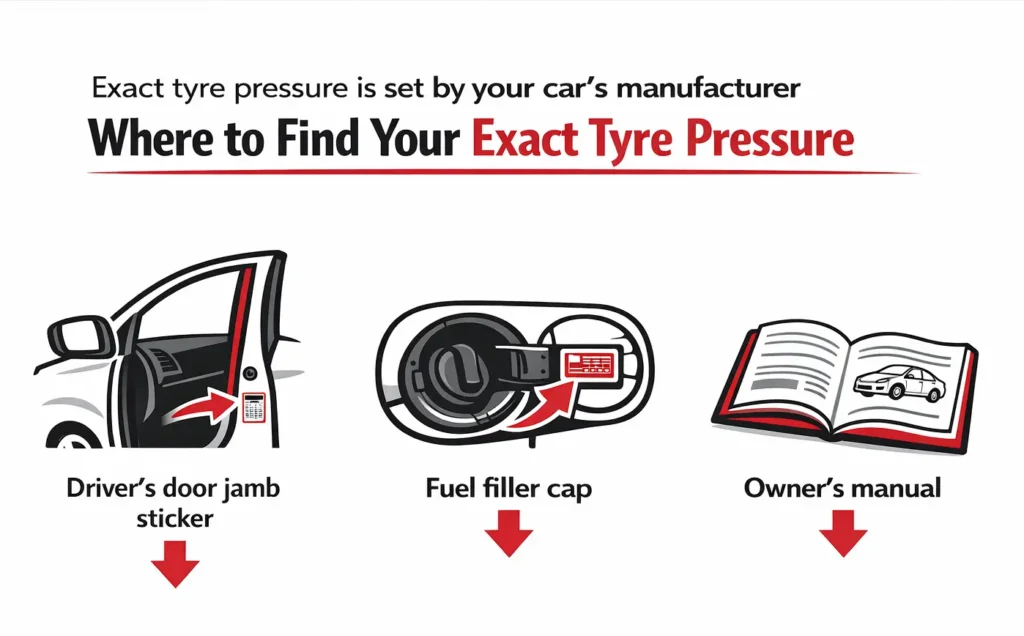
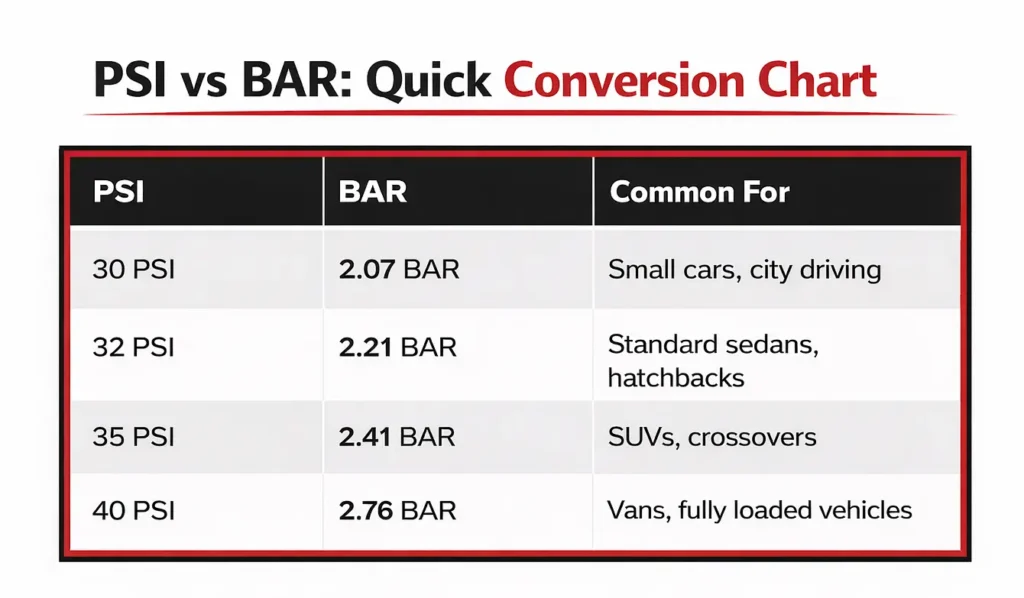
The sticker shows pressure in PSI (pounds per square inch) or BAR. In London, most cars run between 30-35 PSI for normal driving. But your specific car might eed something different. That’s why you must check your exact model.
Can’t find your pressure specs? Our mobile tyre fitting technicians carry manufacturer databases on their vans and can tell you the exact pressure for your make and model on the spot
How to Check Your Tyre Pressure Properly (Most People Get This Wrong)
Checking tyre pressure sounds simple. But 67% of UK drivers do it incorrectly, according to TyreSafe. Here’s the right way, step by step.
When to Check: Cold vs Hot Tyres
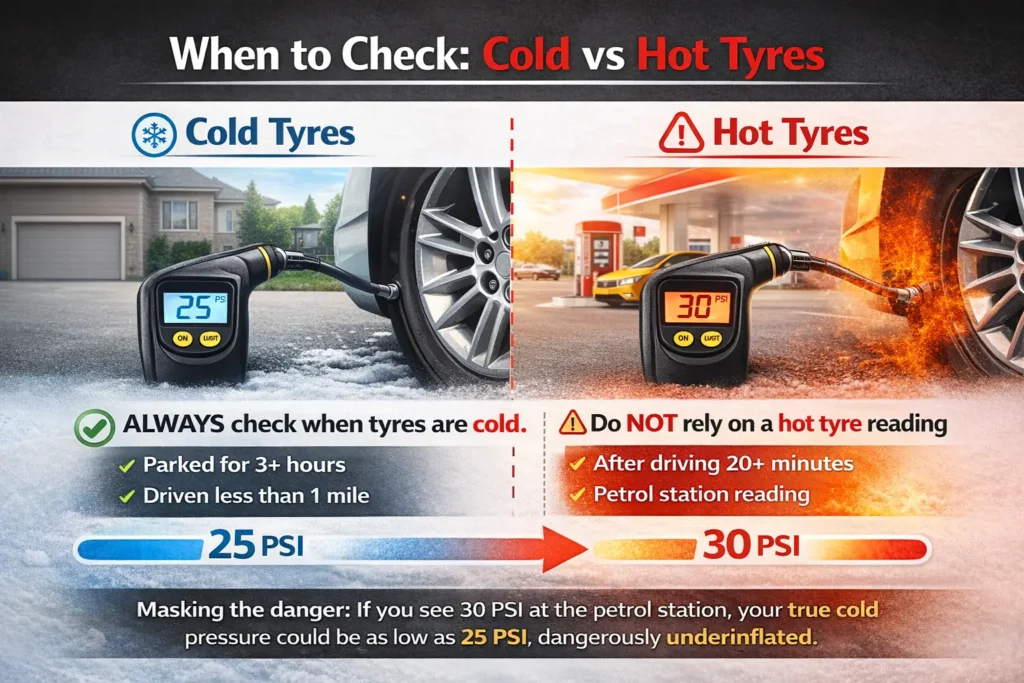
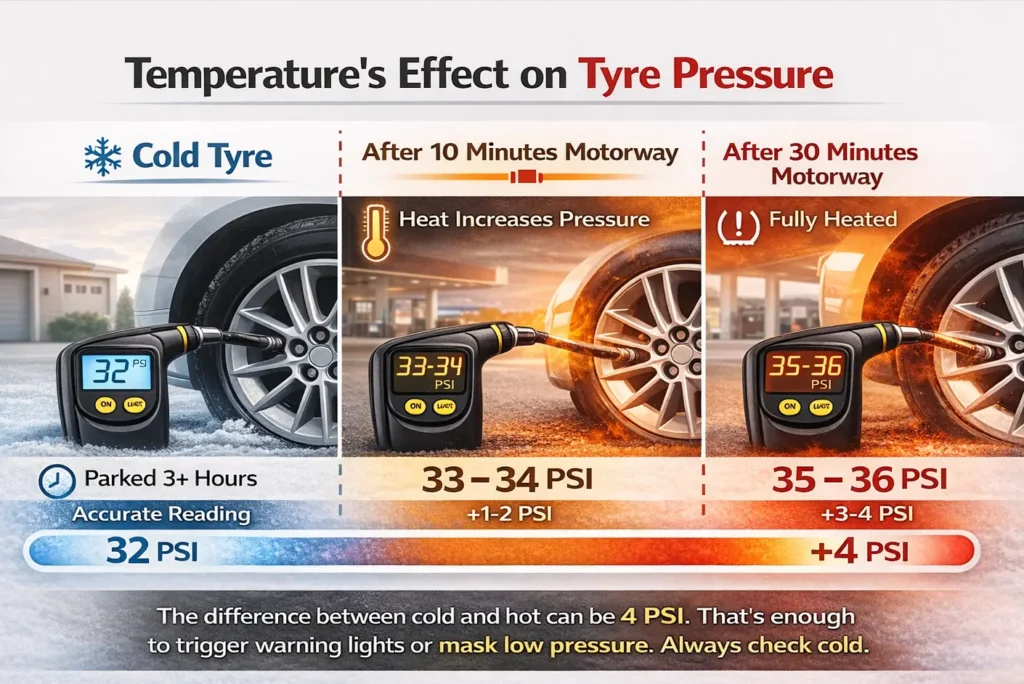
Always check when tires are cold. This means the car hasn’t moved for at least three hours, or you’ve driven less than one mile. Why? Driving heats your tyres. Heat increases air pressure by 1-2 PSI every 10 minutes of motorway driving.
If you check hot tyres at the petrol station after a 20-minute drive, you might see 30 PSI when your true cold pressure is only 25 PSI. That’s dangerously low. You just don’t realize it because the heat is masking the problem.
Need professional help? Book our home tyre fitting service and we’ll check and adjust your pressure at your driveway before work.
The Correct Checking Process
- Remove the valve cap from one tyre (keep it, don’t lose it)
- Press the gauge firmly onto the valve stem (you’ll hear a quick hiss)
- Read the measurement immediately (digital gauges show numbers, dial gauges have a pointer)
- Add or release air to match your manufacturer specs
- Recheck the pressure to confirm it’s correct
- Replace the valve cap (it keeps dirt out)
- Repeat for all four tyres (front and rear often need different pressures)
Never trust the built-in petrol station gauges. They’re often 3-5 PSI off because hundreds of people use them roughly every day. Buy your own digital gauge for £15. It’ll save you thousands in prevented tyre damage.
| Pro Tip: If you’re unsure about your tyre pressure gauge, invest in a quality digital gauge. They provide more precise readings compared to the petrol station gauges, which can often be 3-5 PSI off. |
Understanding Your Tyre Pressure Warning Light
That yellow warning light on your dashboard is TPMS (Tyre Pressure Monitoring System). It triggers when pressure drops 25% below the recommended level. That’s serious.
What the Light Means
Solid yellow light: One or more tyres are significantly low. Check all four immediately.
Flashing yellow light: The TPMS system itself has a fault. Book a diagnostic check.
Don’t ignore the light. A study by the National Highway Traffic Safety Administration found that driving on underinflated tyres increases stopping distance by 20% and makes blowouts three times more likely. In London traffic, that extra stopping distance could be the difference between a near-miss and a collision.Got a warning light that won’t clear? Our mobile wheel balancing service can diagnose TPMS issues and fix them on-site across London.
5 Common Tyre Pressure Mistakes That Damage Your Car
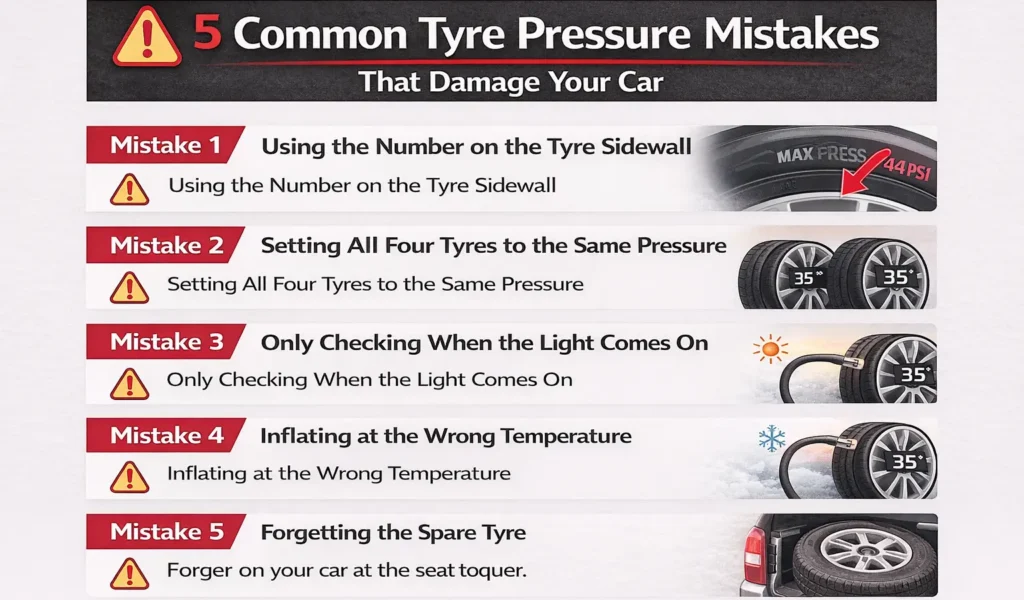
Mistake 1: Using the Number on the Tyre Sidewall
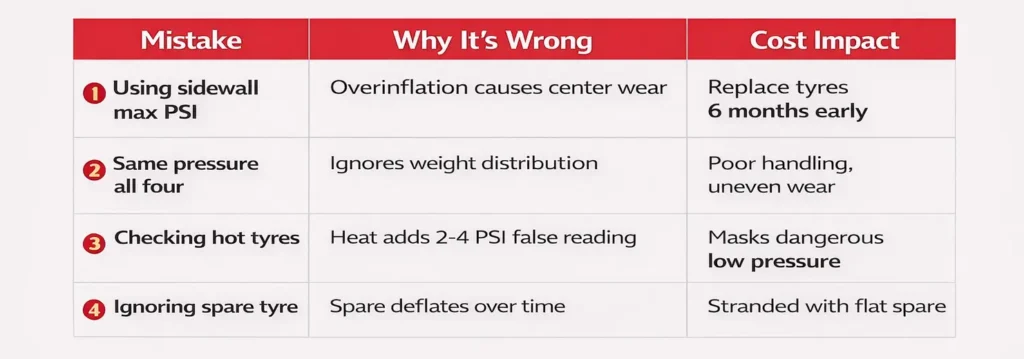
The number stamped on your tyre sidewall (like “MAX PRESS 51 PSI”) is NOT your target pressure. That’s the maximum the tyre can handle before it explodes. Your actual pressure should be 30-40% lower, based on your car manufacturer’s specs. Running at max pressure gives you a harsh ride, reduces traction, and wears the center of your tyre tread prematurely.
Mistake 2: Setting All Four Tyres to the Same Pressure
Many cars need different pressures front and rear. The door jamb sticker will show two numbers, like “Front: 32 PSI / Rear: 35 PSI.” Why? Weight distribution. The front carries the engine. The rear might need higher pressure to support the boot and passengers. Get it wrong, and your car handles poorly.
Mistake 3: Only Checking When the Light Comes On
Warning lights don’t trigger until pressure drops 25%. You could be driving 5-7 PSI low for weeks without knowing. That’s burning extra fuel and wearing your tyres unevenly. Check manually once a month, even if the light is off.
Mistake 4: Inflating at the Wrong Temperature
You drive to the petrol station on a hot summer day. Your tyres are now 4 PSI higher than when cold. You check the pressure, see 36 PSI, and think you’re fine. But once the tyres cool overnight, you’re actually at 32 PSI. If your spec is 35 PSI, you’re now driving underinflated. Always check cold or add 3-4 PSI to compensate for heat.
Mistake 5: Forgetting the Spare Tyre
Your spare tyre (if you have one) needs checking too. Most spares require higher pressure than regular tyres, typically 60 PSI for space-saver spares. Check it every three months. You don’t want to discover a flat spare when you’re stranded on the M25. If your spare is flat or you don’t have one, we offer emergency tyre replacement across London, 24 hours a day.
The Real Safety Risks of Incorrect Tyre Pressure
Wrong pressure isn’t just about tyre wear. It’s about your family’s safety. Let me show you the actual risks, backed by data.
Underinflation Dangers
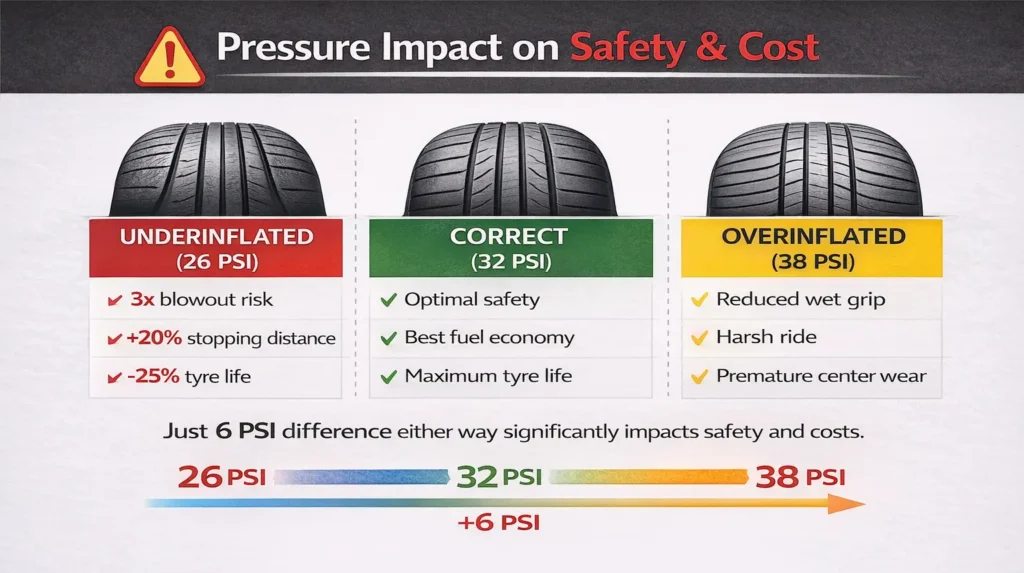
Running 20% low (like 26 PSI instead of 32 PSI) causes:
- Blowout risk increases 3x because sidewalls flex excessively and overheat
- Stopping distance grows 20% because the contact patch is too large and unstable
- Fuel economy drops 3% because rolling resistance increases (that’s £120/year wasted)
- Tyre life reduces 25% because the shoulders wear faster than the center
Overinflation Dangers
Running 20% high (like 38 PSI instead of 32 PSI) causes:
- Grip loss in wet conditions because the contact patch is too small
- Harsh, uncomfortable ride because tyres can’t absorb road impacts
- The center tread wears fast because only the middle touches the road
- Suspension damage risk because impacts transfer directly to shocks and springs
If you’ve been running incorrect pressure and you’re worried about tyre damage, our puncture repair specialists can inspect your tyres and advise whether they’re still safe or need replacing.
Seasonal Tyre Pressure Adjustments for London Weather
Temperature changes pressure. For every 10°C drop in temperature, your tyres lose about 1 PSI. London winters can drop 20°C from summer peaks. That’s 2 PSI less in December than in July.
Summer Adjustments (May-September)
Hot pavement heats tyres quickly. If you’re taking a long motorway trip on a hot day, consider adding 1-2 PSI above your normal spec. This compensates for the extra heat buildup. But don’t go crazy. Never exceed the maximum on your door jamb sticker.
Winter Adjustments (November-March)
Cold air is denser. Your tyres naturally lose 1-2 PSI in winter. Check monthly during winter because the pressure drop is gradual, and TPMS might not trigger until it’s dangerously low. Add air to match your door jamb spec, even if it seems like you’re adding more often than in summer. You are. That’s normal.
Switching to winter tyres? We offer all-season tyre fitting as a better option for London’s mild winters. All-season tyres handle year-round, and you won’t need two sets taking up space in your garage
| Pro Tip: During the winter, as temperatures drop, your tyre pressure will naturally decrease. Check your tyre pressure more frequently to prevent underinflation, which can lead to unsafe driving conditions. |
Unsure if your tyre pressure feels right? This Reddit thread reflects the same concerns many London drivers have.
Someone help me with the correct psi for my tyre PLEASE
byu/Inner_Science2144 indrivingUK
How to Adjust Pressure for Heavy Loads
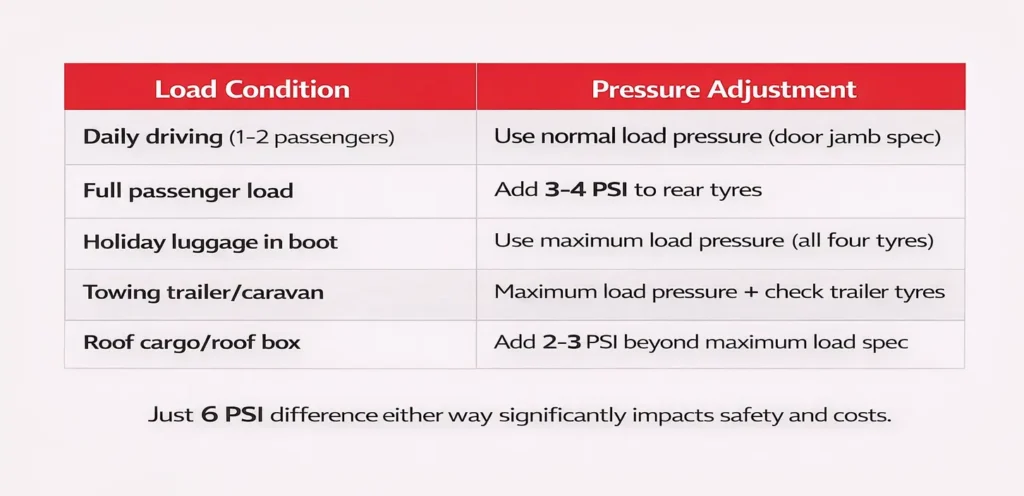
Packing for a holiday? Hauling furniture? Your door jamb sticker shows two pressure settings: normal load and maximum load. Use them.
Packing for holiday? Hauling furniture? Your door jamb sticker shows two pressure settings: normal load and maximum load. Use them.
When to Increase Pressure
- Increase to maximum load pressure when:
- The boot is fully loaded with luggage or cargo
- All seats are occupied by adult passengers
- You’re towing a trailer or caravan
- You’re carrying roof cargo (add 2-3 PSI to compensate for the center of gravity shift)
The difference between normal and maximum load pressure is usually 3-5 PSI. That doesn’t sound like much, but it’s the difference between safe handling and excessive sidewall flex that could cause a blowout at motorway speeds. Need new tyres for your van or 4×4 that regularly carries heavy loads? Check our range ofvan tyres and 4×4 tyres designed for higher load ratings.
Get Your Tyre Pressure Right Today
Correct tyre pressure isn’t complicated. Find the sticker. Check when cold. Match the numbers. Do it monthly.
But the difference between right and wrong is huge. Safety. Fuel costs. Tyre life. All of it depends on those few PSI.
If you need help with tyre pressure, tyre replacement, or any tyre emergency across London, Tyretick operates 24/7. We come to you, whether you’re in Brent, Kensington, Bromley, or anywhere else in London. We carry all major brands, including Michelin, Continental, and Bridgestone.
Don’t wait for a warning light. Check your pressure today. Your tyres and your wallet will thank you.
Need Immediate Mobile Tyre Help?
Fast roadside rescue, expert fitting, and friendly support across the UK.
Frequently Asked Questions
How often should I check my tyre pressure?
Once a month minimum, and always before long trips. Tyres naturally lose 1 PSI per month through the rubber. If you drive in London traffic daily, check every two weeks because potholes and kerb impacts can cause slow leaks.
Can I drive with low pressure if I’m just going to the petrol station?
If the TPMS light is on, check the pressure first. Driving more than a few miles on severely low pressure (below 20 PSI) can damage the tyre’s internal structure permanently, even if you reinflate it later. The sidewall cords flex too much and break. That tyre is then unsafe even at the correct pressure.
Do I need different pressure for motorway vs city driving?
Not usually. The door jamb spec covers both. However, if you’re doing a sustained high-speed motorway trip (80mph+ for hours), adding 1-2 PSI can help compensate for heat buildup. Just remember to let them cool and recheck when you return to normal city driving.
My new car has a TPMS. Do I still need to check manually?
Yes. TPMS only warns you when pressure drops 25%. You could be running 5-7 PSI low without any warning. That’s enough to reduce fuel economy and accelerate wear. Manual checks catch problems before they become emergencies.
What if my front and rear pressures are different?
That’s completely normal. Many cars specify different front and rear pressures because of weight distribution. The front might carry the engine while the rear supports passengers and cargo. Always follow the door jamb sticker for your specific vehicle.
How Often Should I Check My Tyre Pressure?
Check once a month, and before long trips. Tyres lose about 1 PSI every month so keep note of it, in heavy traffic or if you hit a lot of potholes, check every two weeks.
Can I Drive with Low Pressure If I’m Just Going Near Buy?
If the TPMS light is on, check your tyres. Driving with very low pressure (below 20 PSI) can damage them and make them unsafe, even if you fill them up later.
Do I Need Different Pressure for Motorway vs. City Driving?
Not really, but if you’re on the motorway for hours at high speed, adding 1-2 PSI helps. Just check it again once you’re back to normal driving.
Do I Still Need to Check Manually even if I have a TPMS?
Yes! The TPMS only warns you if you’re 25% low. You might be down 5-7 PSI without knowing, and that can wear out your tyres faster.
What If My Front and Rear Pressures Are Different?
It’s normal. Many cars need different pressures for front and back tyres. Always check the sticker inside the door for the correct numbers.
