
Your tyre looks low.
You need air fast.
Don’t panic.
Adding air to your tyres takes about 5 minutes once you know the process. Whether you’re at a petrol station or checking pressure at home before a motorway journey, the right tyre pressure keeps you safe and saves fuel. According to the Department for Transport, under-inflated tyres account for 1,400 road casualties annually in the UK. This guide shows you exactly how to inflate your tyres correctly. If you’re dealing with damaged tyres or need emergency assistance, our 24/7 mobile tyre fitting service operates across the UK.
What You Need to Know Before Adding Air
First things first. You need to find your car’s recommended tyre pressure. Every vehicle has a specific PSI (pounds per square inch) that the manufacturer sets. Driving on incorrect pressure causes uneven wear, reduces fuel economy by up to 3%, and makes your car handle poorly in corners. If you’ve got a punctured tyre, checking pressure becomes even more critical.
Where to Find Your Correct Tyre Pressure
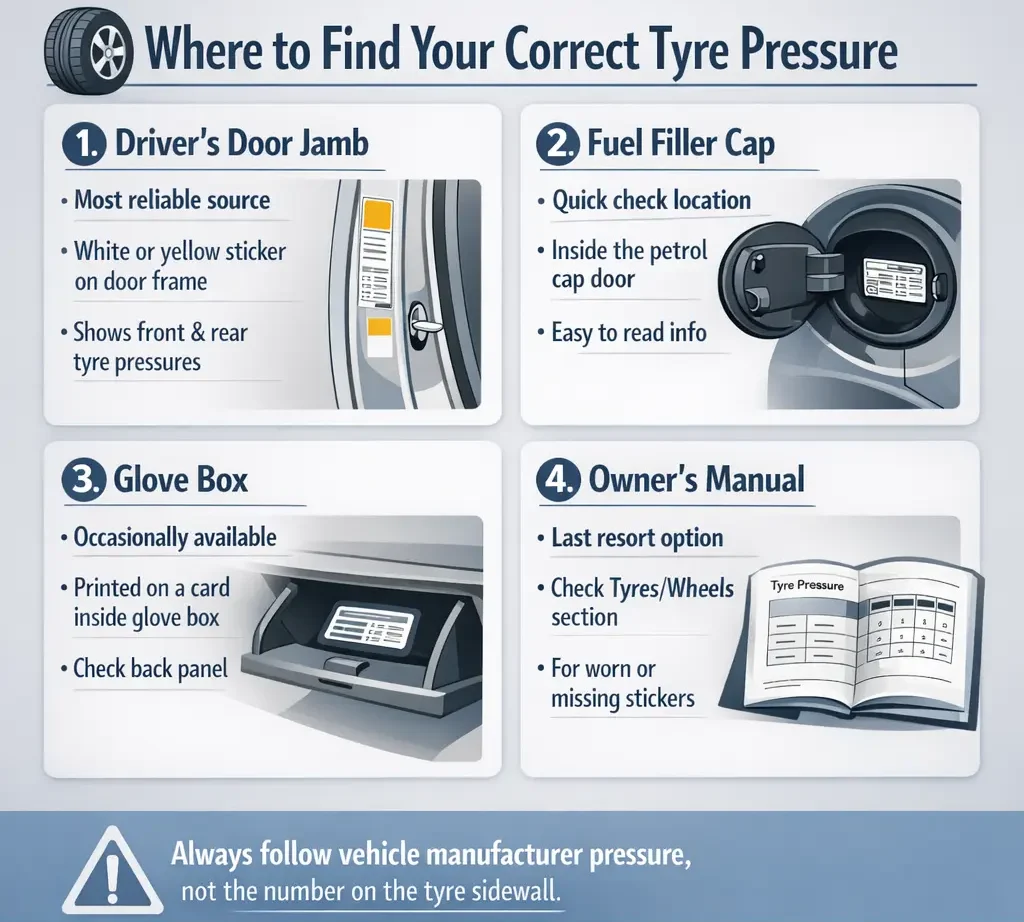
The sticker shows different pressures for front, rear, full load, and high-speed driving. Most UK drivers need the ‘normal load’ setting, which typically ranges from 30 to 35 PSI for standard cars.
Understanding PSI and BAR Measurements
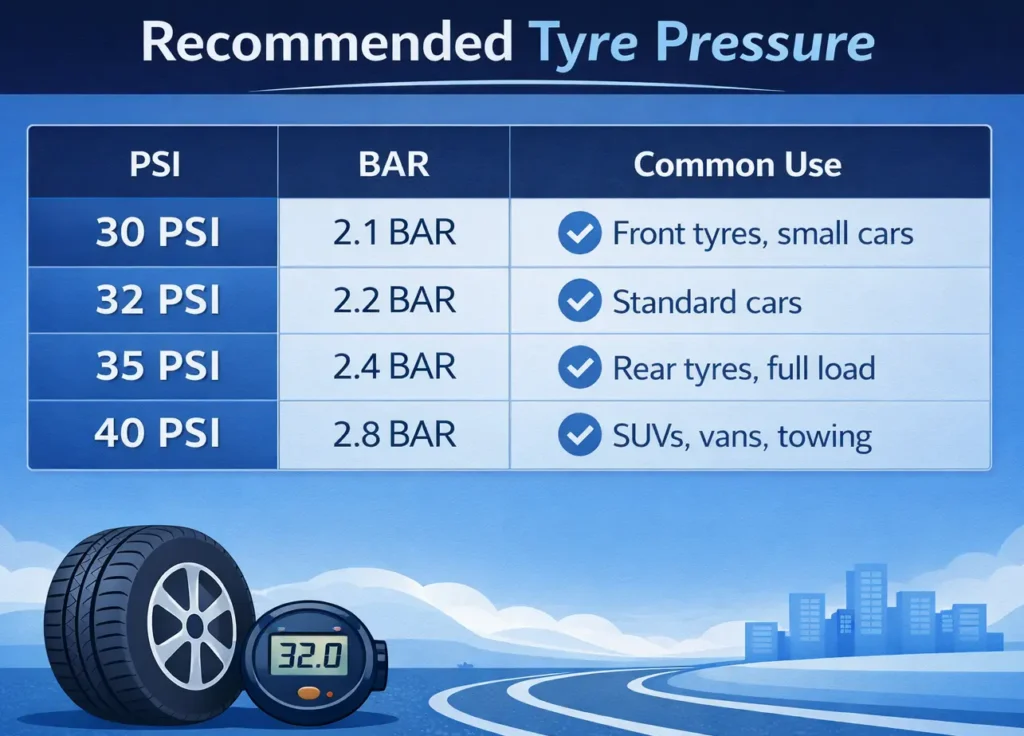
UK tyre pressure stickers show both PSI and BAR.
PSI is the British standard. BAR is the European metric. If you’re confused about which tyres suit your vehicle, check out our guide on all-season tyres for UK weather conditions.
How to Put Air in Tyres at a Petrol Station
Most UK drivers inflate tyres at petrol stations.
You’ll find air pumps at Shell, BP, Tesco, and Sainsbury’s stations across the country. Some charge £1, others are free. If you need emergency assistance or mobile wheel balancing, our service operates throughout the UK with 24/7 availability.
Step-by-Step Petrol Station Process
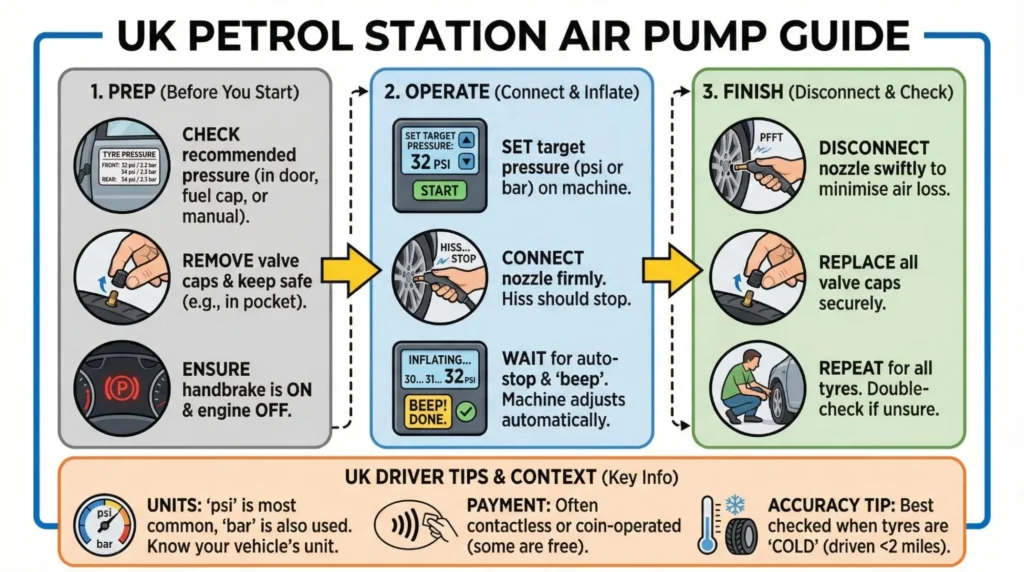
Step 1: Park close to the air machine
Position your car so the hose reaches all four tyres. Most hoses stretch 2 to 3 metres. Don’t block other drivers.
Step 2: Check current tyre pressure
Remove the valve cap (small black or silver cap on the wheel). Press the air gauge firmly onto the valve stem. The gauge shows your current PSI. If it’s below the sticker recommendation, you need air.
Step 3: Set the machine to your target pressure
Modern machines have digital displays. Enter your target PSI (the number from your door sticker). The machine will beep when it reaches that pressure.
Step 4: Attach the hose to the valve
Push the hose connector firmly onto the valve stem. You’ll hear a brief hiss as it seals, this is normal. Hold it steady.
Step 5: Add air until you hear the beep
The machine pumps automatically. Watch the display. It takes about 30 seconds per tyre. If you need emergency tyre replacement, our mobile service can help.
Step 6: Replace the valve cap
Screw the cap back on. It keeps dirt and moisture out of the valve. Lost caps cost about 50p at any auto shop.
Step 7: Repeat for all four tyres
Each tyre takes less than a minute once you get the rhythm. Don’t forget the spare if your car has one.
5 Minutes Total
- Find your car’s PSI (30-35 typical)
- Check the current pressure with the gauge
- Set the machine to target PSI
- Pump all four tyres (30 seconds each)
- Replace valve caps
Quick Tip: Check pressure when tyres are cold (before driving) for the most accurate readings.
What If You Overinflate?
Don’t worry.
Most air machines have a release button. Press it briefly to let out small amounts of air. Check with the gauge after each press. Overinflated tyres wear faster in the centre and make the ride harsh. For performance tyres, precision matters even more.
Here’s how UK drivers explain tyre inflation in real-world conditions, not just manuals.
The correct way to properly inflate tyres?
byu/Inner_Science2144 inCarTalkUK
How to Put Air in Tyres at Home
Home inflating gives you control and convenience.
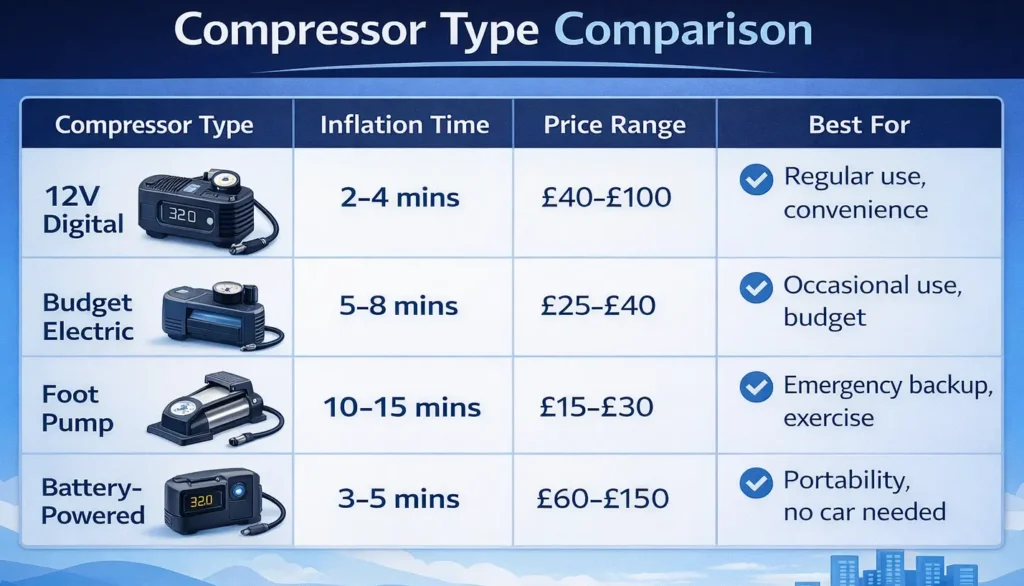
You need a portable air compressor (£30 to £100) or a foot pump (£15 to £30). Electric compressors work faster. Foot pumps take longer but need no power. If you drive a van or 4×4, a quality compressor is essential for maintaining higher pressures.
Using a Portable Electric Compressor
Step 1: Plug the compressor into your 12V socket (cigarette lighter)
Start your engine. Running the car prevents battery drain. Some powerful compressors draw 10 to 15 amps.
Step 2: Set your target PSI on the compressor
Digital models let you preset the pressure. They stop automatically when reached.
Step 3: Attach to the valve and inflate
Lock the connector onto the valve. Most have a threaded or lever-lock system. Press the power button. The compressor inflates the tyre in 2 to 4 minutes, depending on how low it is.
Step 4: Check with a separate gauge for accuracy
Budget compressors sometimes read 1 to 2 PSI off. A £10 manual gauge gives precise readings.
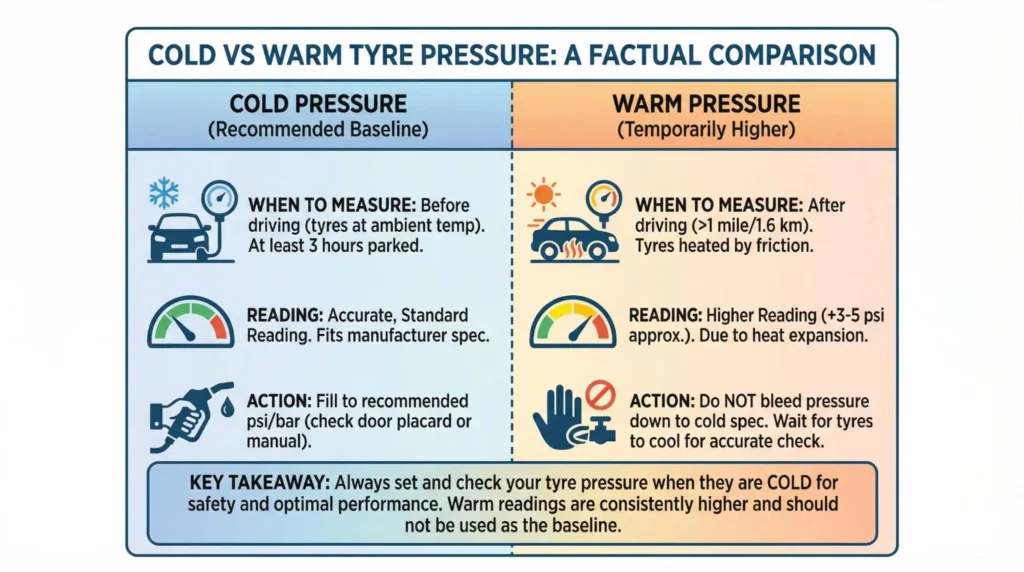
Why Check Tyre Pressure When Cold?
Driving heats tyres. Heat increases pressure by 2-4 PSI.
Cold Tyre (Recommended):
- Before driving
- Car parked 3+ hours
- Temperature stabilised
- Reading: 32 PSI (accurate)
Warm Tyre (After Driving):
- After 20+ minutes driving
- Tyre heated from friction
- Pressure temporarily higher
- Reading: 35 PSI (inflated by heat)
Rule: If you must check when warm, add 2-3 PSI to your target. But cold checks are always best.
Safety Warnings and Limits
Incorrect tyre pressure kills.
The Royal Society for the Prevention of Accidents reports that tyre defects contribute to 10% of road accidents. Under-inflated tyres cause blowouts at motorway speeds. Over-inflated tyres lose grip in wet conditions, which UK roads see frequently. If you’re wondering, can I drive with a punctured tyre, the answer is usually no, especially on motorways.
Never Exceed Maximum PSI
Your tyre sidewall shows maximum pressure.
It might say ‘MAX PRESS 44 PSI’ or similar. This is NOT your target pressure. It’s the absolute safety limit. Operating pressure (from your door sticker) should be 5 to 10 PSI below this maximum.
Watch for Damage While Inflating
Inspect tyres before adding air:
- Bulges or blisters on sidewall (internal damage)
- Cuts deeper than 1mm
- Exposed cords or fabric
- Objects embedded in tread (nails, screws, glass)
- Uneven wear patterns
- Cracks in rubber (age damage)
If you spot any of these, don’t inflate. Don’t drive. The tyre might burst. Our home tyre fitting service can replace it at your location.
Different Pressures for Different Loads
Your door sticker shows two pressure sets.
Normal load means you plus maybe one passenger and light luggage. Full load means five people, boot packed, roof box loaded. The pressure difference is usually 3 to 5 PSI higher for full load.
Using normal pressure with a full load wears the tyre edges. Using full load pressure when empty makes the ride harsh and wears the centre. Match your inflation to your actual load.
Watch for Damage While Inflating
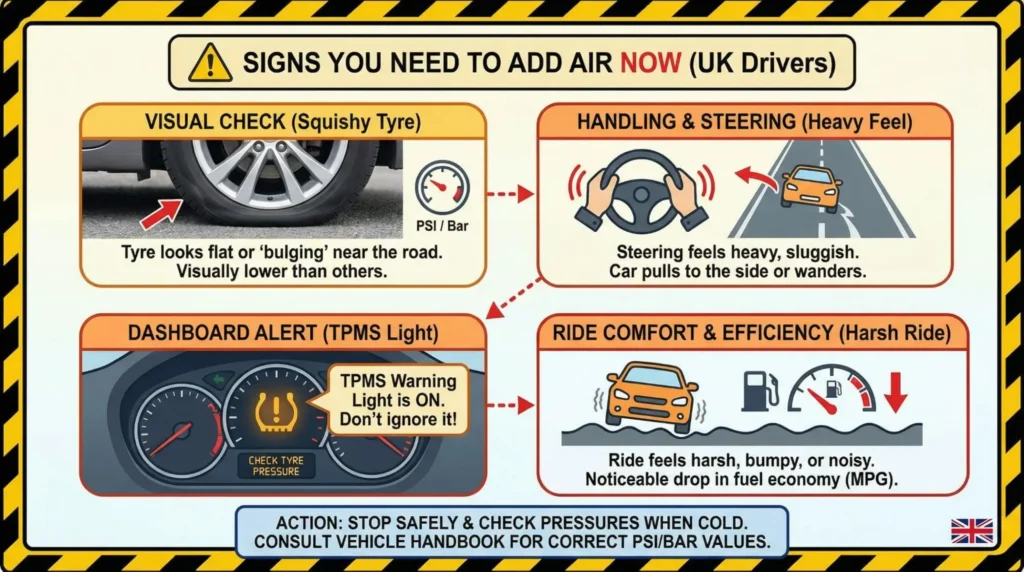
Visual Checks:
- Tyre looks flattened at bottom
- Sidewall bulging outward near road
- One tyre is noticeably lower than others
Driving Symptoms:
- The car pulls to one side
- Steering feels heavy or sluggish
- Fuel economy dropped 2+ mpg
- Thumping noise from wheels
Dashboard Alerts:
- TPMS light on (🚗 exclamation symbol)
- Low-pressure warning message
Action: Check pressure within 24 hours. If TPMS blinks, stop immediately and call for help.
Need Immediate Mobile Tyre Help?
Fast roadside rescue, expert fitting, and friendly support across the UK.
When to Call for Professional Help
Some situations need experts.
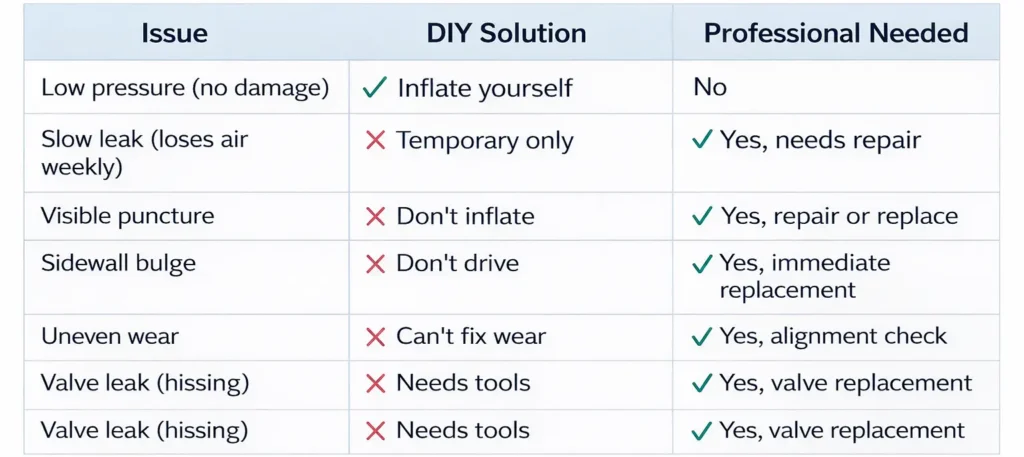
DIY inflation works for normal maintenance. But if your tyre won’t hold pressure after you’ve inflated it, or if you see damage, or if the TPMS light stays on after correction, you need professional inspection. Whether you need Michelin tyres or Continental tyres, our mobile service brings expertise to your location.
Signs You Need More Than Just Air
Call for help if you notice:
- Tyre loses pressure within 24 hours of inflating
- Hissing sound when checking the valve
- Visible puncture or nail
- Sidewall damage or bubbles
- Tread depth below 3mm (legal minimum is 1.6mm)
- One tyre is consistently lower than the others
- Unusual wear patterns (edges worn, centre fine, or vice versa)
- Vibration at a speed that wasn’t there before
These symptoms indicate slow leaks, valve problems, wheel balance issues, or alignment problems. If you need help, our mobile technicians can diagnose and fix most issues on the spot.
Keep Your Tyres Properly Inflated
Checking tyre pressure takes five minutes.
Doing it monthly prevents accidents, saves fuel, and extends tyre life. You’ve now got the complete process for both petrol stations and home inflation. Find your door sticker. Check when tires are cold. Inflate to the recommended PSI, not the maximum.
Watch for damage while you work.
If you spot anything concerning or your tyres won’t hold pressure, contact Tyretick Fast Tyre for professional mobile tyre fitting across the UK. We bring expertise and equipment to your location, whether that’s your home, office, or roadside.
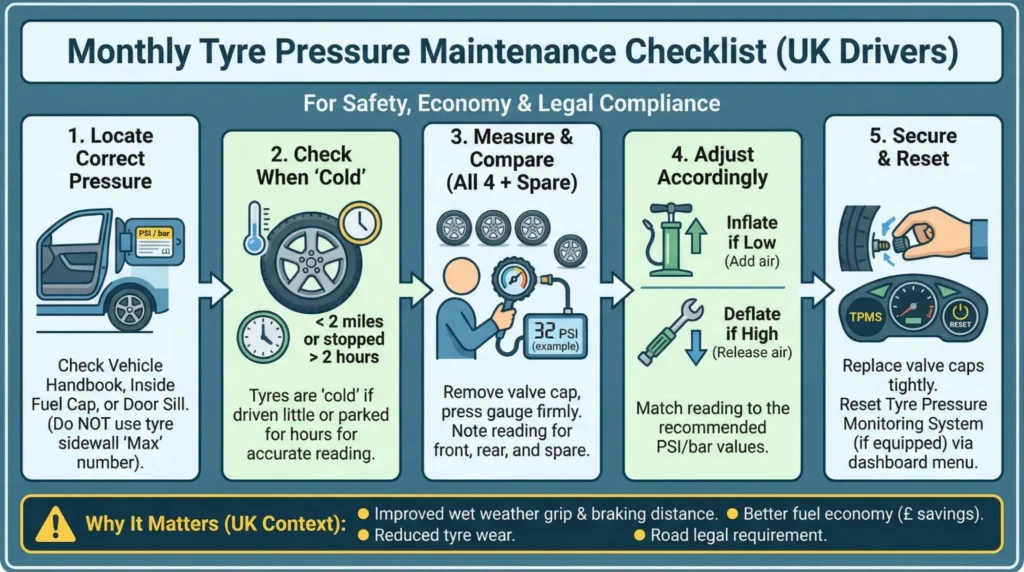
Every Month:
- Check all four tyres when cold
- Inspect tread depth (minimum 1.6mm legal, 3mm recommended)
- Look for cuts, bulges, or embedded objects
- Check the spare tyre pressure
- Clean valve caps and check for leaks
Before Long Trips:
- Check the pressure day before travel
- Adjust for full load if carrying passengers/luggage
- Verify the spare is inflated
- Pack a portable compressor or pump
Seasonal Changes:
- Check when the temperature drops 10°C or more
- Winter: Add 1-2 PSI to compensate for cold
- Summer: Recheck as temperature rises
Time Investment: 10 minutes per month prevents £500+ emergency repairs
Common Questions About Tyre Inflation
How much air should be in my tyres?
Check your driver’s door jamb sticker for the exact PSI, typically 30-35 PSI for standard cars. Never use the maximum PSI printed on the tyre sidewall as your target.
Can you put air in your tyres at a petrol station?
Yes, most UK petrol stations have air pumps that cost £1 or are free. Park near the machine, set your target PSI, and inflate each tyre following the digital display.
How do I know if my tyres need air?
Your TPMS warning light, visibly flat tyres, car pulling to one side, or reduced fuel economy indicate low pressure. Check monthly with a gauge when tyres are cold.
Should all 4 tyres have the same pressure?
Not always. Many cars need different front and rear pressures, shown on your door sticker. Front tyres often need slightly less PSI than rear tyres.
Can I drive with low tyre pressure?
You can drive slowly to the nearest air pump if the pressure is slightly low. If it’s 20% below recommended or TPMS light blinks, stop immediately to avoid blowout risk at speed.
