
A cold morning can change how your car behaves more than most drivers expect. The same tyres that feel sharp and confident in summer can lose grip overnight when temperatures drop.
This creates a real safety problem on UK roads, especially during rain, frost, or sudden cold snaps. Many drivers keep summer tyres fitted without realising the risk.
But here is a complete explanation on whether you should use your summer tyres in winter or not. Even better? You will learn about the best tyres to use in winter that offer safer control across rain, frost, and unpredictable winter conditions.
Here we go:
Quick Answer: Can Summer Tyres Be Used in Winter?
No! Summer tyres can’t be used in winter because they are not a safe choice once temperatures fall below 7°C. Cold air makes the rubber hard, which reduces grip and lengthens braking distances. Also, the steering becomes less predictable.
For colder months, winter or all-season tyres provide far better control and safety on everyday roads during rain, frost, and unexpected weather changes throughout the year.
In fact, UK tyre rating company TyreSafe even said:
“Winter tyres come with extra grip and multi-sipe tread patterns – the combination that no summer tyre can provide.”
Why You Shouldn’t Use Summer Tyres in Winter?
You should not use summer tyres in winter because cold weather makes them hard, unsafe, and slow to stop, which increases crash risk on all roads.
Summer tyres are built for warm seasons. Their rubber compound works best above 7°C. When temperatures fall, the rubber stiffens. Hard rubber cannot flex. Reduced flexibility lowers road contact. Less contact means less control.
1. Increased Braking Distances
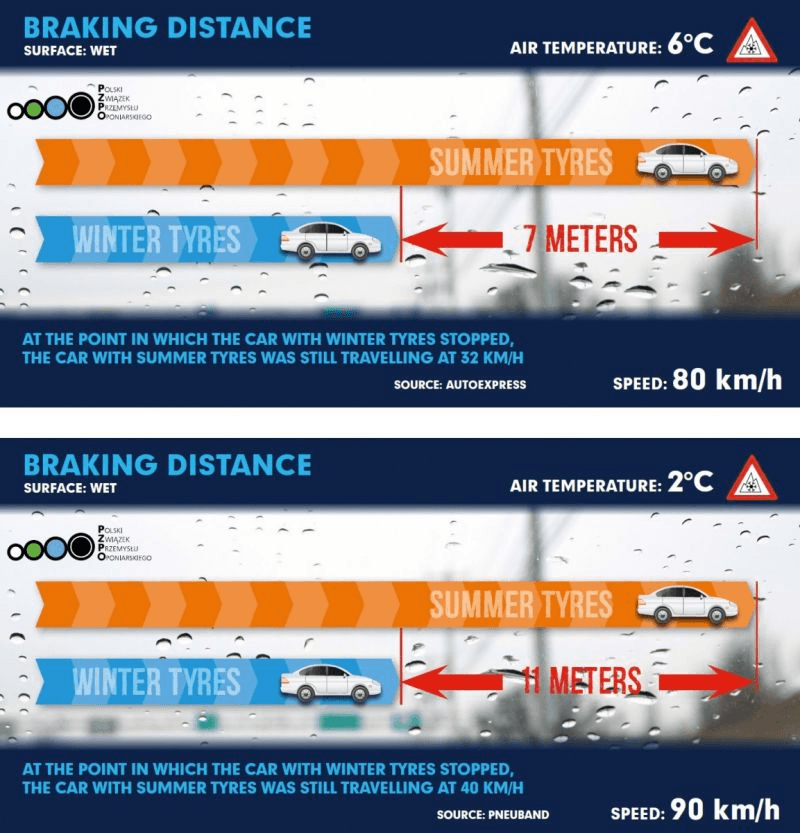
Braking takes longer due to wet roads or snow. Independent tyre tests show summer tyres need extra metres to stop at city speeds. A longer stop often causes rear-end crashes. On frost, ice, or light snow, stopping distances increase sharply. Drivers lose precious reaction time.
2. Less Traction and Grip
Tyre Grip drops fast in winter. Also, summer tyre tread patterns are shallow. They cannot bite into snow or slush. Plus, steering feels vague, and acceleration weakens. So, corners feel unstable and the car slides more easily. As a result, the driver feels less confident behind the wheel.
3. Risk of Tyre Cracking and Damage
Let’s have a look at the tests conducted by PTIA, a Polish tyre industry body:Cold air removes elasticity from summer rubber. The tyre surface dries out. Small cracks form along the tread and sidewalls. These cracks weaken the structure. Potholes and curbs cause more harm. Over time, damage leads to slow air leaks or sudden failure. Blowouts are rare, but risk rises.
“As the temperature decreases, the braking of winter tyres increases. In fact, they beat summer tyres by a large margin.”
Why are Summer Tyres Less Efficient On Snow?
Summer tyres are less efficient on snow because
- Cold temperatures harden the rubber compound.
- Hardened rubber reduces surface grip.
- Shallow tread blocks fill with snow and slush.
- A clogged tread prevents snow evacuation.
- The lack of tread edges reduces traction.
- Low traction slows acceleration.
- Reduced grip weakens steering response.
- Braking distance increases at low speeds.
When Should You Use Summer Tyres?
Summer tyres should be used when the daily temperature remains above 7°C. This is because
- Rubber stays flexible and maintains road contact.
- Steering feels quicker and more precise.
- Braking becomes smoother and shorter.
- Summer tyres work well on hot, dry roads.
- Performance remains stable in heavy rain.
- Grip drops as temperatures fall.
- Cold starts and icy mornings reduce effectiveness
UK drivers often fit summer tyres in spring. Tyres are usually changed again in autumn. For example, in the UK, many drivers switch to summer tyres around Easter, when daytime temperatures consistently rise above 7°C and roads stay dry and warm.
Can You Use Summer Tyres All Year?
Summer tyres can be used throughout the year, just in areas where the temperature is expected to remain above 7°C and where snow does not occur. They do well on dry roads in warm climates and handle heavy rain confidently. When the air is mild, the grip is also stable
Better Alternatives for Winter Driving
Below are the best alternatives for winter driving to stay safe on roads:
Winter Tyres for Cold and Snow
Winter tyres offer the strongest safety in cold conditions. This is because they have a specialized rubber compound that has a higher silica content. This material keeps the tyre soft in cold weather and increases the grip on the road even in slipped conditions.
On top of that, winter tyres also have an aggressive treading design. This particular style creates biting edges, helping the tyre dig deeper in the snow.
These are some of the industry-leading winter tyres for better stability in cold:
- Michelin X-Ice Snow: Known for outstanding ice and snow braking
- Bridgestone Blizzak WS90: Excellent for deep snow and ice
- Nokian Hakkapeliitta R5: Extremely reliable for extreme cold climates
All-Weather Tyres for Changing Climates
All-weather tyres are also a great option for winter driving. In fact, you should go with these tyres for a year-round performance.
Such tyres come with a Three-Peak Mountain Snowflake (3PMSF) rating, which literally means they are far better in all weathers than summer tyres.
Remember, they are not better than winter tyres, but you can choose them for moderate snow, ice, and cold and dry roads.
Examples:
- Michelin CrossClimate: Exceptional snow traction and braking
- Nokian Remedy WRG5: Strong in snow and ice
Need Immediate Mobile Tyre Help?
Fast roadside rescue, expert fitting, and friendly support across the UK.
If cold weather has already damaged your tyre or caused a puncture, make sure you know whether it’s actually safe to drive with a punctured tyre and how far you can go before risking more damage.
FAQs
Can summer tyres handle cold rain?
No! They manage rain when roads stay warm, but grip fades once temperatures drop and surfaces cool. Standing water feels manageable, yet sudden braking still becomes unpredictable.
Is it illegal to use summer tyres in winter?
No! In the UK, it is legal, yet insurers may question safety after accidents. Rules differ across Europe. Local fines may apply in the winter months.
At what temperature do summer tyres become unsafe?
Summer tyres become unsafe below 7 degrees Celsius. At this temperature, the tyre rubber hardens, which can lead to a decrease in road grip. This issue can cause an increase in braking distances as well as accidents.
Do summer tyres wear faster in winter?
Yes! Cold roads accelerate wear, encourage cracking, and reduce overall tyre lifespan. This wear also affects grip consistency and can raise running costs during colder months for regular drivers.
Summary
So summer tyres work best in warm conditions and struggle once temperatures fall. Cold weather hardens the rubber, reducing grip, braking control, and steering confidence. Snow and slush make problems worse.
In the UK, seasonal tyre changes improve safety. For winter driving, all-season or winter tyres deliver better traction, durability, and predictable handling across changing road conditions for everyday use safely.
If winter damage leaves you with a flat tyre on the roadside and you’re confident handling it yourself, here’s a clear guide on how to safely change a punctured tyre step-by-step without damaging your car.
And if you are facing tyre issues like flat tyres or need help regarding a tyre health check, contact TyreTick. We offer quick under-45-minute service to get you on the road in no time.
